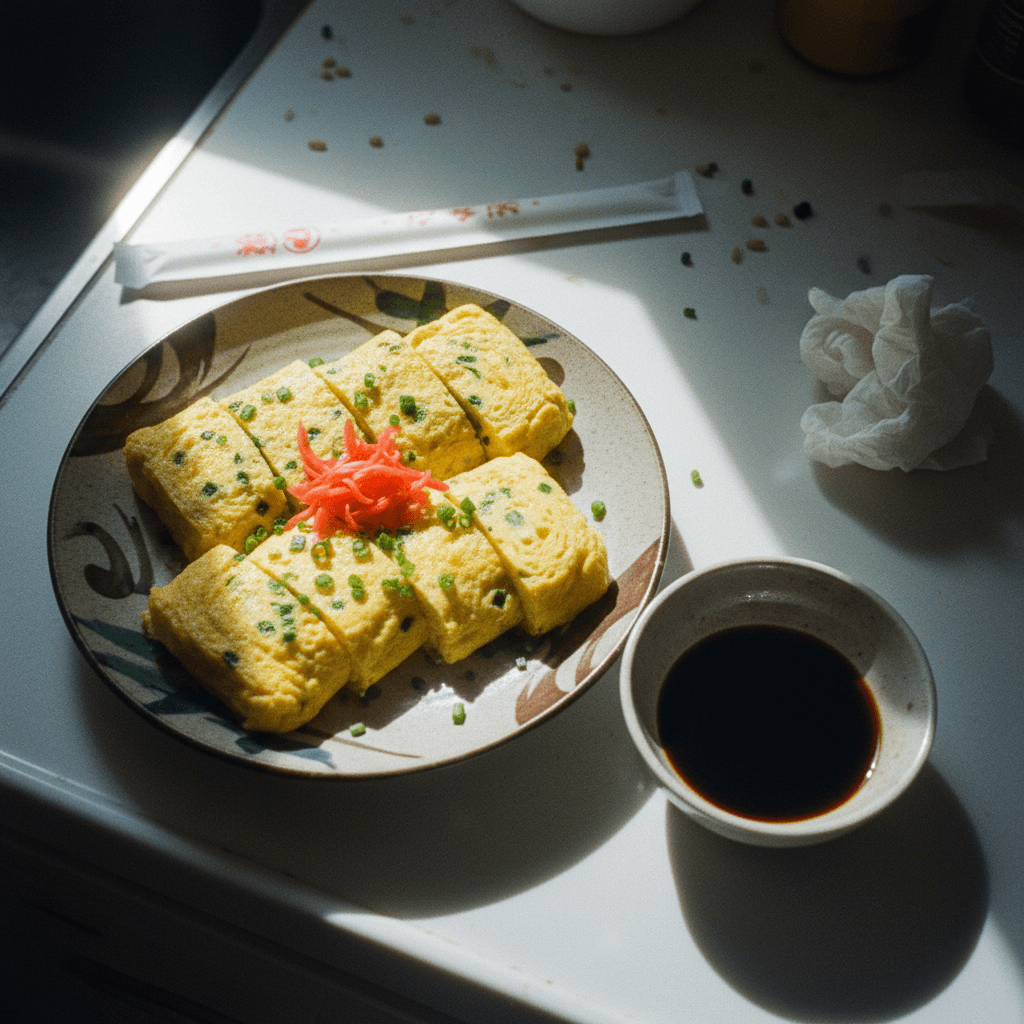
Japanese Tamagoyaki Omelet Rolls
Japanese Tamagoyaki Omelet Rolls
Ingredients
- 6 large eggs
- 1/4 cup dashi stock, or water
- 1 teaspoon soy sauce
- 1 tablespoon mirin
- 1 teaspoon granulated sugar
- 1/4 teaspoon salt
- 1 tablespoon vegetable oil, or as needed
Instructions
- 1
In a medium bowl, crack the eggs. Gently whisk them with chopsticks or a fork until the yolks and whites are just combined, being careful not to incorporate too much air. You want a smooth, uniform mixture.
⏱️ 2 min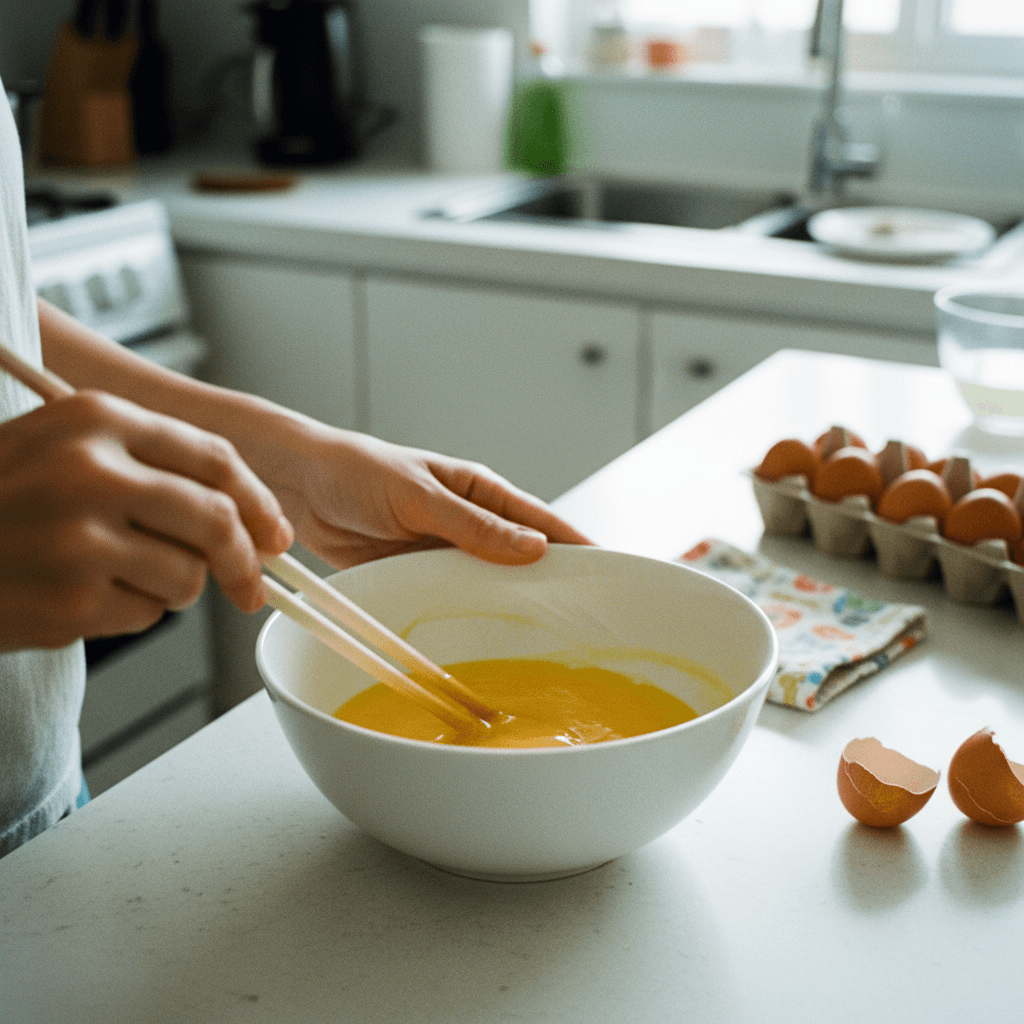
- 2
In a separate small bowl, combine the dashi stock (or water), soy sauce, mirin, granulated sugar, and salt. Whisk until the sugar and salt are fully dissolved.
⏱️ 2 min
- 3
Pour the dashi mixture into the beaten eggs and whisk gently until well combined. Strain the egg mixture through a fine-mesh sieve into another bowl to remove any chalazae (white strings) and ensure a smooth omelet. This step is crucial for a silky texture.
⏱️ 3 min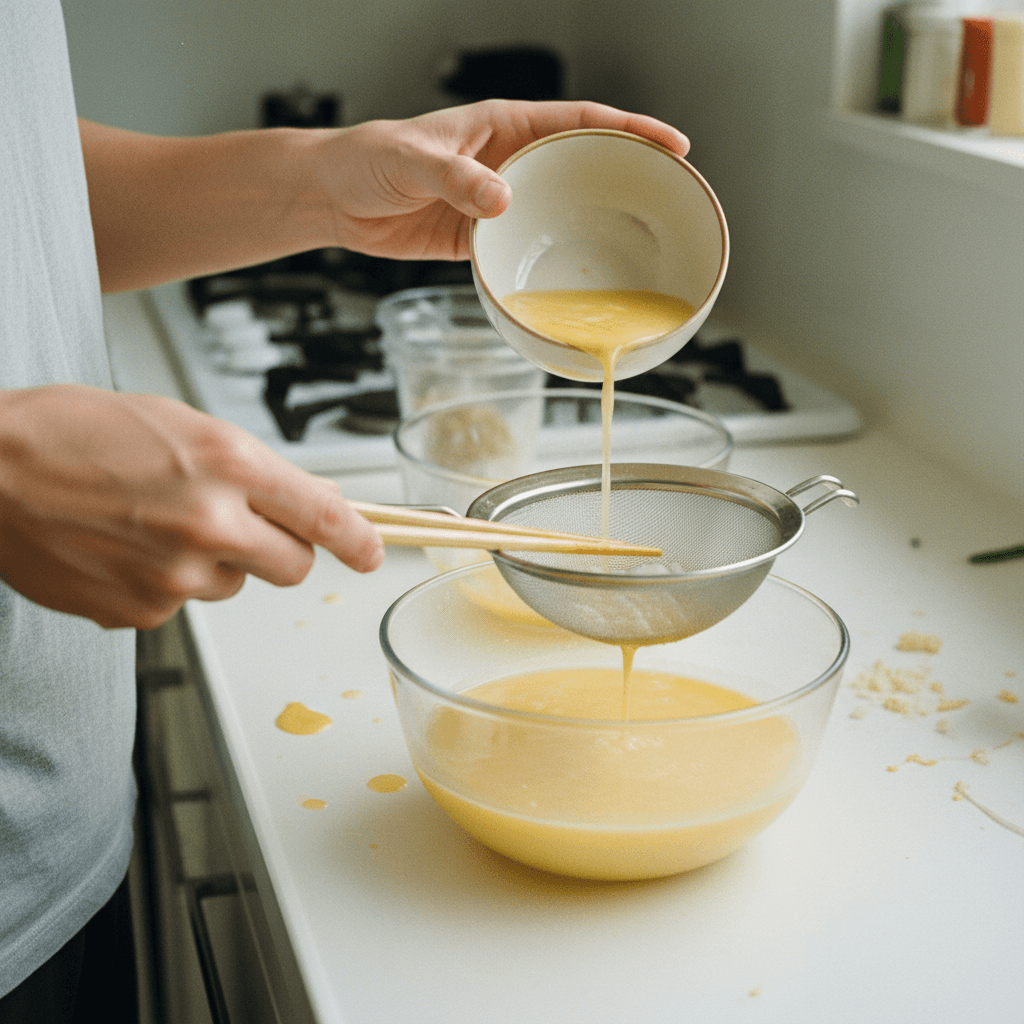
- 4
Heat a rectangular tamagoyaki pan (or a small non-stick frying pan, about 8-inch) over medium-low heat. Lightly coat the pan with a thin layer of vegetable oil using a paper towel. Ensure the pan is evenly oiled.
⏱️ 2 min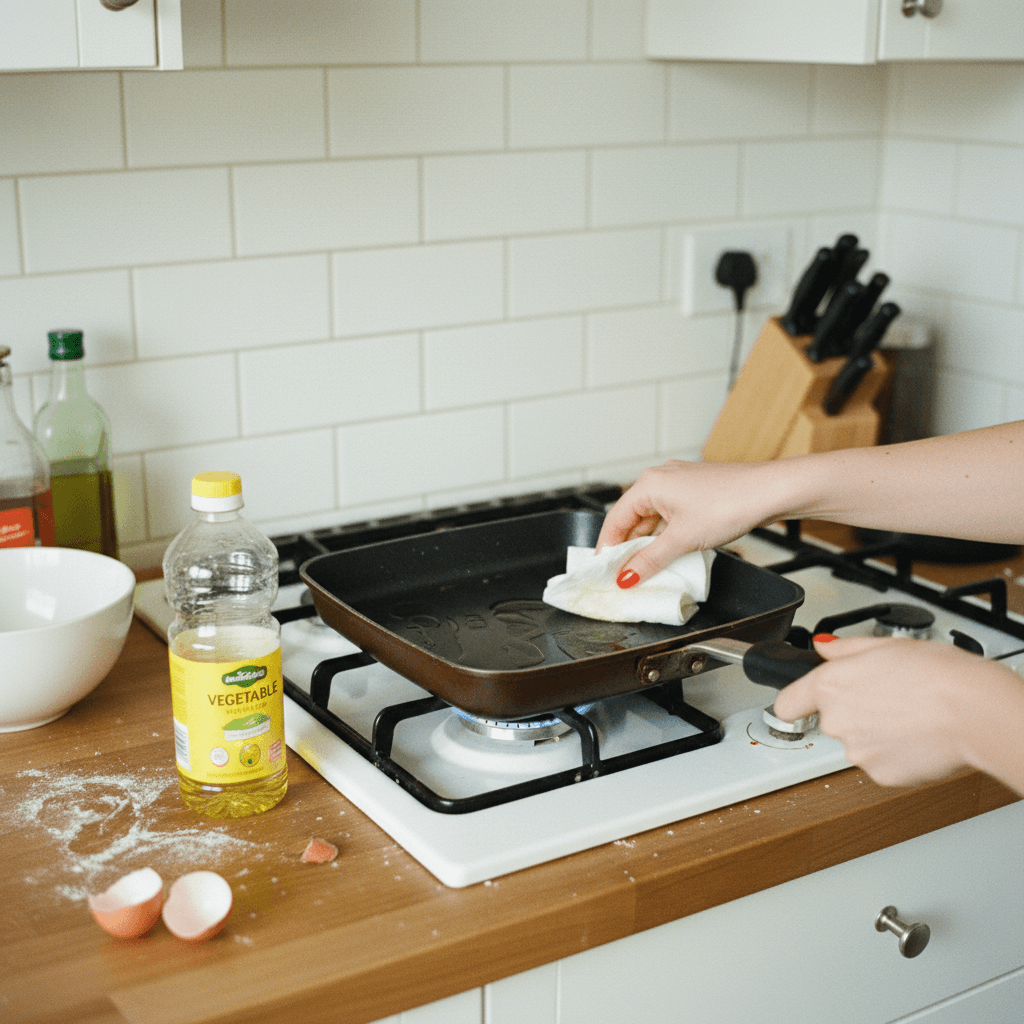
- 5
Pour about 1/4 of the egg mixture into the hot pan, tilting the pan to spread it evenly into a thin layer. Cook for about 1-2 minutes, or until the edges are set and the top is mostly set but still slightly wet.
⏱️ 2 min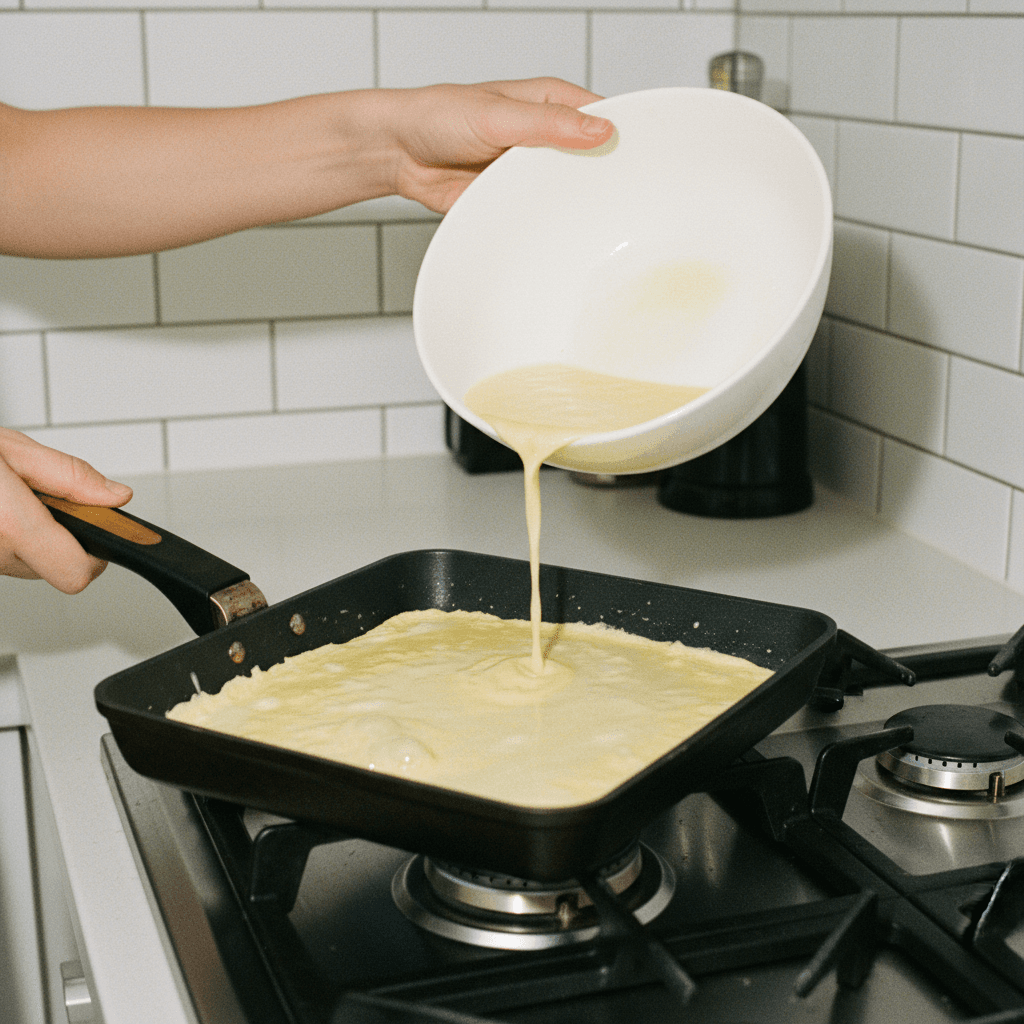
- 6
Using chopsticks or a spatula, gently roll the cooked egg layer from one end of the pan to the other. Push the rolled omelet to one side of the pan.
⏱️ 1 min
- 7
Lightly oil the empty part of the pan again. Pour another 1/4 of the egg mixture into the pan, lifting the rolled omelet slightly to allow the new egg mixture to flow underneath it. Cook until mostly set.
⏱️ 2 min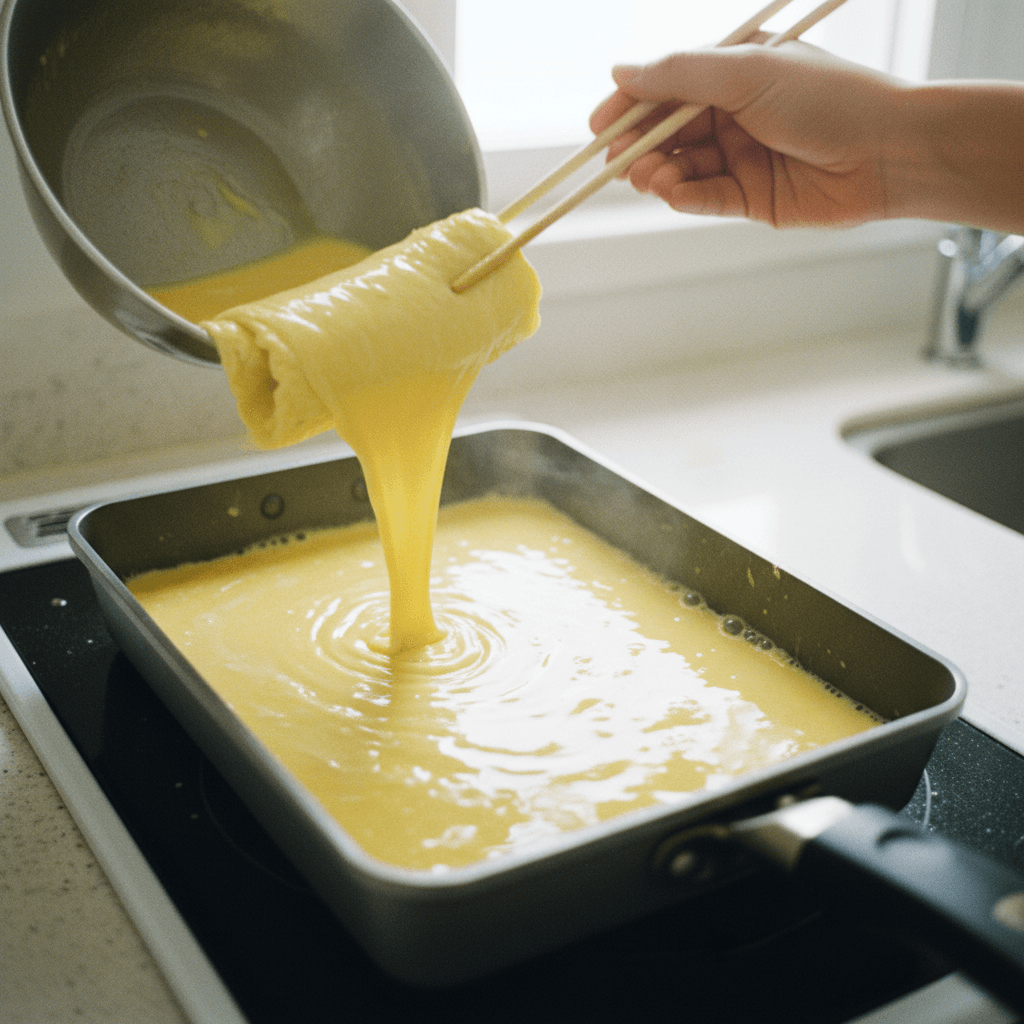
- 8
Roll the cooked egg from the side with the existing omelet over the new layer, continuing to form a thicker roll. Repeat steps 6 and 7 with the remaining egg mixture, adding a new layer and rolling it into the growing omelet.
⏱️ 3 min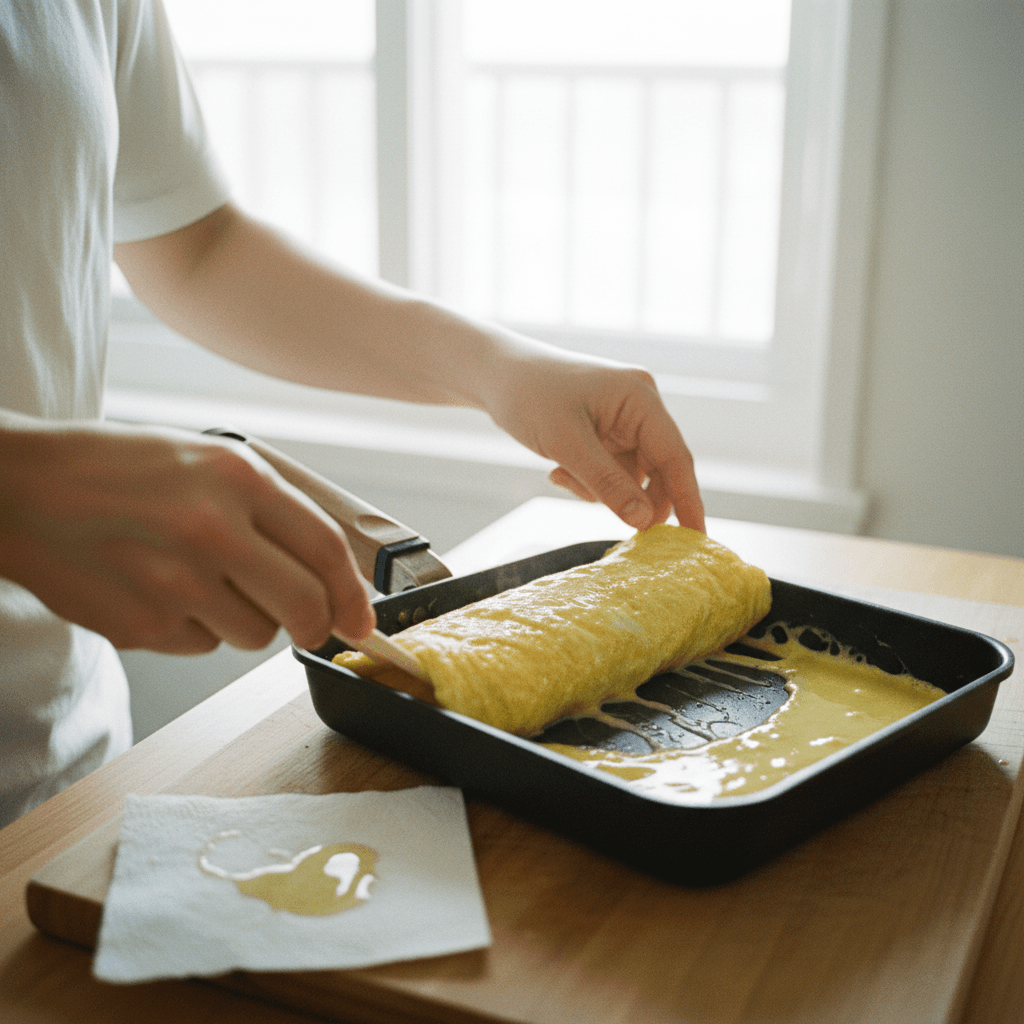
- 9
Once all the egg mixture is used and the tamagoyaki is a thick roll, remove it from the pan and place it on a bamboo sushi mat (makisu) or a cutting board. Shape it gently into a neat rectangle using the mat or by pressing with a spatula.
⏱️ 1 min
- 10
Let the tamagoyaki cool for a few minutes before slicing it into 1-inch thick pieces. Serve warm or at room temperature.
⏱️ 2 min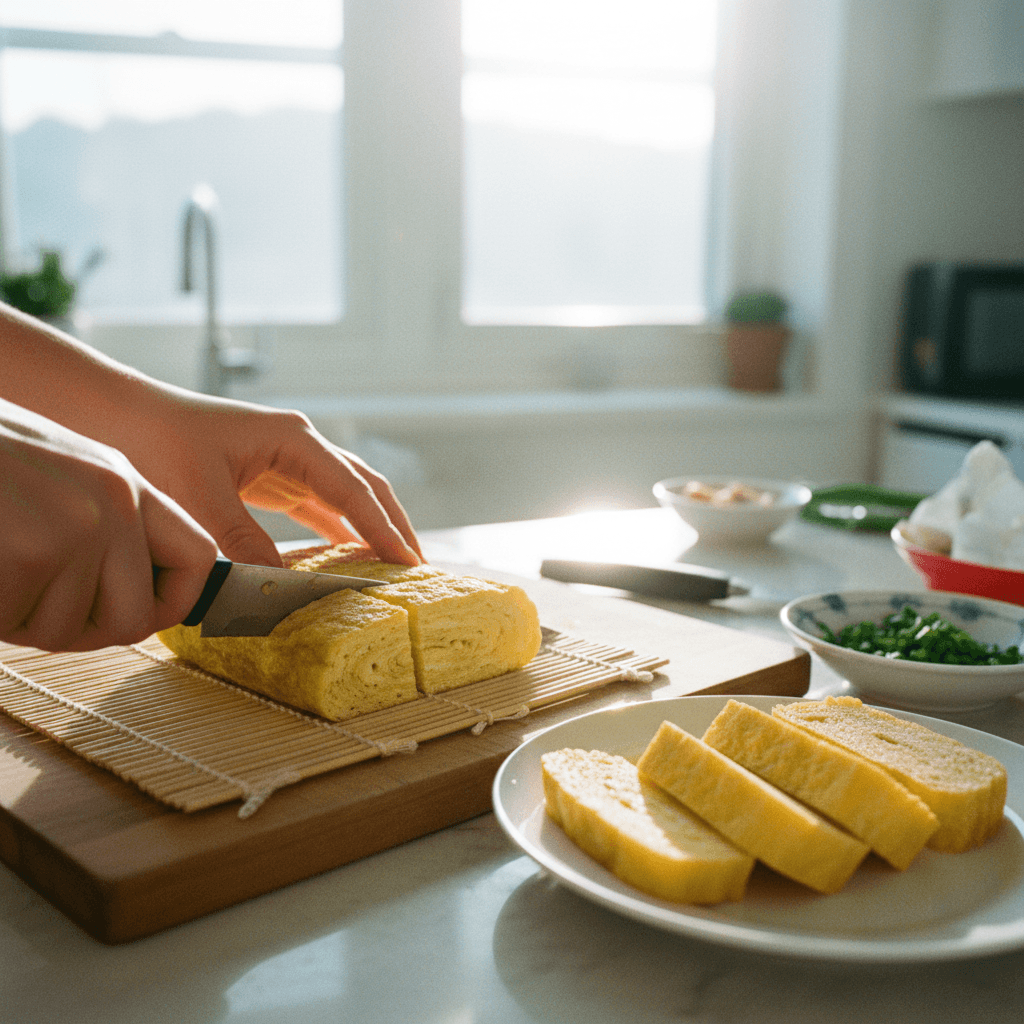
Kitchen Tools
Nutrition Facts (per serving)
Japanese Tamagoyaki Omelet Rolls
- 6 large eggs
- 1/4 cup dashi stock, or water
- 1 teaspoon soy sauce
- 1 tablespoon mirin
- 1 teaspoon granulated sugar
- 1/4 teaspoon salt
- 1 tablespoon vegetable oil, or as needed
Instructions
- 1
In a medium bowl, crack the eggs. Gently whisk them with chopsticks or a fork until the yolks and whites are just combined, being careful not to incorporate too much air. You want a smooth, uniform mixture.
⏱️ 2 min - 2
In a separate small bowl, combine the dashi stock (or water), soy sauce, mirin, granulated sugar, and salt. Whisk until the sugar and salt are fully dissolved.
⏱️ 2 min - 3
Pour the dashi mixture into the beaten eggs and whisk gently until well combined. Strain the egg mixture through a fine-mesh sieve into another bowl to remove any chalazae (white strings) and ensure a smooth omelet. This step is crucial for a silky texture.
⏱️ 3 min - 4
Heat a rectangular tamagoyaki pan (or a small non-stick frying pan, about 8-inch) over medium-low heat. Lightly coat the pan with a thin layer of vegetable oil using a paper towel. Ensure the pan is evenly oiled.
⏱️ 2 min - 5
Pour about 1/4 of the egg mixture into the hot pan, tilting the pan to spread it evenly into a thin layer. Cook for about 1-2 minutes, or until the edges are set and the top is mostly set but still slightly wet.
⏱️ 2 min - 6
Using chopsticks or a spatula, gently roll the cooked egg layer from one end of the pan to the other. Push the rolled omelet to one side of the pan.
⏱️ 1 min - 7
Lightly oil the empty part of the pan again. Pour another 1/4 of the egg mixture into the pan, lifting the rolled omelet slightly to allow the new egg mixture to flow underneath it. Cook until mostly set.
⏱️ 2 min - 8
Roll the cooked egg from the side with the existing omelet over the new layer, continuing to form a thicker roll. Repeat steps 6 and 7 with the remaining egg mixture, adding a new layer and rolling it into the growing omelet.
⏱️ 3 min - 9
Once all the egg mixture is used and the tamagoyaki is a thick roll, remove it from the pan and place it on a bamboo sushi mat (makisu) or a cutting board. Shape it gently into a neat rectangle using the mat or by pressing with a spatula.
⏱️ 1 min - 10
Let the tamagoyaki cool for a few minutes before slicing it into 1-inch thick pieces. Serve warm or at room temperature.
⏱️ 2 min