Tavern Style Pizza Dough
Tavern Style Pizza Dough
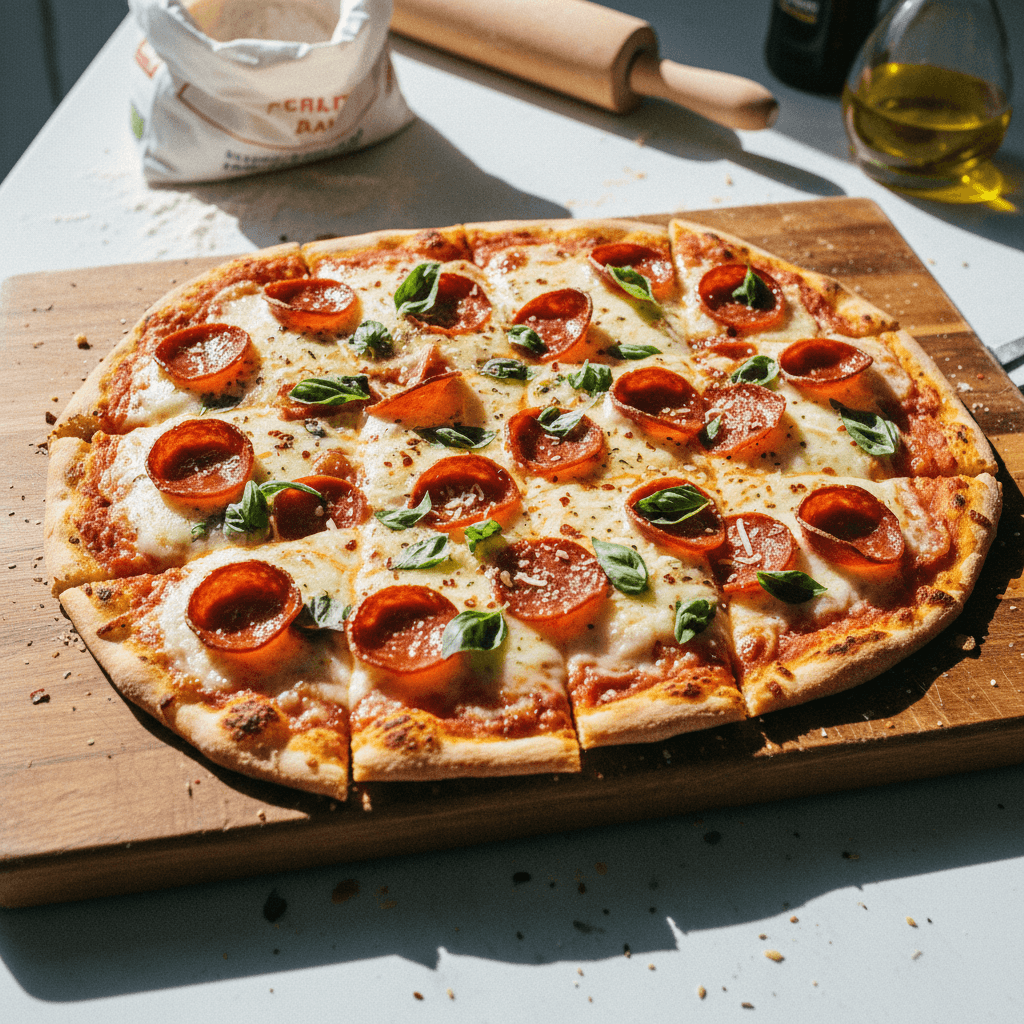
Ingredients
For the Dough
- 4 1/3 cups bread flour
- 2 tablespoons cornmeal
- 1 teaspoon instant yeast
- 2 teaspoons salt
- 1 1/2 teaspoons granulated sugar
- 1 1/4 cups water, warmed to 90°F
- 3 1/4 tablespoons olive oil
For Preparation and Storage
- 2 tablespoons olive oil, for greasing
- 1/4 cup all-purpose flour, for dusting
- 3 parchment paper, sheets
Instructions
- 1
In a large mixing bowl, combine the bread flour, cornmeal, instant yeast, salt, and granulated sugar. Whisk together until well combined.
⏱️ 2 min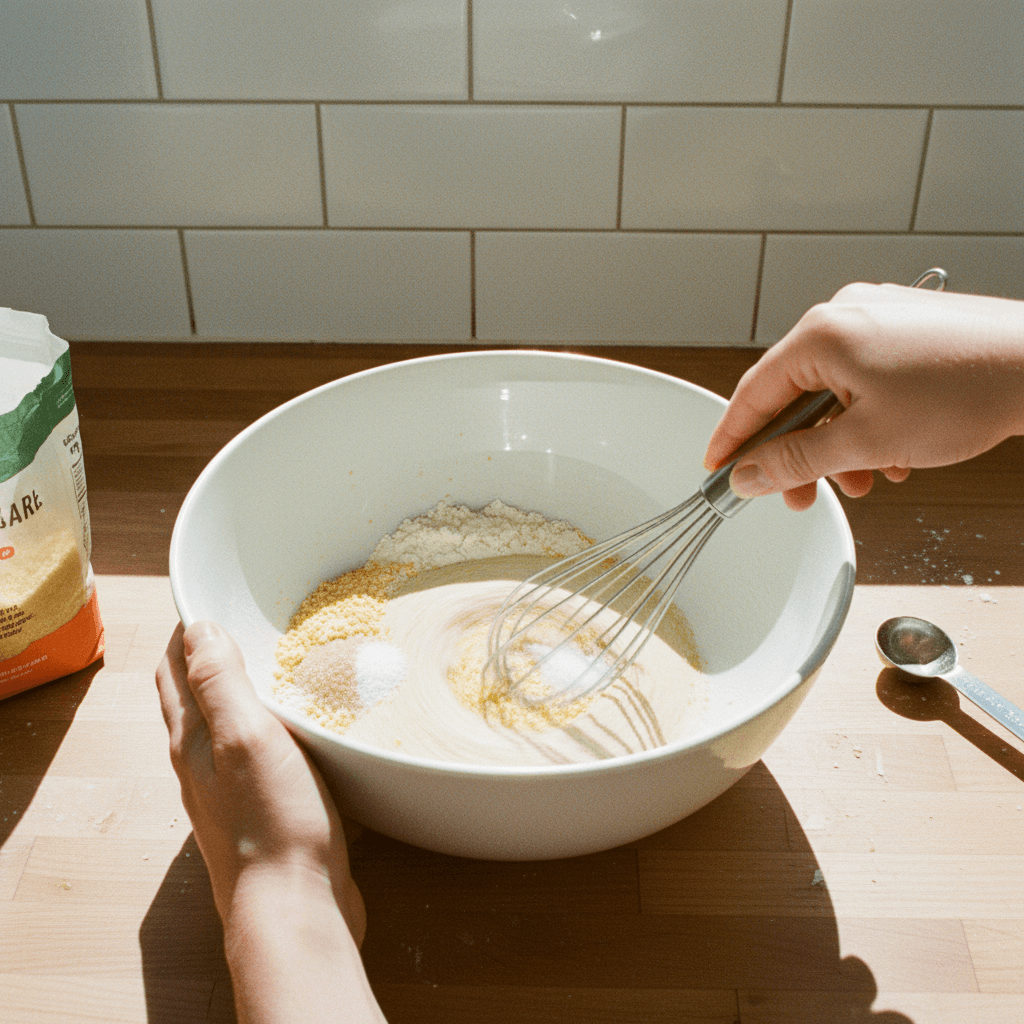
- 2
Pour the 90°F water and 3 1/4 tablespoons of olive oil into the dry ingredients. Mix with a spatula or your hands until a shaggy dough forms and most of the flour is incorporated.
⏱️ 3 min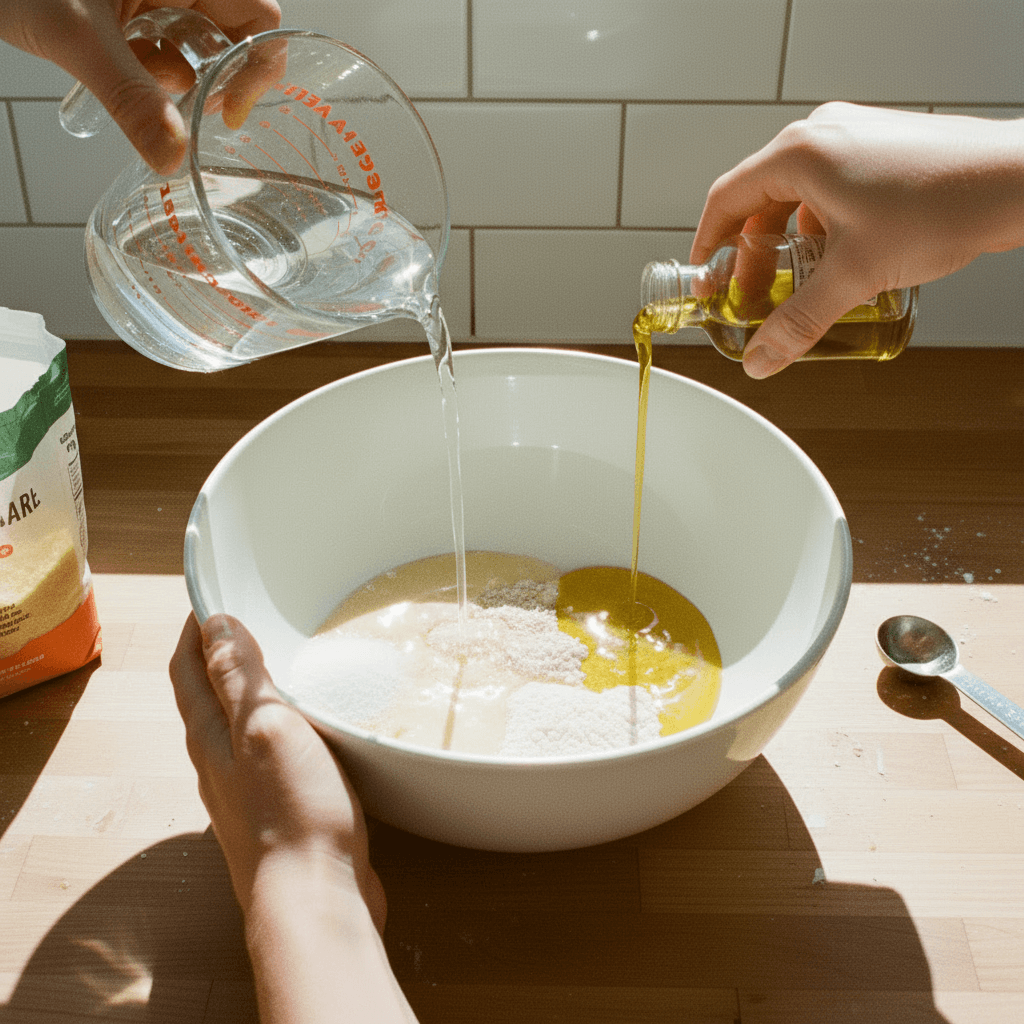
- 3
Transfer the dough to a clean, lightly floured countertop. Knead lightly for about 5 minutes until all the flour and water are fully incorporated into a cohesive, slightly sticky dough. It doesn't need to be perfectly smooth at this stage.
⏱️ 5 min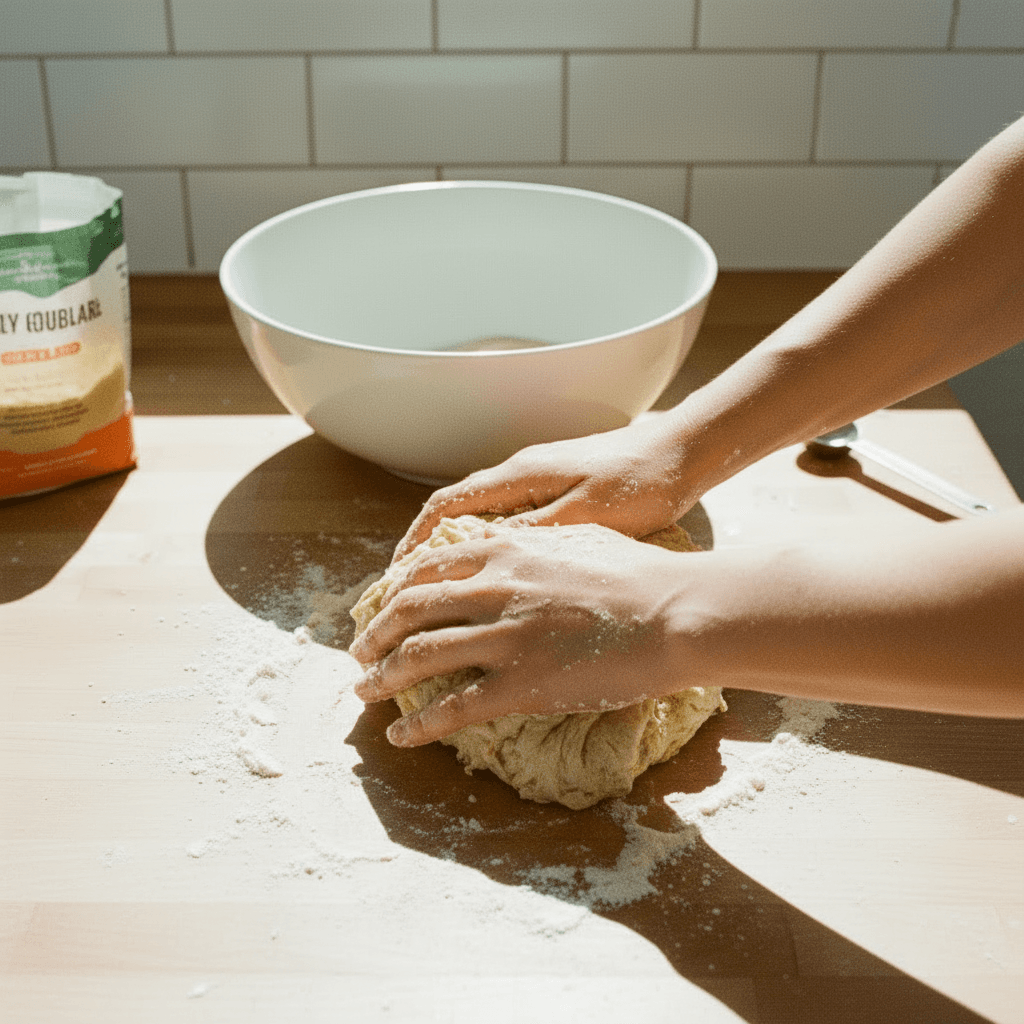
- 4
Place the dough back into the mixing bowl, cover it with a clean kitchen towel or plastic wrap, and let it rest at room temperature for 30 minutes.
⏱️ 30 min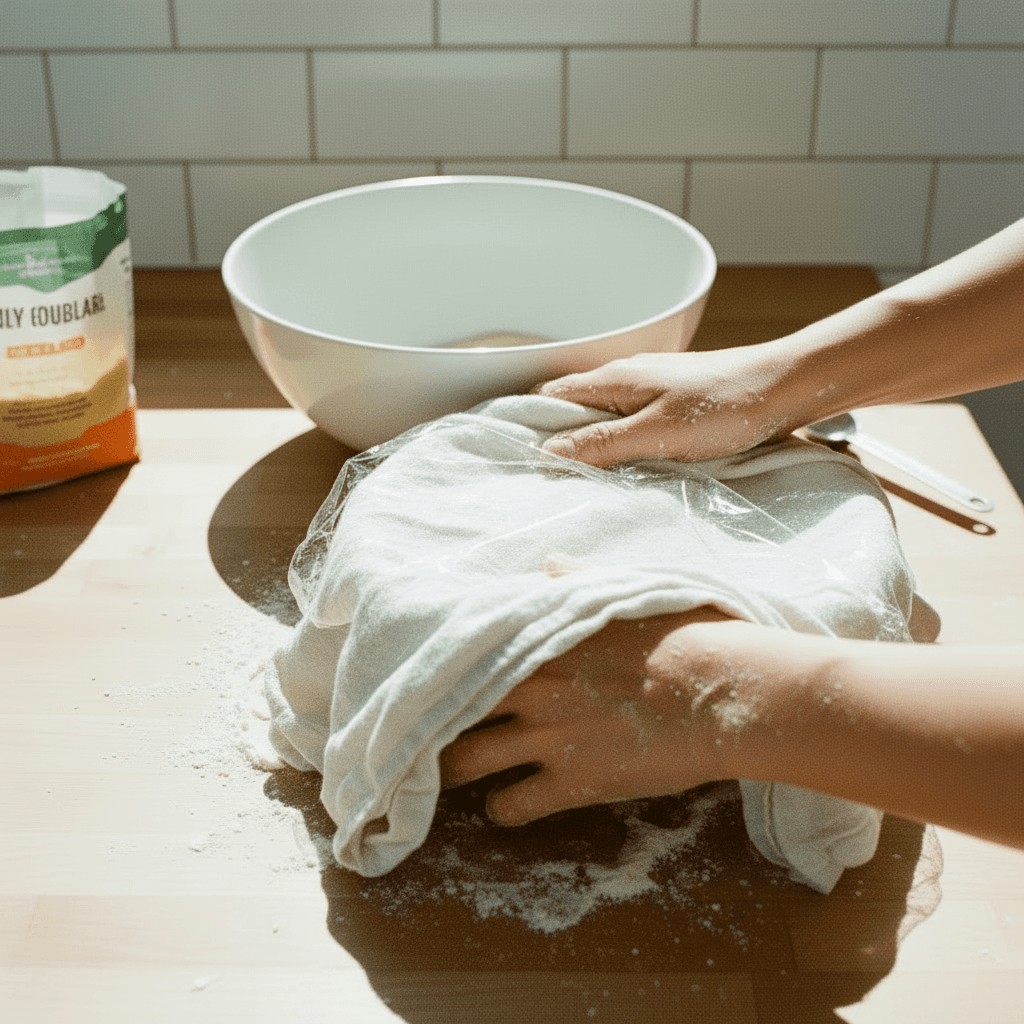
- 5
After the rest, transfer the dough back to the lightly floured countertop and knead for another 2 minutes until it becomes smoother and more elastic.
⏱️ 2 min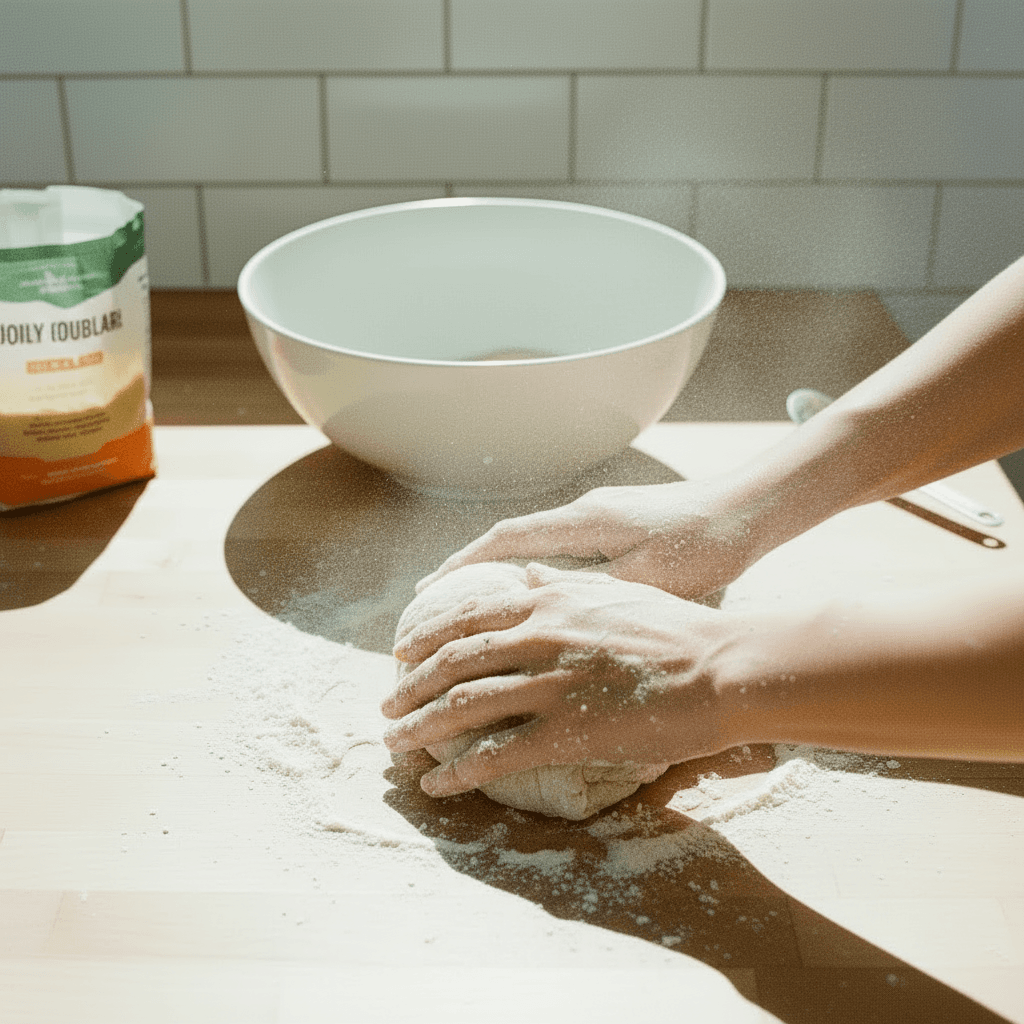
- 6
Lightly grease three airtight containers with olive oil. Divide the dough into three equal portions. Shape each portion into a tight ball by pulling the edges underneath and pinching the seam to create surface tension.
⏱️ 10 min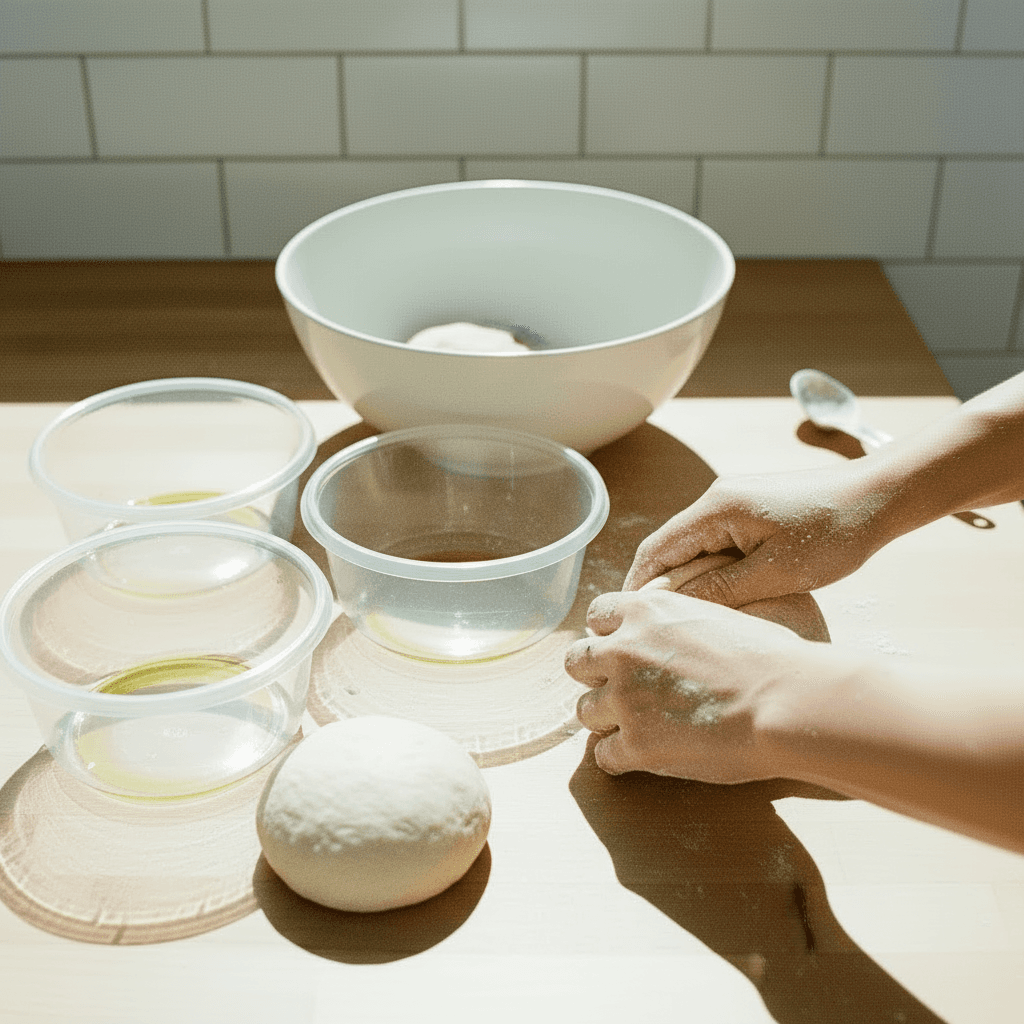
- 7
Place each dough ball into a greased container, cover tightly, and refrigerate for 1 to 2 days for a cold fermentation. This 'curing process' develops an amazing texture and flavor.
⏱️ 2880 min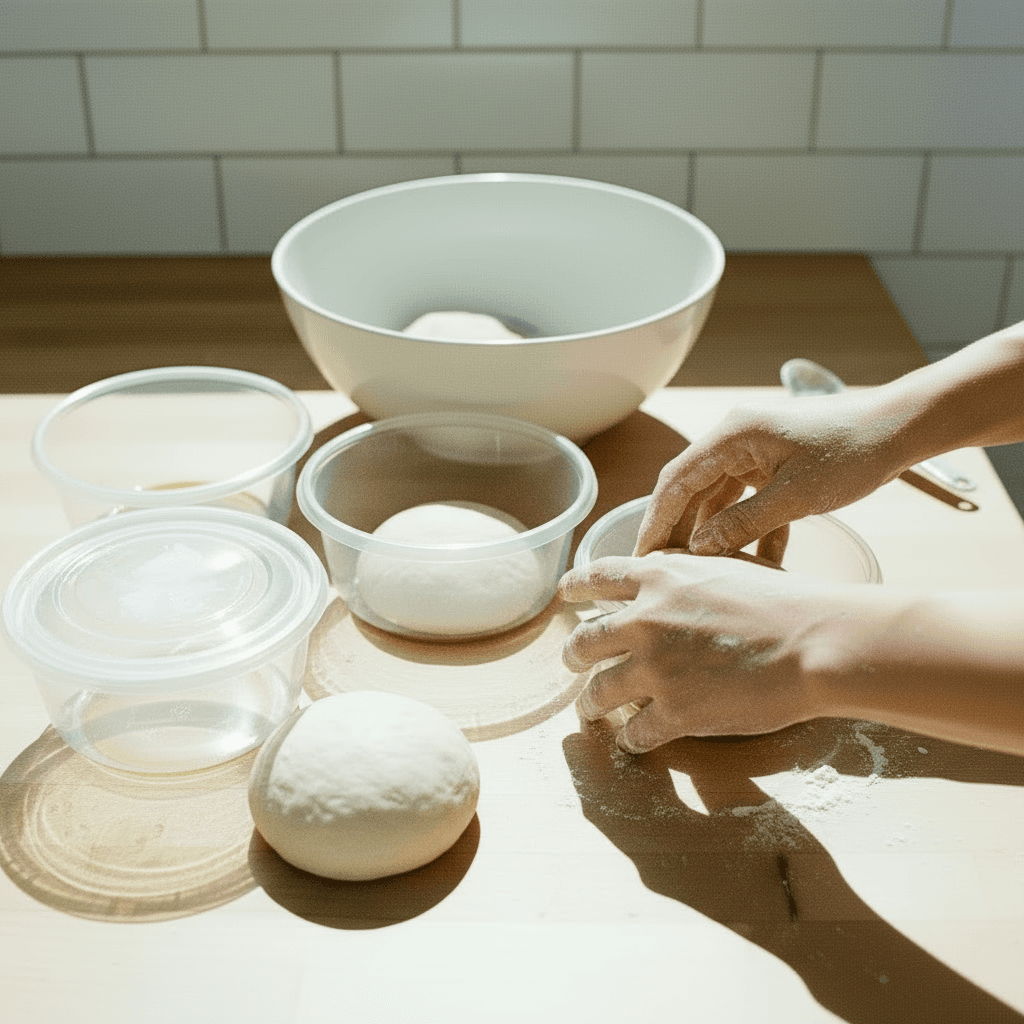
- 8
The day you plan to make pizza, remove the dough balls from the refrigerator and let them sit on the counter for at least 1 hour to come to room temperature.
⏱️ 60 min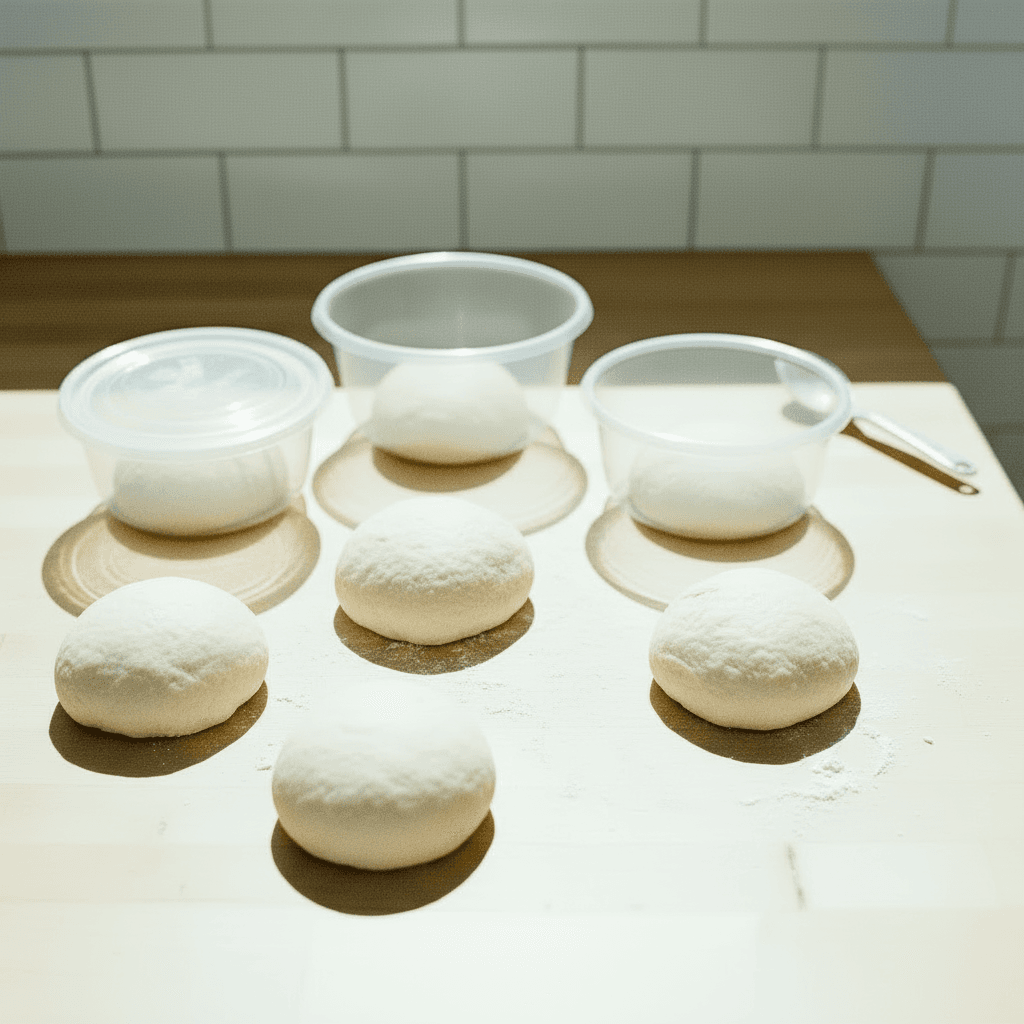
- 9
Lightly flour your hands and a clean work surface. Take one dough ball and gently press it out completely to the edges to form a rough circle. Then, use a rolling pin to further flatten the dough into a very thin, circular shape (14-16 inches in diameter), adding flour as needed to prevent sticking. Repeat for remaining dough balls.
⏱️ 45 min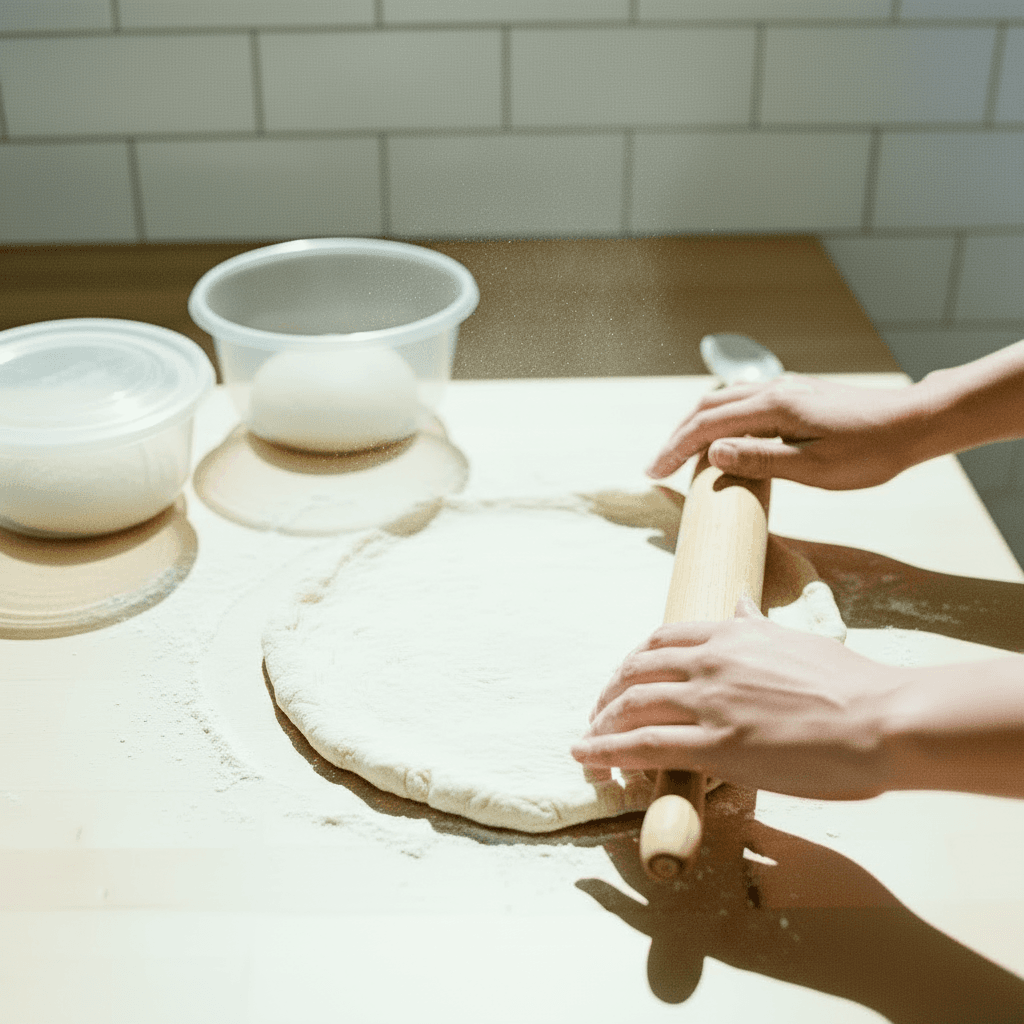
- 10
Using a fork or a pizza docking tool, poke numerous holes across the entire surface of each rolled-out dough. This prevents large bubbles from forming during baking.
⏱️ 5 min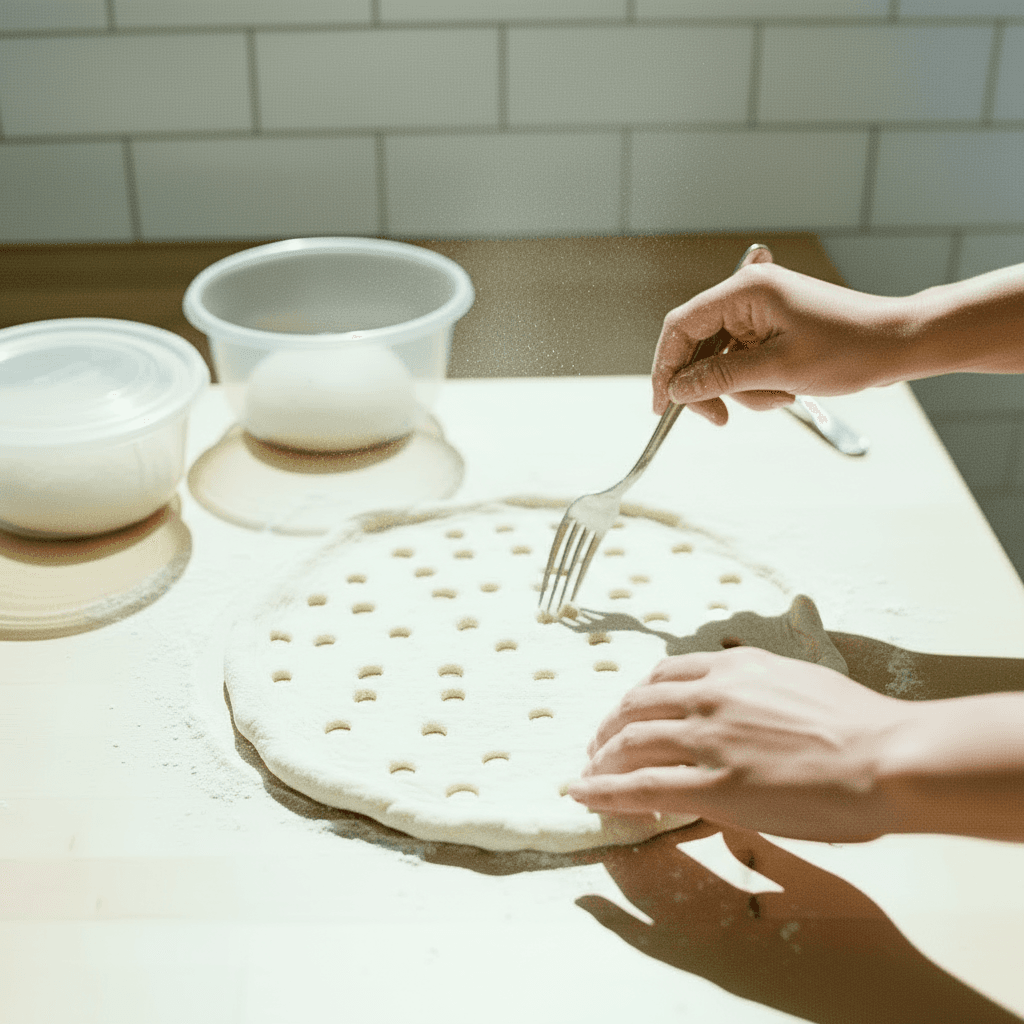
- 11
Place a sheet of parchment paper on a pizza pan or baking sheet. Lay one rolled-out and docked dough on the parchment paper. If preparing multiple doughs for later use, place another sheet of parchment paper on top of the first dough, then another rolled-out dough, and so on. Store these stacked doughs in the fridge overnight or until ready to bake.
⏱️ 5 min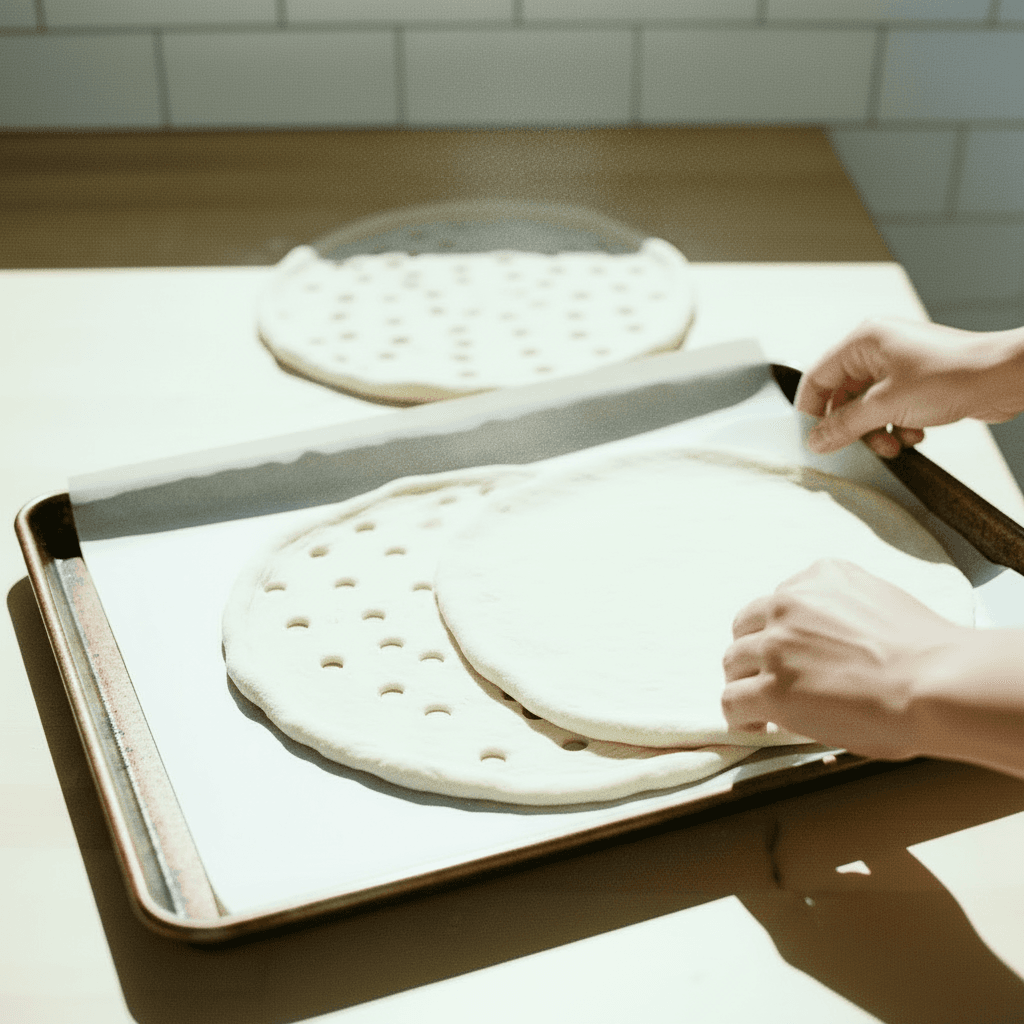
Kitchen Tools
Nutrition Facts (per serving)
Tavern Style Pizza Dough
Ingredients
For the Dough
- 4 1/3 cups bread flour
- 2 tablespoons cornmeal
- 1 teaspoon instant yeast
- 2 teaspoons salt
- 1 1/2 teaspoons granulated sugar
- 1 1/4 cups water, warmed to 90°F
- 3 1/4 tablespoons olive oil
For Preparation and Storage
- 2 tablespoons olive oil, for greasing
- 1/4 cup all-purpose flour, for dusting
- 3 parchment paper, sheets
Instructions
- 1
In a large mixing bowl, combine the bread flour, cornmeal, instant yeast, salt, and granulated sugar. Whisk together until well combined.
⏱️ 2 min - 2
Pour the 90°F water and 3 1/4 tablespoons of olive oil into the dry ingredients. Mix with a spatula or your hands until a shaggy dough forms and most of the flour is incorporated.
⏱️ 3 min - 3
Transfer the dough to a clean, lightly floured countertop. Knead lightly for about 5 minutes until all the flour and water are fully incorporated into a cohesive, slightly sticky dough. It doesn't need to be perfectly smooth at this stage.
⏱️ 5 min - 4
Place the dough back into the mixing bowl, cover it with a clean kitchen towel or plastic wrap, and let it rest at room temperature for 30 minutes.
⏱️ 30 min - 5
After the rest, transfer the dough back to the lightly floured countertop and knead for another 2 minutes until it becomes smoother and more elastic.
⏱️ 2 min - 6
Lightly grease three airtight containers with olive oil. Divide the dough into three equal portions. Shape each portion into a tight ball by pulling the edges underneath and pinching the seam to create surface tension.
⏱️ 10 min - 7
Place each dough ball into a greased container, cover tightly, and refrigerate for 1 to 2 days for a cold fermentation. This 'curing process' develops an amazing texture and flavor.
⏱️ 2880 min - 8
The day you plan to make pizza, remove the dough balls from the refrigerator and let them sit on the counter for at least 1 hour to come to room temperature.
⏱️ 60 min - 9
Lightly flour your hands and a clean work surface. Take one dough ball and gently press it out completely to the edges to form a rough circle. Then, use a rolling pin to further flatten the dough into a very thin, circular shape (14-16 inches in diameter), adding flour as needed to prevent sticking. Repeat for remaining dough balls.
⏱️ 45 min - 10
Using a fork or a pizza docking tool, poke numerous holes across the entire surface of each rolled-out dough. This prevents large bubbles from forming during baking.
⏱️ 5 min - 11
Place a sheet of parchment paper on a pizza pan or baking sheet. Lay one rolled-out and docked dough on the parchment paper. If preparing multiple doughs for later use, place another sheet of parchment paper on top of the first dough, then another rolled-out dough, and so on. Store these stacked doughs in the fridge overnight or until ready to bake.
⏱️ 5 min