Vanilla Bean Biscoff Cheesecake
Vanilla Bean Biscoff Cheesecake

Ingredients
For the Crust
- 250 g Biscoff biscuits
- 100 g unsalted butter, melted
For the Filling
- 500 g full-fat cream cheese, room temperature
- 100 g powdered sugar
- 2 teaspoons vanilla bean paste
- 1 tablespoon lemon juice
- 300 ml heavy cream, cold
- 100 g Biscoff spread, melted
For the Topping
- 100 g Biscoff spread, melted
- 2-3 Biscoff biscuits, crushed
Instructions
- 1
Crush 250 g of Biscoff biscuits until they form fine crumbs. This can be achieved using a food processor.
⏱️ 5 min
- 2
Add 100 g of melted unsalted butter to the crushed biscuits. Mix the butter and biscuit crumbs together until they are well combined and resemble wet sand.
⏱️ 3 min
- 3
Press the mixture firmly and evenly into the bottom of a lined 20 cm springform pan. Use the back of a spoon or the bottom of a glass to compact the crust.
⏱️ 5 min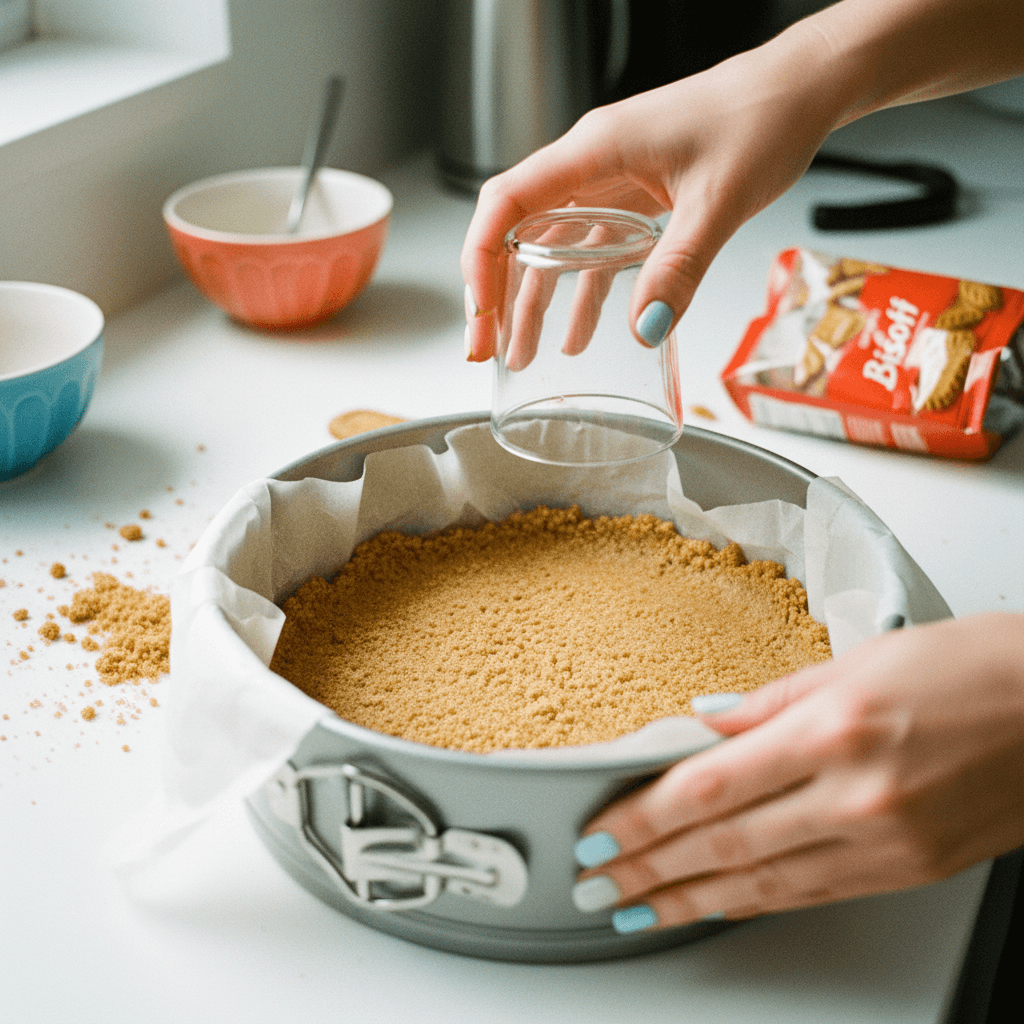
- 4
Chill the prepared crust in the refrigerator for 30 minutes to allow it to set.
⏱️ 30 min
- 5
In a large mixing bowl, combine 500 g of full-fat cream cheese (at room temperature), 100 g of powdered sugar, 2 teaspoons of vanilla bean paste, and 1 tablespoon of lemon juice. Mix these ingredients thoroughly using an electric mixer until the mixture is smooth and lump-free.
⏱️ 7 min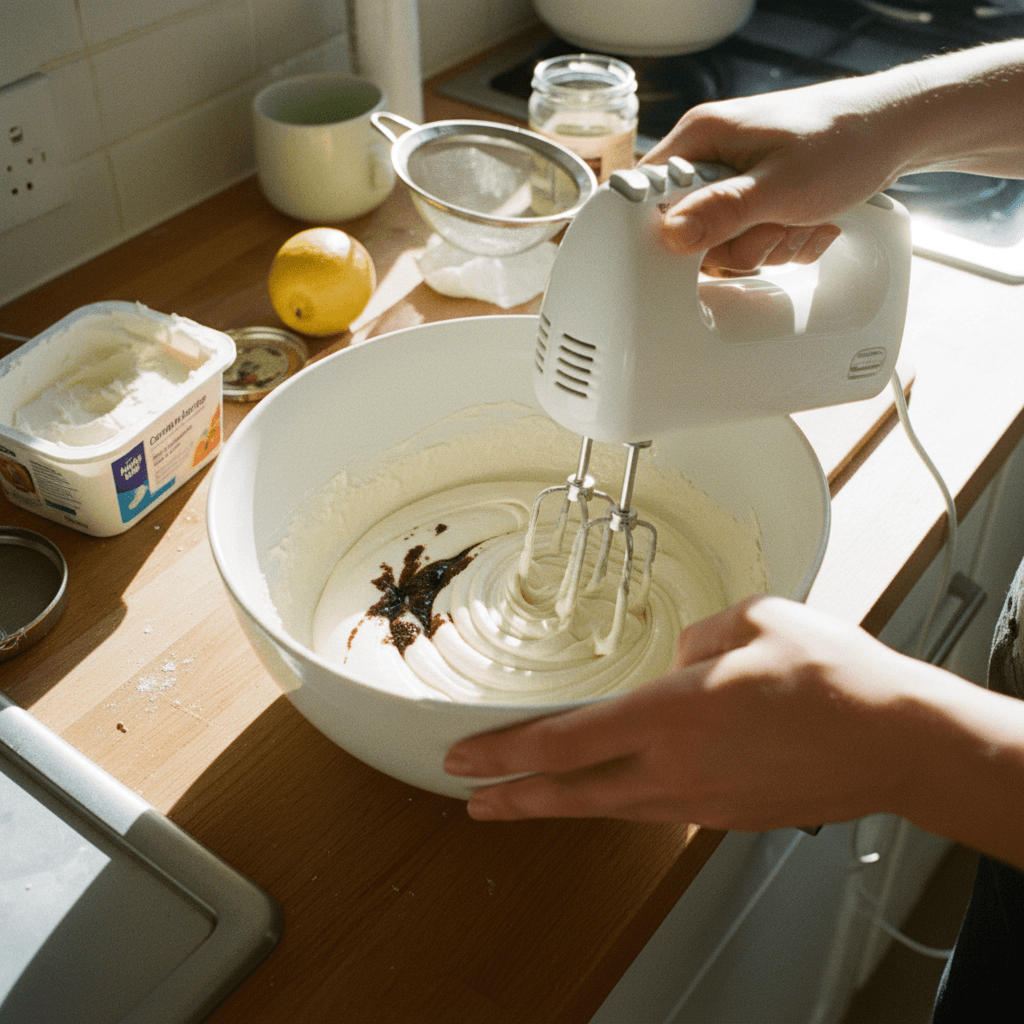
- 6
In a separate clean bowl, whip 300 ml of cold heavy cream using an electric mixer until stiff peaks form.
⏱️ 5 min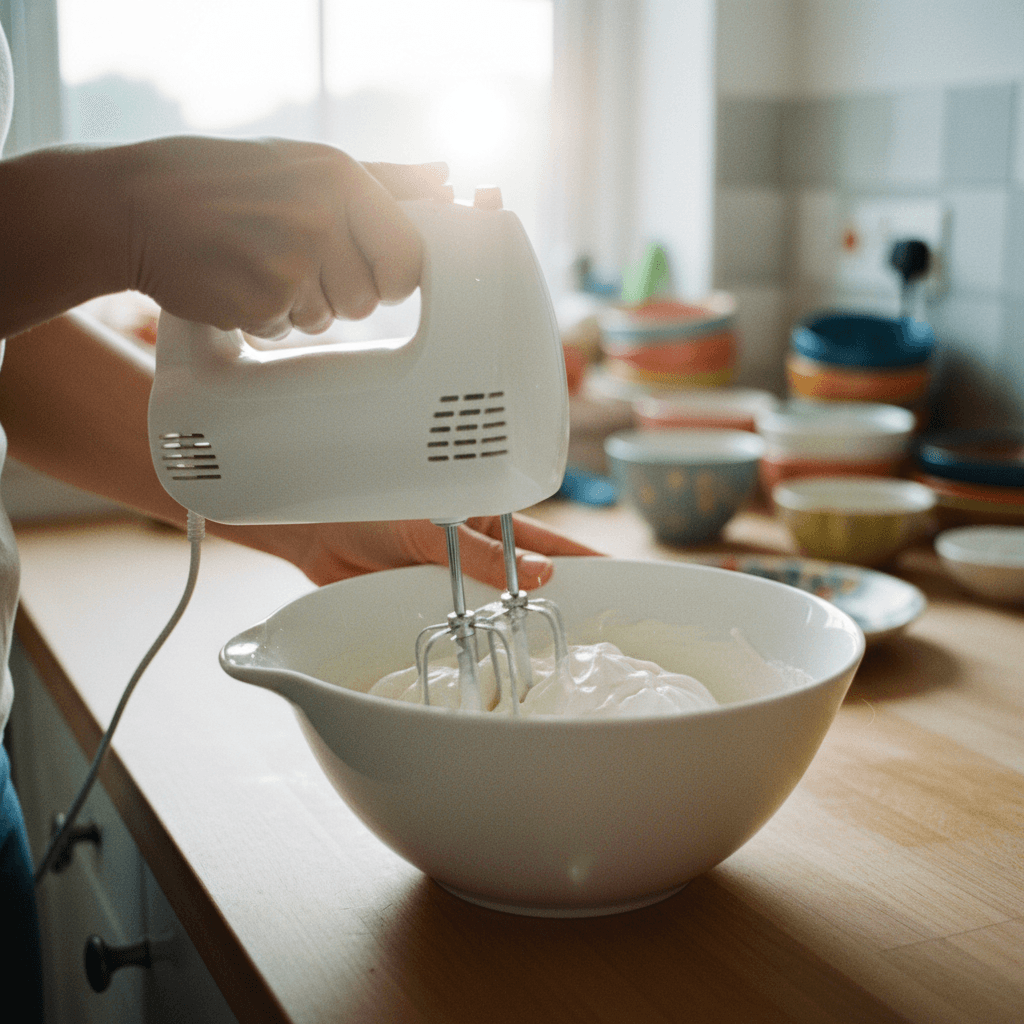
- 7
Gently fold the whipped cream into the cream cheese mixture until just combined, being careful not to deflate the cream.
⏱️ 3 min
- 8
Add 100 g of melted Biscoff spread to the cheesecake mixture. Fold gently until the Biscoff spread is just incorporated and streaks are visible, giving a marbled effect.
⏱️ 2 min
- 9
Pour the prepared cheesecake filling evenly over the chilled biscuit crust in the springform pan. Smooth the top of the cheesecake with a spatula or the back of a spoon.
⏱️ 5 min
- 10
Chill the cheesecake in the refrigerator for at least 6 hours, or preferably overnight, to allow it to set completely.
⏱️ 360 min
- 11
Once the cheesecake is thoroughly chilled and firm, melt an additional 100 g of Biscoff spread until it is smooth and pourable.
⏱️ 2 min
- 12
Pour the melted Biscoff spread over the top of the cheesecake and spread it evenly to create a smooth layer.
⏱️ 1 min - 13
Crush 2-3 Biscoff biscuits and sprinkle them over the Biscoff topping for decoration.
⏱️ 2 min
Kitchen Tools
Vanilla Bean Biscoff Cheesecake
For the Crust
- 250 g Biscoff biscuits
- 100 g unsalted butter, melted
For the Filling
- 500 g full-fat cream cheese, room temperature
- 100 g powdered sugar
- 2 teaspoons vanilla bean paste
- 1 tablespoon lemon juice
- 300 ml heavy cream, cold
- 100 g Biscoff spread, melted
For the Topping
- 100 g Biscoff spread, melted
- 2-3 Biscoff biscuits, crushed
Instructions
- 1
Crush 250 g of Biscoff biscuits until they form fine crumbs. This can be achieved using a food processor.
⏱️ 5 min - 2
Add 100 g of melted unsalted butter to the crushed biscuits. Mix the butter and biscuit crumbs together until they are well combined and resemble wet sand.
⏱️ 3 min - 3
Press the mixture firmly and evenly into the bottom of a lined 20 cm springform pan. Use the back of a spoon or the bottom of a glass to compact the crust.
⏱️ 5 min - 4
Chill the prepared crust in the refrigerator for 30 minutes to allow it to set.
⏱️ 30 min - 5
In a large mixing bowl, combine 500 g of full-fat cream cheese (at room temperature), 100 g of powdered sugar, 2 teaspoons of vanilla bean paste, and 1 tablespoon of lemon juice. Mix these ingredients thoroughly using an electric mixer until the mixture is smooth and lump-free.
⏱️ 7 min - 6
In a separate clean bowl, whip 300 ml of cold heavy cream using an electric mixer until stiff peaks form.
⏱️ 5 min - 7
Gently fold the whipped cream into the cream cheese mixture until just combined, being careful not to deflate the cream.
⏱️ 3 min - 8
Add 100 g of melted Biscoff spread to the cheesecake mixture. Fold gently until the Biscoff spread is just incorporated and streaks are visible, giving a marbled effect.
⏱️ 2 min - 9
Pour the prepared cheesecake filling evenly over the chilled biscuit crust in the springform pan. Smooth the top of the cheesecake with a spatula or the back of a spoon.
⏱️ 5 min - 10
Chill the cheesecake in the refrigerator for at least 6 hours, or preferably overnight, to allow it to set completely.
⏱️ 360 min - 11
Once the cheesecake is thoroughly chilled and firm, melt an additional 100 g of Biscoff spread until it is smooth and pourable.
⏱️ 2 min - 12
Pour the melted Biscoff spread over the top of the cheesecake and spread it evenly to create a smooth layer.
⏱️ 1 min - 13
Crush 2-3 Biscoff biscuits and sprinkle them over the Biscoff topping for decoration.
⏱️ 2 min