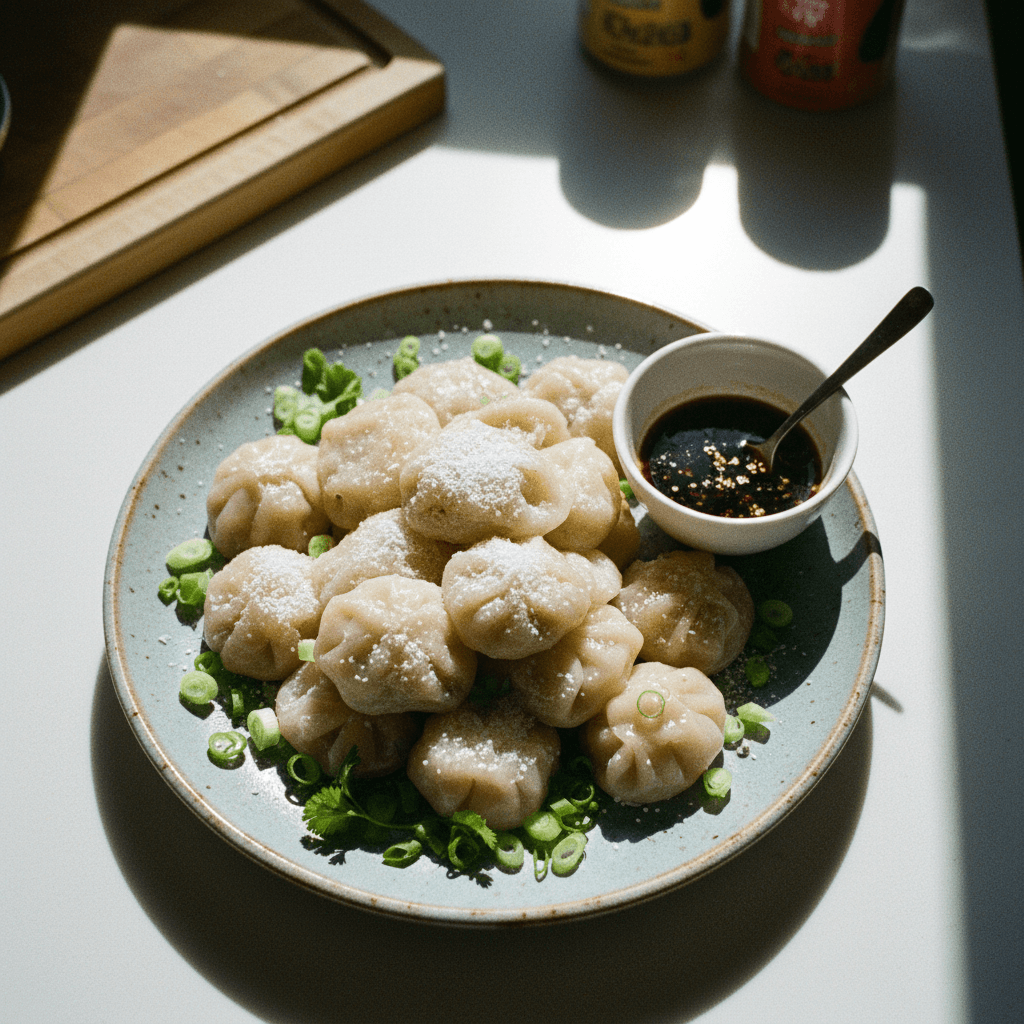
Gluten-Free Dumpling Pastry
Gluten-Free Dumpling Pastry
Ingredients
- 115 g fine rice flour
- 65 g tapioca starch
- 174 g boiling hot water
- 3 tablespoons glutinous rice flour, for kneading and dusting
- 2 teaspoons oil
Instructions
- 1
In a bowl, combine the 115g fine rice flour and 65g tapioca starch.
⏱️ 1 min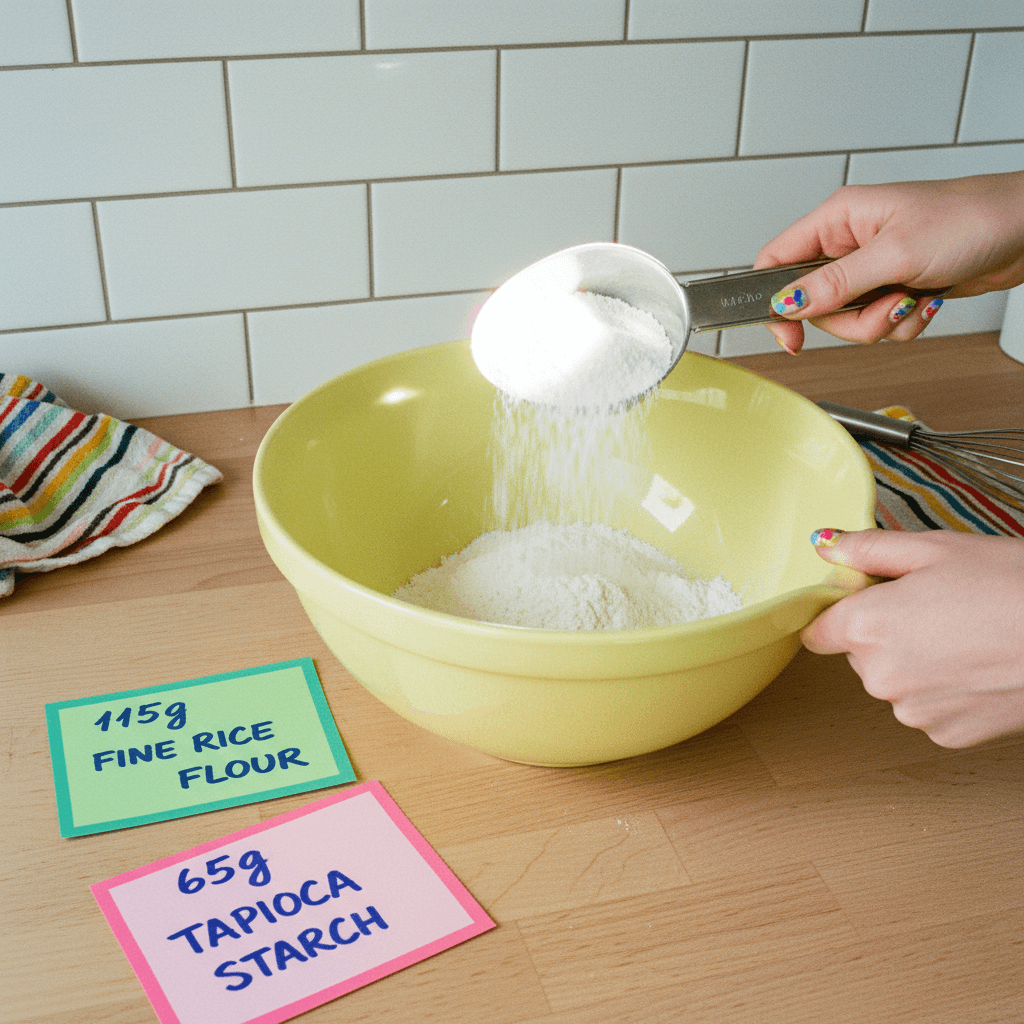
- 2
Add 174g boiling hot water to the flour mixture. Immediately and quickly mix the ingredients together with a spoon. This step is crucial to activate all the dry flour; if the water cools down too much, the starches will not activate, resulting in a dry and crumbly texture.
⏱️ 2 min
- 3
Once the mixture has come together into a rough mass, use your hands to continue mixing and bring the dough together.
⏱️ 3 min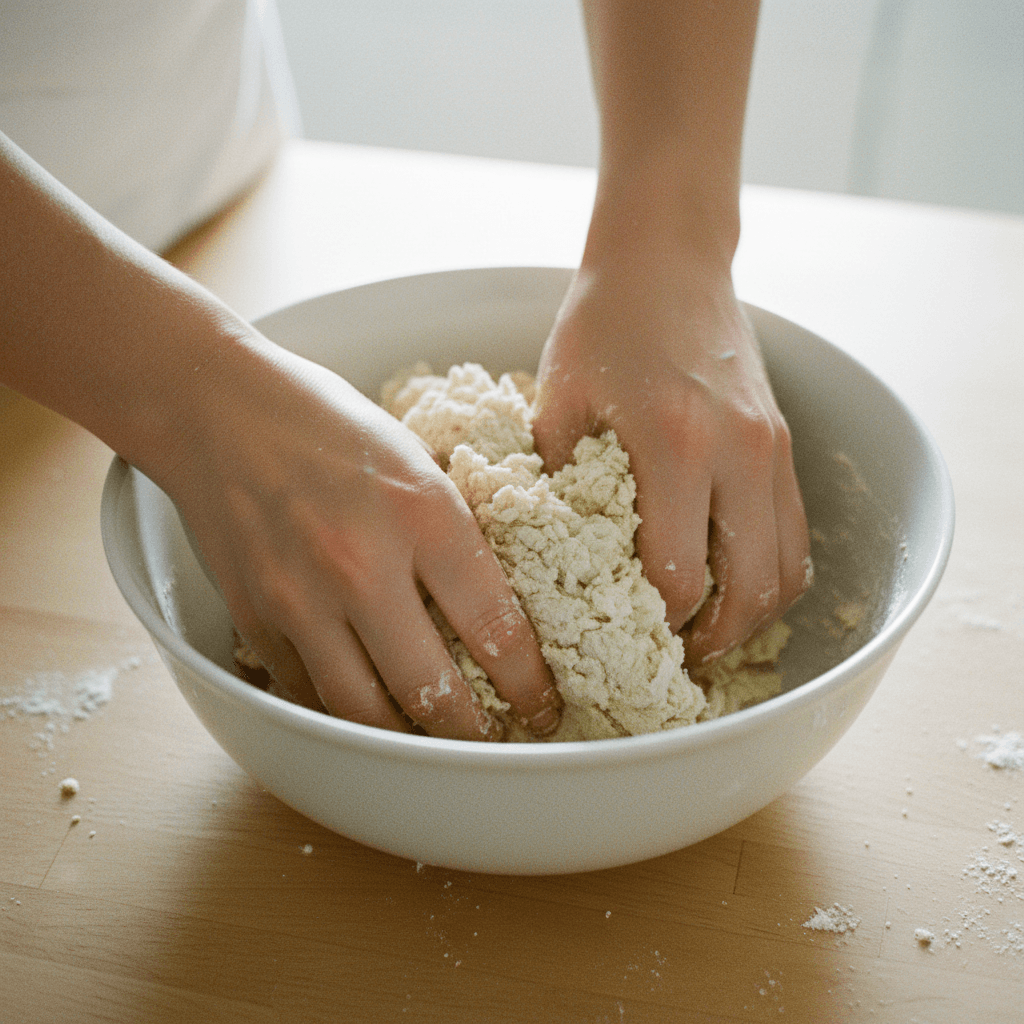
- 4
At this point, add 3 tablespoons of glutinous rice flour to the dough. Knead it in. The glutinous rice flour will change the texture, making it more sticky, stretchy, and easier to handle, similar to a regular wheat dough.
⏱️ 5 min
- 5
Incorporate 2 teaspoons of oil into the dough and continue kneading until it forms a smooth ball. The oil helps prevent the dough from drying out.
⏱️ 5 min
- 6
As soon as the dough is smooth, cover it with cling film. It is important to keep the pastry covered at all times to prevent it from drying out, especially when working with individual pieces.
⏱️ 1 min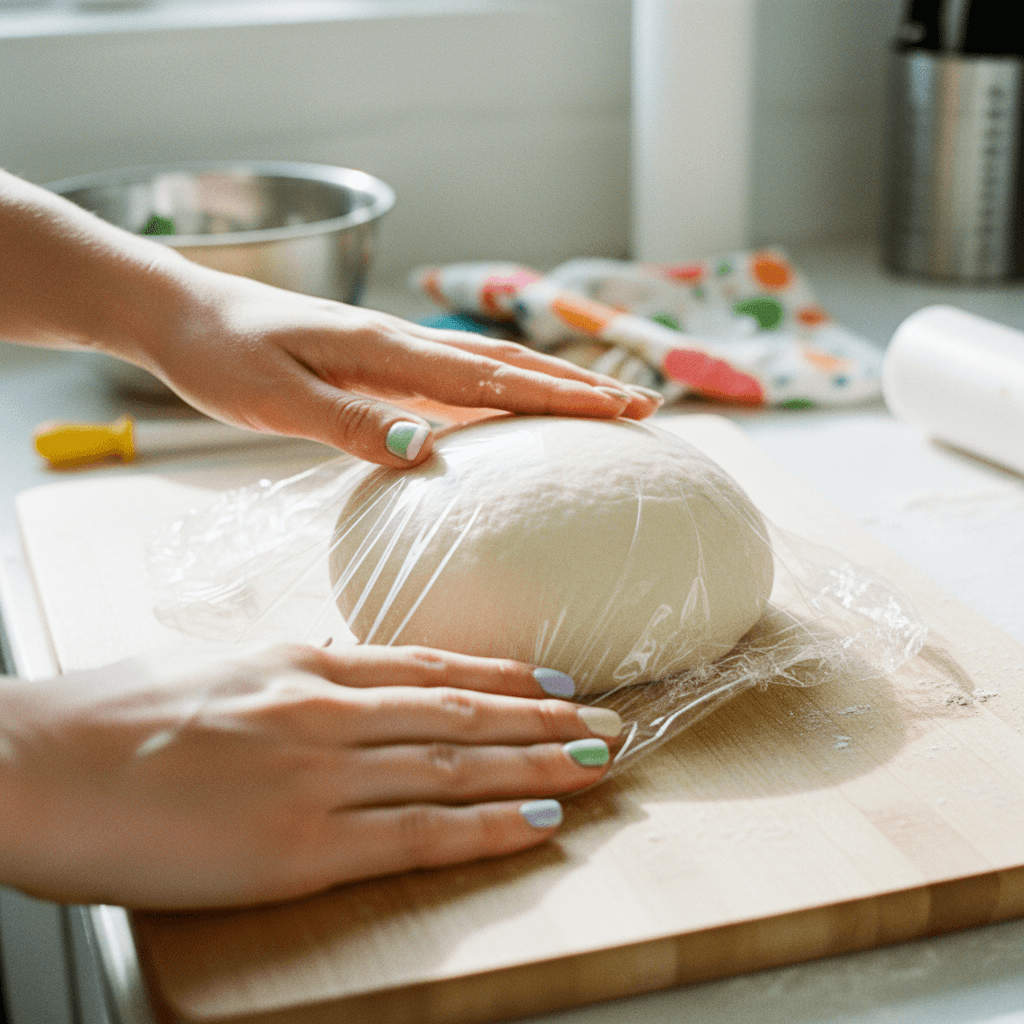
- 7
Take one small piece of the dough at a time, keeping the rest covered. Knead this small piece a bit between your palms to ensure the edges are smooth, then flatten it slightly.
⏱️ 5 min
- 8
Dust the flattened dough piece on both sides with some of the remaining glutinous rice flour, then dust off any excess. Place the dusted dough on a clean work surface. Using a small rolling pin, very gently roll out the dough. Focus on rolling the part just below the center of the dough. The resulting pastry should be slightly thicker than a regular wheat pastry.
⏱️ 5 min
- 9
Place approximately a teaspoon of your desired filling onto the center of the rolled-out wrapper. Fold the pastry over the filling, pinch the top edges together, and then start pleating towards the center to seal the dumpling.
⏱️ 5 min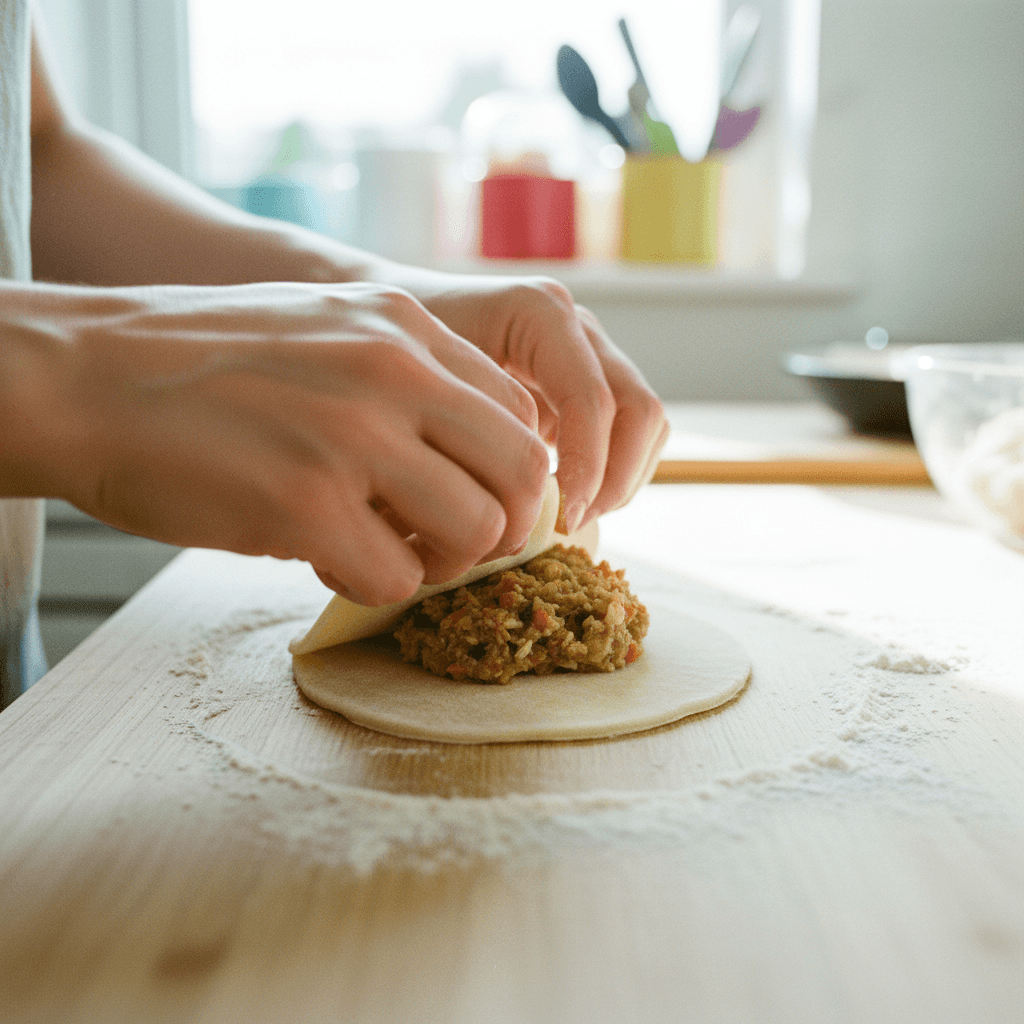
- 10
Steam the prepared dumplings for 10–12 minutes.
⏱️ 12 min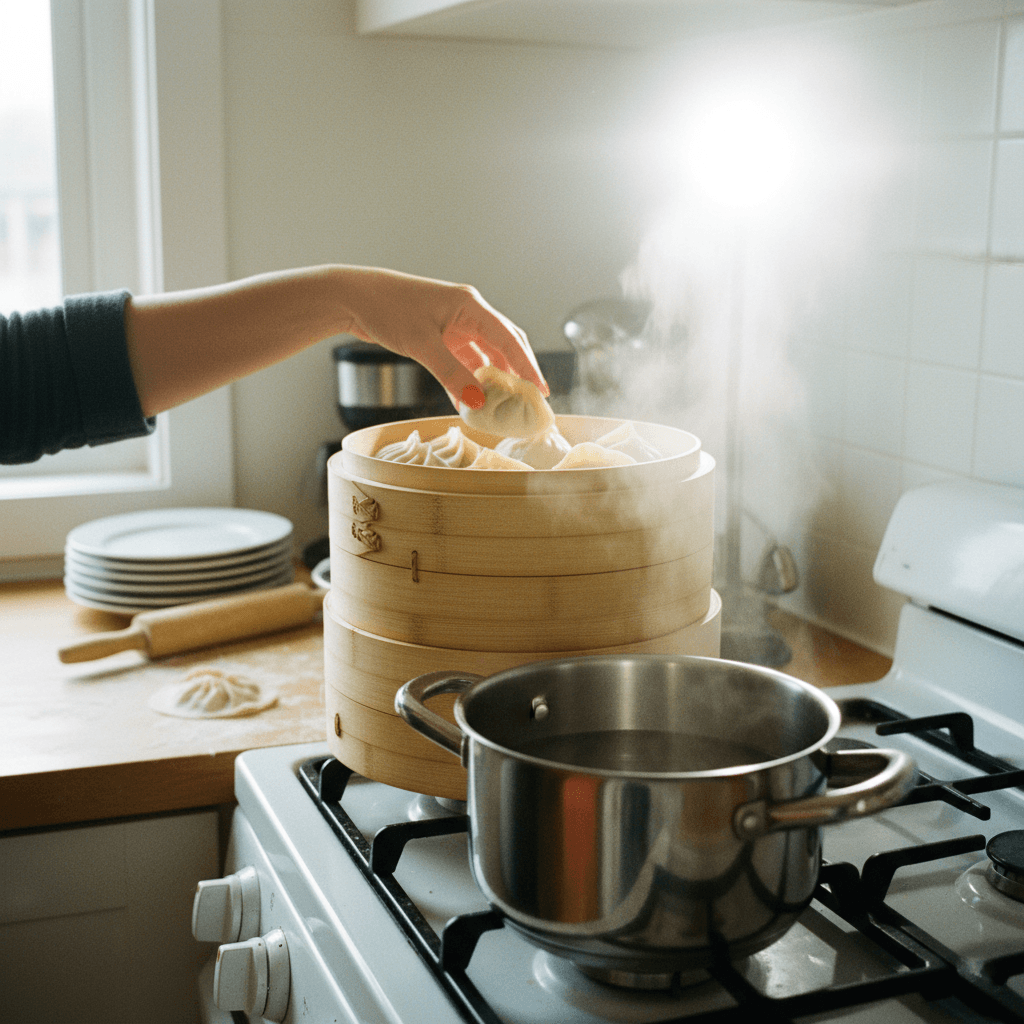
Kitchen Tools
Nutrition Facts (per serving)
Gluten-Free Dumpling Pastry
- 115 g fine rice flour
- 65 g tapioca starch
- 174 g boiling hot water
- 3 tablespoons glutinous rice flour, for kneading and dusting
- 2 teaspoons oil
Instructions
- 1
In a bowl, combine the 115g fine rice flour and 65g tapioca starch.
⏱️ 1 min - 2
Add 174g boiling hot water to the flour mixture. Immediately and quickly mix the ingredients together with a spoon. This step is crucial to activate all the dry flour; if the water cools down too much, the starches will not activate, resulting in a dry and crumbly texture.
⏱️ 2 min - 3
Once the mixture has come together into a rough mass, use your hands to continue mixing and bring the dough together.
⏱️ 3 min - 4
At this point, add 3 tablespoons of glutinous rice flour to the dough. Knead it in. The glutinous rice flour will change the texture, making it more sticky, stretchy, and easier to handle, similar to a regular wheat dough.
⏱️ 5 min - 5
Incorporate 2 teaspoons of oil into the dough and continue kneading until it forms a smooth ball. The oil helps prevent the dough from drying out.
⏱️ 5 min - 6
As soon as the dough is smooth, cover it with cling film. It is important to keep the pastry covered at all times to prevent it from drying out, especially when working with individual pieces.
⏱️ 1 min - 7
Take one small piece of the dough at a time, keeping the rest covered. Knead this small piece a bit between your palms to ensure the edges are smooth, then flatten it slightly.
⏱️ 5 min - 8
Dust the flattened dough piece on both sides with some of the remaining glutinous rice flour, then dust off any excess. Place the dusted dough on a clean work surface. Using a small rolling pin, very gently roll out the dough. Focus on rolling the part just below the center of the dough. The resulting pastry should be slightly thicker than a regular wheat pastry.
⏱️ 5 min - 9
Place approximately a teaspoon of your desired filling onto the center of the rolled-out wrapper. Fold the pastry over the filling, pinch the top edges together, and then start pleating towards the center to seal the dumpling.
⏱️ 5 min - 10
Steam the prepared dumplings for 10–12 minutes.
⏱️ 12 min