Same-day Focaccia
Same-day Focaccia

Ingredients
- 500 g white bread flour, (4 cups, spooned and levelled, 12% protein content or higher)
- 390 ml warm water, start with 390ml, add more if needed up to 420ml (1 3/4 cups)
- 15 ml extra virgin olive oil, (1 tablespoon)
- 4 g instant yeast, (1 teaspoon)
- 5 g honey, sugar or agave, (1 teaspoon)
- 10 g fine sea salt, (2 teaspoons)
- 3 tablespoons extra virgin olive oil, to line pan and drizzle, plus more as needed
- as needed flaky sea salt, to finish
- as needed toppings of choice, such as rosemary, olives, peppers, onions, jalapeños, cheese
Instructions
- 1
In a large mixing bowl, whisk together the warm water, 15ml (1 tablespoon) extra virgin olive oil, 5g (1 teaspoon) honey, and 4g (1 teaspoon) instant yeast until combined.
⏱️ 2 min
- 2
Stir in the 500g (4 cups) white bread flour and 10g (2 teaspoons) fine sea salt. Mix thoroughly until all ingredients are well combined and no dry flour remains. The dough should be sticky and shaggy, but come together. Add more water if needed, up to 420ml total, to achieve a sticky consistency.
⏱️ 3 min
- 3
Scrape down the sides of the bowl. Cover the bowl and rest the dough at room temperature for 15 minutes.

- 4
After 15 minutes, perform the first set of stretch and folds. Wet your hand, then grab a section of the dough from the edge of the bowl, stretch it upwards, and fold it over itself towards the center. Rotate the bowl slightly and repeat this process about 8 times around the bowl until the dough starts to tighten up into a ball-like shape.
⏱️ 3 min
- 5
Cover the bowl again and rest the dough at room temperature for another 15 minutes.

- 6
Repeat the stretch and folds once more, following the same technique as before (wetting your hand, stretching, and folding the dough about 8 times around the bowl).
⏱️ 3 min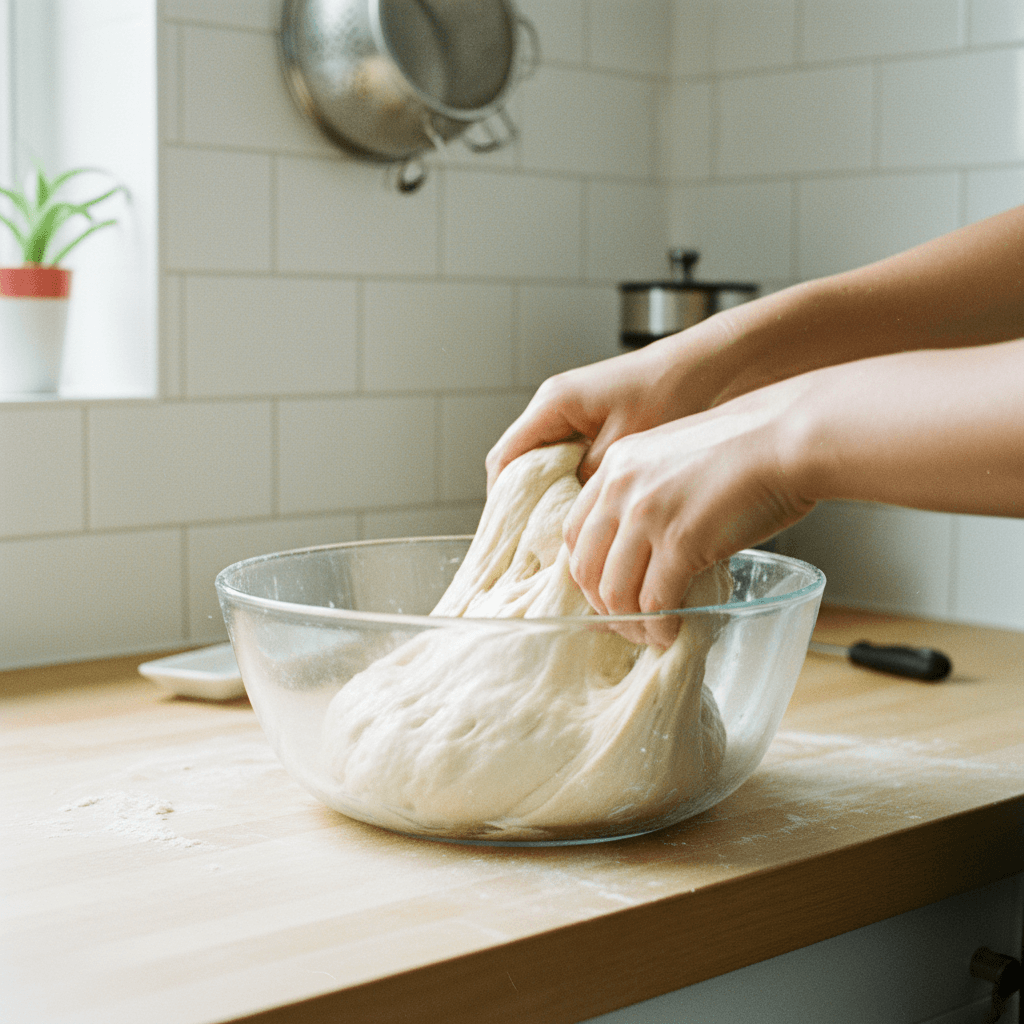
- 7
Cover the bowl and proof the dough at room temperature for 1 to 1 1/2 hours. The dough should increase in volume and become bubbly.

- 8
While the dough is proofing, prepare your baking tray. Line a 9x13 metal baking tray with nonstick parchment paper. A larger tray can be used for a thinner/crispier focaccia.
⏱️ 2 min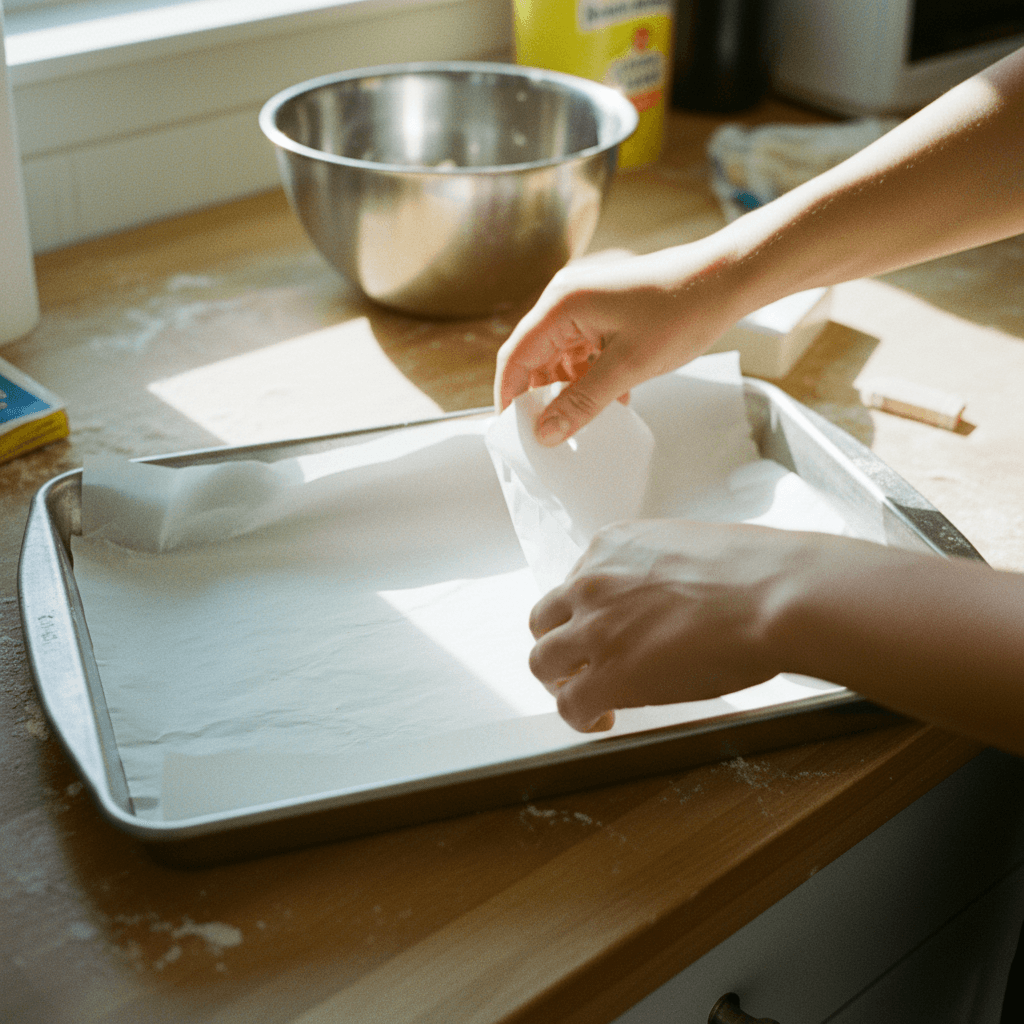
- 9
Coat the parchment paper generously with 3 tablespoons of extra virgin olive oil, ensuring the entire surface is covered.
⏱️ 1 min
- 10
Once the dough has proofed, transfer it to the prepared baking tray. The dough will be very soft and somewhat sticky.
⏱️ 1 min
- 11
Fold the dough as follows: fold one side of the dough towards the center, then the opposite side over it (folding it into thirds). Rotate the dough 90 degrees, then flip it over so the seam is underneath. This helps create tension.
⏱️ 2 min
- 12
Cover the tray with another baking tray or with oiled parchment paper (oiled side down) to prevent sticking. Proof the dough at room temperature for another 1 to 1 1/2 hours.

- 13
During the second proof, preheat your oven to 220°C (430°F). Place the oven rack in the lowest position to help crisp the bottom of the focaccia.
⏱️ 15 min•🌡️ 220 - 14
After the second proof, uncover the dough. Gently spread the dough to the edges of the tray using your fingertips.
⏱️ 1 min
- 15
If using rosemary, scatter it evenly over the dough.
⏱️ 1 min
- 16
Drizzle additional extra virgin olive oil over the surface of the dough.
⏱️ 1 min
- 17
Using oiled fingertips, dimple the dough all over by pressing down firmly, creating indentations.
⏱️ 2 min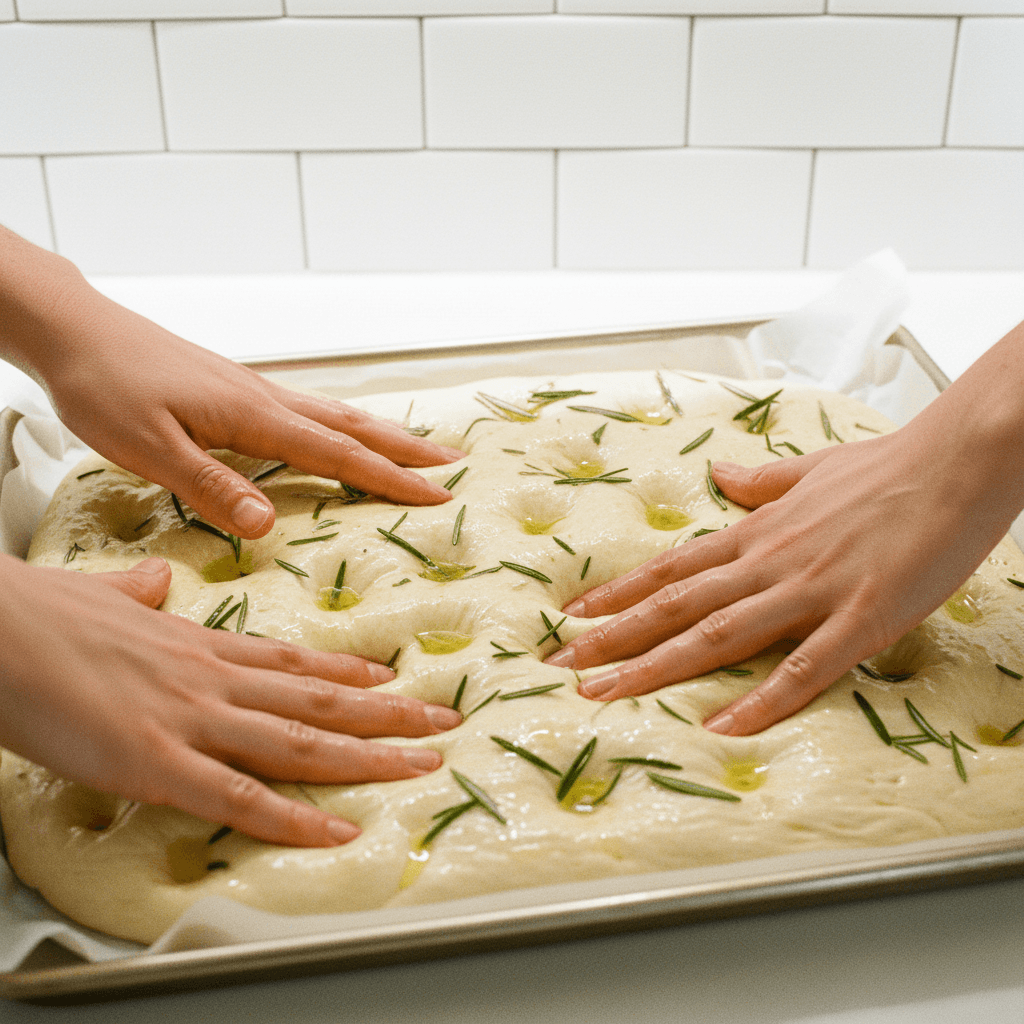
- 18
Add any additional toppings (e.g., pearl onions) by gently pressing them into the dimples.
⏱️ 1 min
- 19
Sprinkle flaky sea salt generously over the entire surface of the focaccia.
⏱️ 1 min - 20
Bake for 18-24 minutes on the lowest rack of your oven until golden brown and cooked through.
⏱️ 24 min•🌡️ 220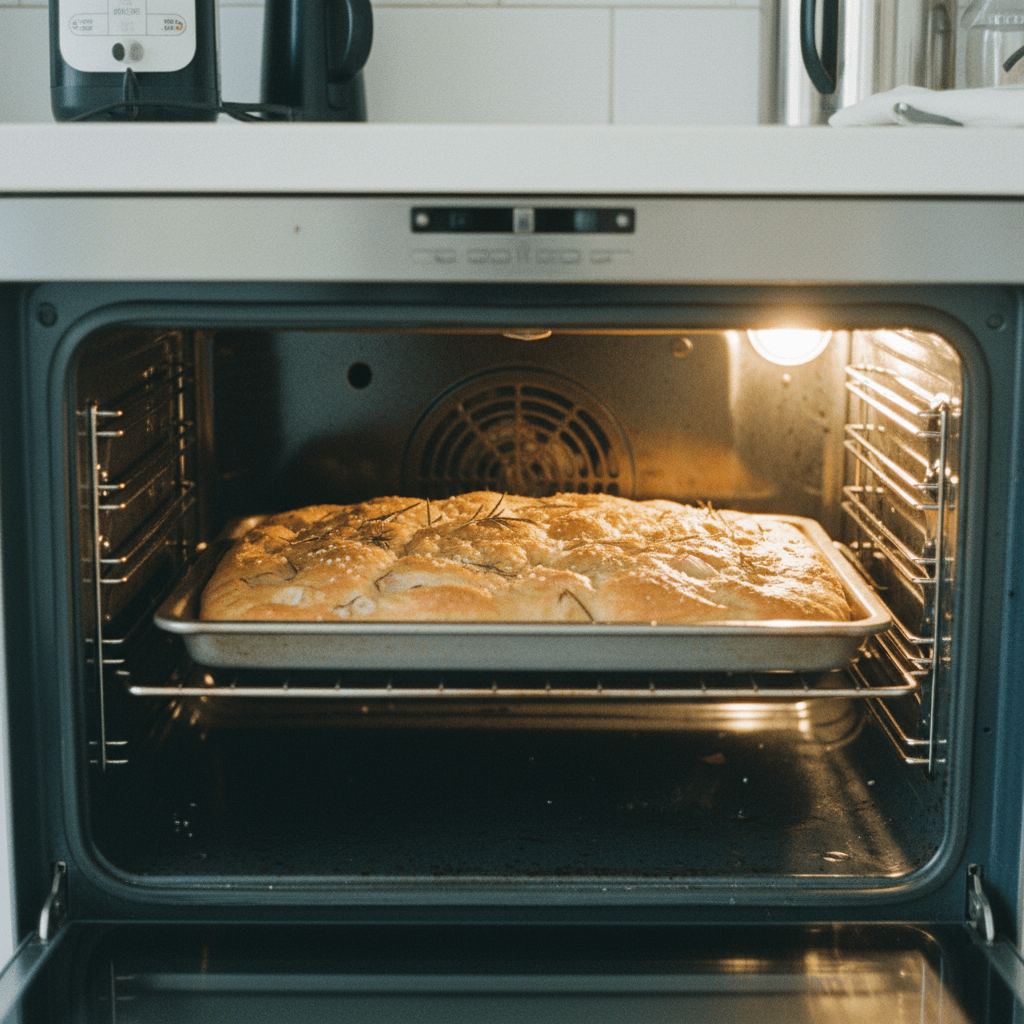
- 21
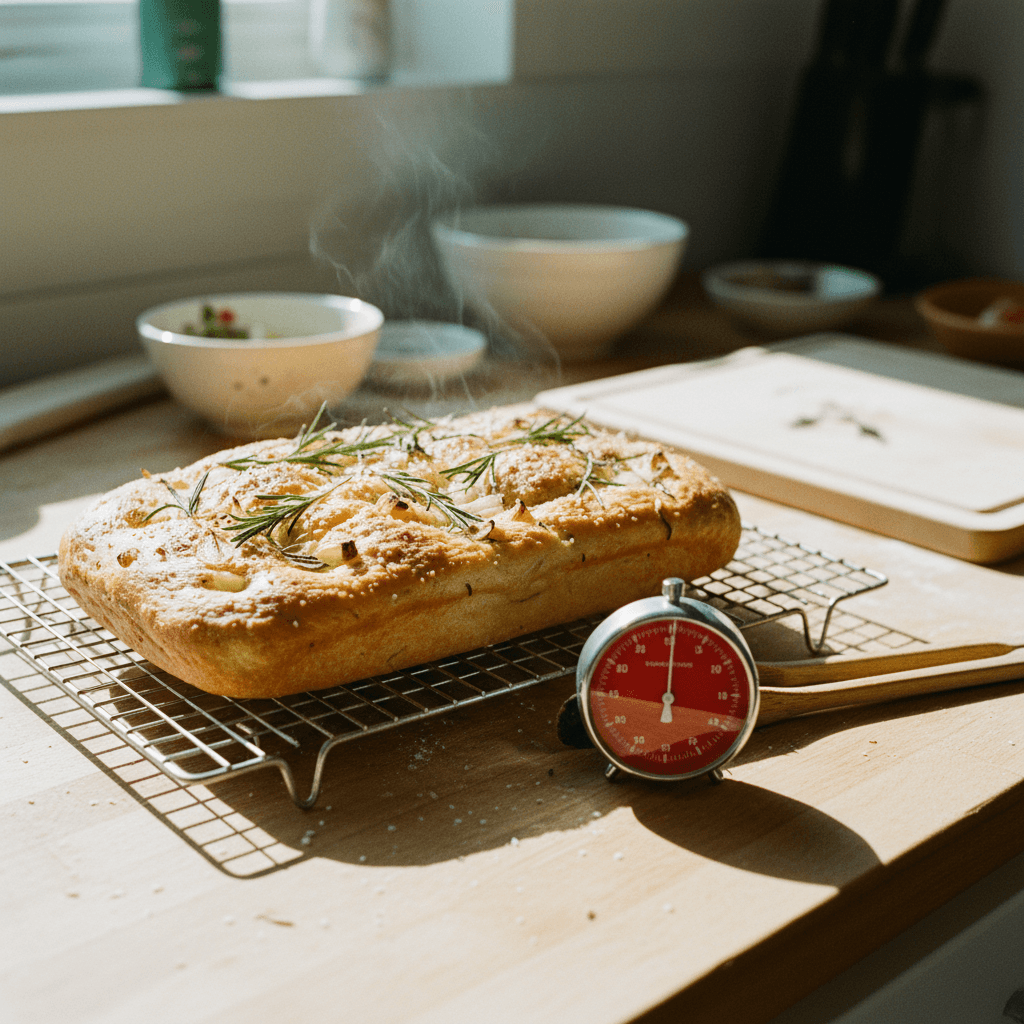
Transfer the baked focaccia to a cooling rack.

- 22
Wait at least 15 minutes before cutting into slices and enjoying.
Kitchen Tools
Nutrition Facts (per serving)
Same-day Focaccia
- 500 g white bread flour, (4 cups, spooned and levelled, 12% protein content or higher)
- 390 ml warm water, start with 390ml, add more if needed up to 420ml (1 3/4 cups)
- 15 ml extra virgin olive oil, (1 tablespoon)
- 4 g instant yeast, (1 teaspoon)
- 5 g honey, sugar or agave, (1 teaspoon)
- 10 g fine sea salt, (2 teaspoons)
- 3 tablespoons extra virgin olive oil, to line pan and drizzle, plus more as needed
- as needed flaky sea salt, to finish
- as needed toppings of choice, such as rosemary, olives, peppers, onions, jalapeños, cheese
Instructions
- 1
In a large mixing bowl, whisk together the warm water, 15ml (1 tablespoon) extra virgin olive oil, 5g (1 teaspoon) honey, and 4g (1 teaspoon) instant yeast until combined.
⏱️ 2 min - 2
Stir in the 500g (4 cups) white bread flour and 10g (2 teaspoons) fine sea salt. Mix thoroughly until all ingredients are well combined and no dry flour remains. The dough should be sticky and shaggy, but come together. Add more water if needed, up to 420ml total, to achieve a sticky consistency.
⏱️ 3 min - 3
Scrape down the sides of the bowl. Cover the bowl and rest the dough at room temperature for 15 minutes.
- 4
After 15 minutes, perform the first set of stretch and folds. Wet your hand, then grab a section of the dough from the edge of the bowl, stretch it upwards, and fold it over itself towards the center. Rotate the bowl slightly and repeat this process about 8 times around the bowl until the dough starts to tighten up into a ball-like shape.
⏱️ 3 min - 5
Cover the bowl again and rest the dough at room temperature for another 15 minutes.
- 6
Repeat the stretch and folds once more, following the same technique as before (wetting your hand, stretching, and folding the dough about 8 times around the bowl).
⏱️ 3 min - 7
Cover the bowl and proof the dough at room temperature for 1 to 1 1/2 hours. The dough should increase in volume and become bubbly.
- 8
While the dough is proofing, prepare your baking tray. Line a 9x13 metal baking tray with nonstick parchment paper. A larger tray can be used for a thinner/crispier focaccia.
⏱️ 2 min - 9
Coat the parchment paper generously with 3 tablespoons of extra virgin olive oil, ensuring the entire surface is covered.
⏱️ 1 min - 10
Once the dough has proofed, transfer it to the prepared baking tray. The dough will be very soft and somewhat sticky.
⏱️ 1 min - 11
Fold the dough as follows: fold one side of the dough towards the center, then the opposite side over it (folding it into thirds). Rotate the dough 90 degrees, then flip it over so the seam is underneath. This helps create tension.
⏱️ 2 min - 12
Cover the tray with another baking tray or with oiled parchment paper (oiled side down) to prevent sticking. Proof the dough at room temperature for another 1 to 1 1/2 hours.
- 13
During the second proof, preheat your oven to 220°C (430°F). Place the oven rack in the lowest position to help crisp the bottom of the focaccia.
⏱️ 15 min•🌡️ 220 - 14
After the second proof, uncover the dough. Gently spread the dough to the edges of the tray using your fingertips.
⏱️ 1 min - 15
If using rosemary, scatter it evenly over the dough.
⏱️ 1 min - 16
Drizzle additional extra virgin olive oil over the surface of the dough.
⏱️ 1 min - 17
Using oiled fingertips, dimple the dough all over by pressing down firmly, creating indentations.
⏱️ 2 min - 18
Add any additional toppings (e.g., pearl onions) by gently pressing them into the dimples.
⏱️ 1 min - 19
Sprinkle flaky sea salt generously over the entire surface of the focaccia.
⏱️ 1 min - 20
Bake for 18-24 minutes on the lowest rack of your oven until golden brown and cooked through.
⏱️ 24 min•🌡️ 220 - 21
Transfer the baked focaccia to a cooling rack.
- 22
Wait at least 15 minutes before cutting into slices and enjoying.