Easy Zong Zi // Sticky Rice Dumplings
Easy Zong Zi // Sticky Rice Dumplings
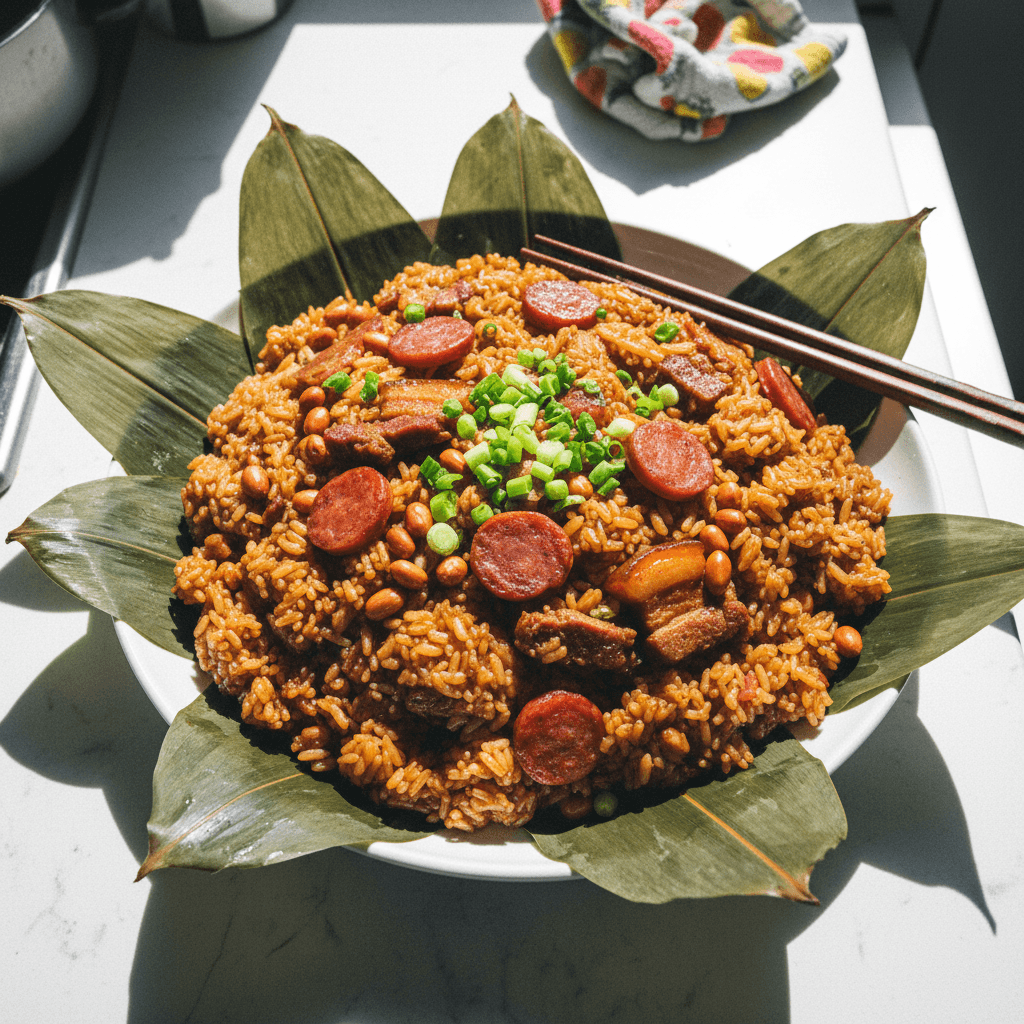
Ingredients
For the Rice
- 2 1/2 cups sticky rice, uncooked (also called glutinous rice or “sweet rice”)
- 2 tablespoons light soy sauce
- 1 teaspoon salt
For the Pork Marinade
- 1 pound pork belly, sliced into bite size pieces
- 2 tablespoons light soy sauce
- 1 1/2 tablespoons Shaoxing wine
- 2 teaspoons dark soy sauce
- 1/2 teaspoon salt
- 1/2 teaspoon sugar
- 1/2 teaspoon white pepper
- 1/2 teaspoon chicken bouillon powder
For the Other Filling
- 1/2 cup peanuts, raw shelled
- 4 lap cheong, Chinese sausages, sliced into rounds
- 2 green onions, chopped
For Assembly
- 8-10 dried bamboo leaves
- as needed kitchen twine
Instructions
- 1
Soak the sticky rice in a bowl with enough water to cover it overnight, or for at least 6 hours. Rinse the soaked sticky rice thoroughly in a colander and set aside. In a separate bowl, soak the dried bamboo leaves overnight, or for at least 3 hours, until they become pliable. After soaking, rinse each leaf thoroughly on both sides under running water and keep them submerged in fresh water until ready to use.
⏱️ 10 min
- 2
In a bowl, combine the sliced pork belly with 2 tablespoons light soy sauce, 1 1/2 tablespoons Shaoxing wine, 2 teaspoons dark soy sauce, 1/2 teaspoon salt, 1/2 teaspoon sugar, 1/2 teaspoon white pepper, and 1/2 teaspoon chicken bouillon powder. Mix all ingredients well to ensure the pork is evenly coated. Cover the bowl and marinate the pork belly in the refrigerator for 1–2 hours.
⏱️ 5 min
- 3
While the pork is marinating, place the raw shelled peanuts in a bowl and cover them with water. Soak the peanuts for 1 hour. Drain the peanuts thoroughly before adding them to the rice mixture.
⏱️ 5 min
- 4
Drain the soaked sticky rice and transfer it to a large mixing bowl. Add the soaked peanuts, sliced lap cheong (Chinese sausages), and chopped green onions to the rice. Incorporate the remaining 1 tablespoon light soy sauce and 1 teaspoon salt. Mix all ingredients until they are evenly combined.
⏱️ 10 min
- 5
Take two bamboo leaves from the water and lay them flat on your work surface, slightly overlapping each other. Ensure the smooth, shiny side of the leaves is facing up. This will form the base for your zongzi packet.
⏱️ 2 min
- 6
Place approximately half of the seasoned sticky rice mixture in the middle of the overlapping bamboo leaves. Spread it out slightly to create a bed for the pork.
⏱️ 2 min
- 7
Arrange several pieces of the marinated pork belly on top of the sticky rice mixture. Distribute them evenly.
⏱️ 2 min
- 8
Cover the pork belly completely with the remaining half of the sticky rice mixture, ensuring the pork is fully encased.
⏱️ 2 min
- 9
Carefully fold the bamboo leaves over the filling to form a compact, rectangular packet. Start by folding the longer sides inwards, then fold the ends over to seal the packet.
⏱️ 3 min
- 10
Use kitchen twine to tie the packet securely. Wrap the twine around the length and width of the packet multiple times, tying knots to prevent it from opening during cooking. Repeat steps 5-10 for the remaining ingredients to create all the zongzi packets.
⏱️ 4 min
- 11
Place all the wrapped zongzi packets into a large pot. Fill the pot with enough cold water to completely submerge the zongzi. Ensure there's at least 1-2 inches of water covering the top of the packets.
⏱️ 2 min
- 12
Bring the water to a rolling boil over high heat. Once boiling, reduce the heat to a gentle simmer, cover the pot, and cook the zongzi for 1 hour. Check the water level periodically and add more hot water if needed to keep the zongzi submerged.
⏱️ 60 min
- 13
Once cooked, carefully remove the zongzi from the pot using tongs. Let them cool slightly before unwrapping. Serve hot and enjoy your homemade easy zongzi!
⏱️ 5 min
Kitchen Tools
Easy Zong Zi // Sticky Rice Dumplings
For the Rice
- 2 1/2 cups sticky rice, uncooked (also called glutinous rice or “sweet rice”)
- 2 tablespoons light soy sauce
- 1 teaspoon salt
For the Pork Marinade
- 1 pound pork belly, sliced into bite size pieces
- 2 tablespoons light soy sauce
- 1 1/2 tablespoons Shaoxing wine
- 2 teaspoons dark soy sauce
- 1/2 teaspoon salt
- 1/2 teaspoon sugar
- 1/2 teaspoon white pepper
- 1/2 teaspoon chicken bouillon powder
For the Other Filling
- 1/2 cup peanuts, raw shelled
- 4 lap cheong, Chinese sausages, sliced into rounds
- 2 green onions, chopped
For Assembly
- 8-10 dried bamboo leaves
- as needed kitchen twine
Instructions
- 1
Soak the sticky rice in a bowl with enough water to cover it overnight, or for at least 6 hours. Rinse the soaked sticky rice thoroughly in a colander and set aside. In a separate bowl, soak the dried bamboo leaves overnight, or for at least 3 hours, until they become pliable. After soaking, rinse each leaf thoroughly on both sides under running water and keep them submerged in fresh water until ready to use.
⏱️ 10 min - 2
In a bowl, combine the sliced pork belly with 2 tablespoons light soy sauce, 1 1/2 tablespoons Shaoxing wine, 2 teaspoons dark soy sauce, 1/2 teaspoon salt, 1/2 teaspoon sugar, 1/2 teaspoon white pepper, and 1/2 teaspoon chicken bouillon powder. Mix all ingredients well to ensure the pork is evenly coated. Cover the bowl and marinate the pork belly in the refrigerator for 1–2 hours.
⏱️ 5 min - 3
While the pork is marinating, place the raw shelled peanuts in a bowl and cover them with water. Soak the peanuts for 1 hour. Drain the peanuts thoroughly before adding them to the rice mixture.
⏱️ 5 min - 4
Drain the soaked sticky rice and transfer it to a large mixing bowl. Add the soaked peanuts, sliced lap cheong (Chinese sausages), and chopped green onions to the rice. Incorporate the remaining 1 tablespoon light soy sauce and 1 teaspoon salt. Mix all ingredients until they are evenly combined.
⏱️ 10 min - 5
Take two bamboo leaves from the water and lay them flat on your work surface, slightly overlapping each other. Ensure the smooth, shiny side of the leaves is facing up. This will form the base for your zongzi packet.
⏱️ 2 min - 6
Place approximately half of the seasoned sticky rice mixture in the middle of the overlapping bamboo leaves. Spread it out slightly to create a bed for the pork.
⏱️ 2 min - 7
Arrange several pieces of the marinated pork belly on top of the sticky rice mixture. Distribute them evenly.
⏱️ 2 min - 8
Cover the pork belly completely with the remaining half of the sticky rice mixture, ensuring the pork is fully encased.
⏱️ 2 min - 9
Carefully fold the bamboo leaves over the filling to form a compact, rectangular packet. Start by folding the longer sides inwards, then fold the ends over to seal the packet.
⏱️ 3 min - 10
Use kitchen twine to tie the packet securely. Wrap the twine around the length and width of the packet multiple times, tying knots to prevent it from opening during cooking. Repeat steps 5-10 for the remaining ingredients to create all the zongzi packets.
⏱️ 4 min - 11
Place all the wrapped zongzi packets into a large pot. Fill the pot with enough cold water to completely submerge the zongzi. Ensure there's at least 1-2 inches of water covering the top of the packets.
⏱️ 2 min - 12
Bring the water to a rolling boil over high heat. Once boiling, reduce the heat to a gentle simmer, cover the pot, and cook the zongzi for 1 hour. Check the water level periodically and add more hot water if needed to keep the zongzi submerged.
⏱️ 60 min - 13
Once cooked, carefully remove the zongzi from the pot using tongs. Let them cool slightly before unwrapping. Serve hot and enjoy your homemade easy zongzi!
⏱️ 5 min