Hủ Tiếu Khô - Vietnamese Dry Noodles
Hủ Tiếu Khô - Vietnamese Dry Noodles
Ingredients
For the Pork Belly
- 4 garlic, cloves, smashed
- 2 inch ginger, knob, smashed
- 1 shallot, smashed
- 1 pound pork belly
- 1 tablespoon salt
- 1 tablespoon sugar
- as needed water, for boiling
For the Hủ Tiếu Sauce
- 1 1/2 tablespoons fish sauce
- 1 tablespoon dark soy sauce
- 1 tablespoon oyster sauce
- 1 teaspoon sesame oil
- 1 teaspoon black pepper
- 1 tablespoon chicken bouillon powder
- 1 tablespoon sugar
For the Noodles and Toppings
- 1 pound Hủ Tiếu noodles, flat rice noodles
- 1/2 pound shrimp, peeled and deveined
- 1/2 pound squid, cleaned and sliced into rings
- 8 quail eggs
- 1/4 pound pork liver, thinly sliced
- 1 cup bean sprouts
- 1/2 cup Chinese chives, cut into 2-inch pieces
For Garnish
- 2 tablespoons fried shallots
- 1 tablespoon chili oil, or to taste
- 1 lime, cut into wedges
- 2 tablespoons green onion, chopped
- 2 tablespoons cilantro, chopped
Instructions
- 1
Prepare the aromatics for the pork belly: smash 4 to 5 cloves of garlic, a 2-inch knob of ginger, and 1 shallot.
⏱️ 5 min
- 2
Place the 1-pound slab of pork belly into a large pot. Add the smashed garlic, ginger, and shallot to the pot. Add 1 tablespoon of salt and 1 tablespoon of sugar.
⏱️ 5 min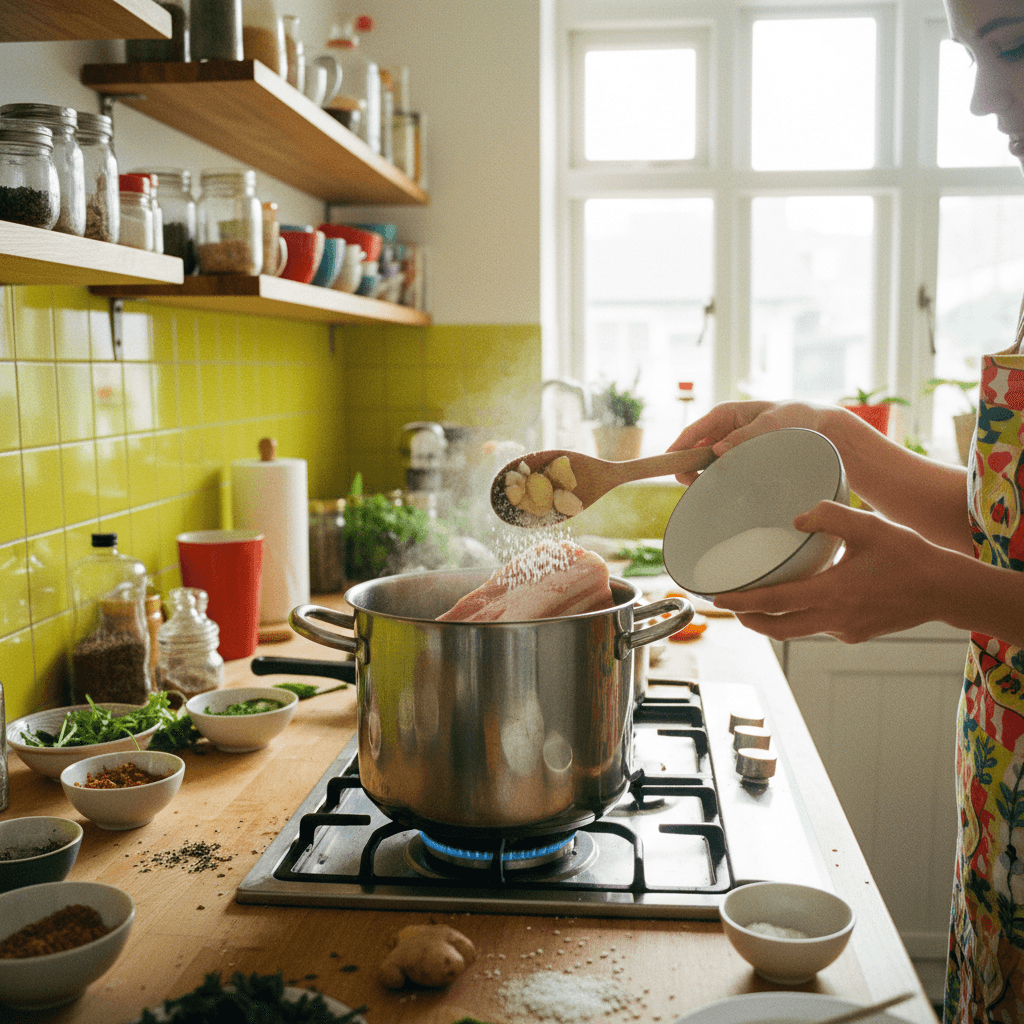
- 3
Fill the pot with enough water to fully submerge the pork belly. Bring to a boil, then reduce heat and simmer until the pork belly is tender, about 30-40 minutes.
⏱️ 40 min
- 4
Once tender, remove the pork belly from the pot and let it cool completely on a cutting board. This will take about 30 minutes. Once cooled, slice the pork belly thinly.
⏱️ 30 min
- 5
While the pork belly cools, prepare the Hủ Tiếu sauce. In a medium bowl, combine 1 1/2 tablespoons of fish sauce, 1 tablespoon of dark soy sauce, 1 tablespoon of oyster sauce, 1 teaspoon of sesame oil, 1 teaspoon of black pepper, 1 tablespoon of chicken bouillon powder, and 1 tablespoon of sugar. Mix all ingredients well until the sugar is dissolved.
⏱️ 5 min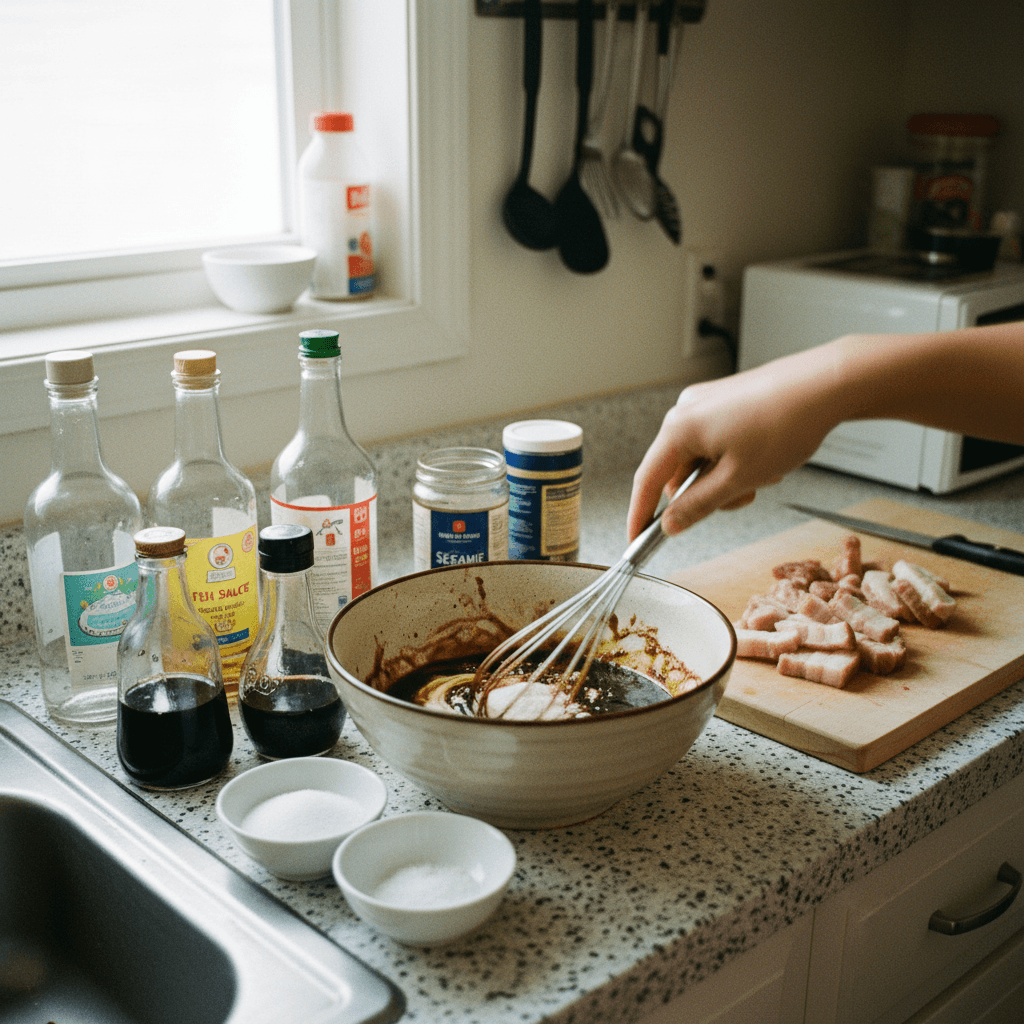
- 6
Bring a large pot of water to a rolling boil. Cook the Hủ Tiếu noodles (flat rice noodles) according to package directions until al dente. Drain well.
⏱️ 5 min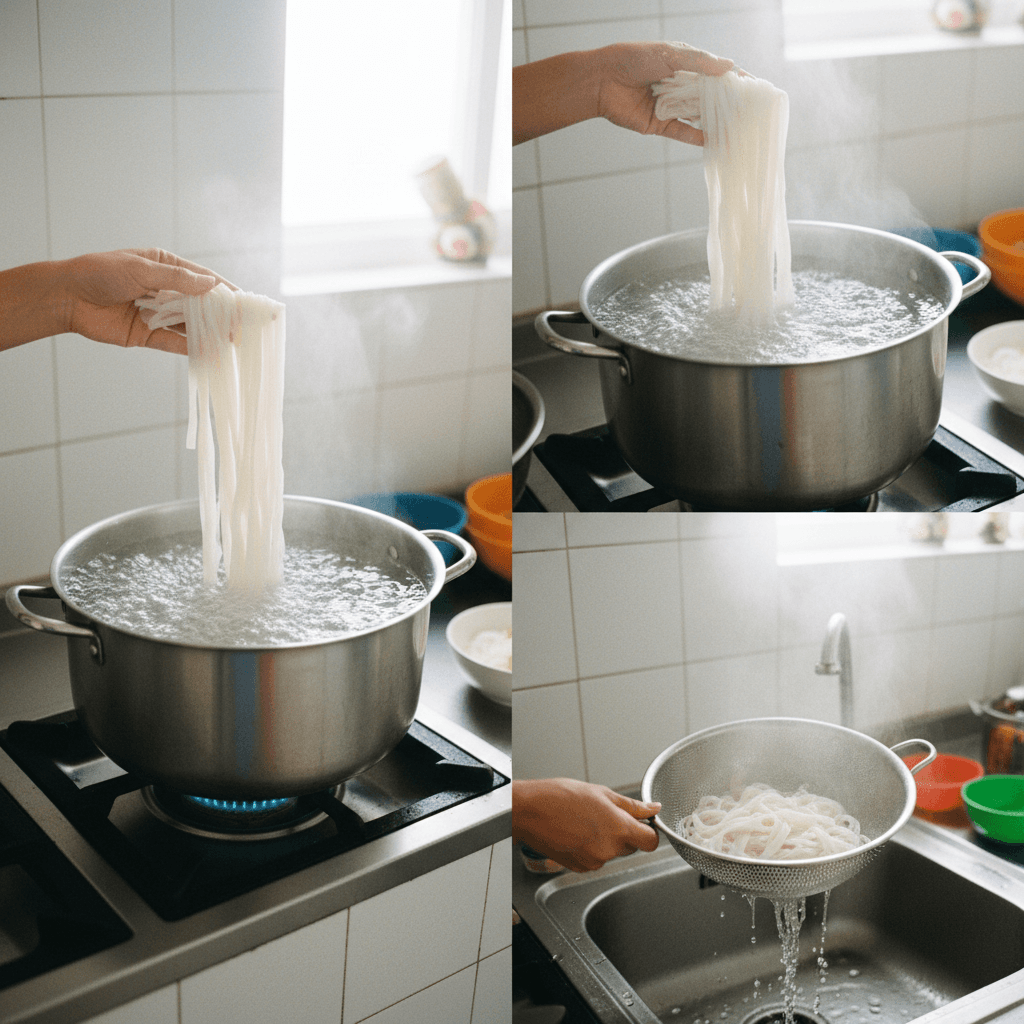
- 7
Using the same pot of boiling water (or fresh boiling water), blanch the shrimp, squid, quail eggs, and pork liver until just cooked through. This will be quick, about 1-2 minutes for seafood and liver, and 3-5 minutes for quail eggs if starting raw.
⏱️ 5 min
- 8
Quickly blanch the bean sprouts and Chinese chives for only a few seconds, just until slightly tender-crisp. Drain immediately.
⏱️ 1 min
- 9
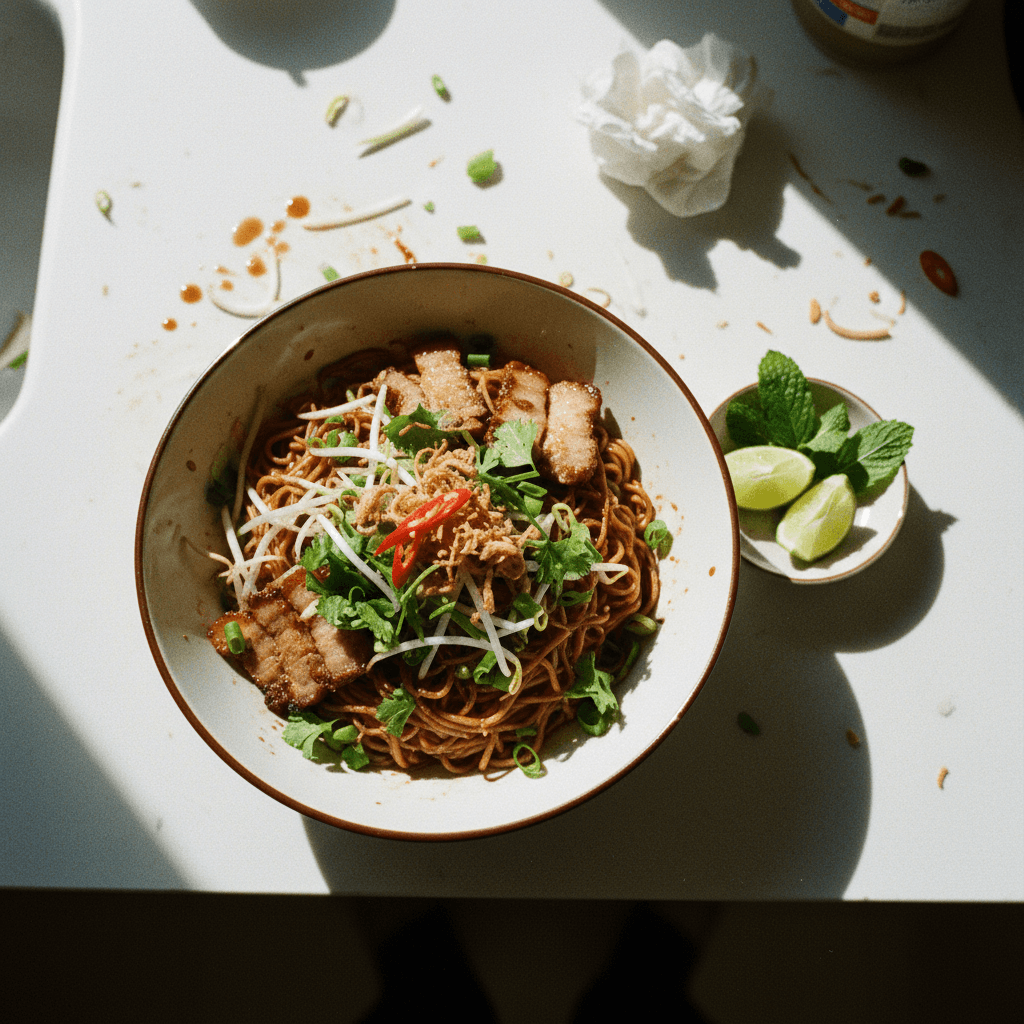
To assemble, divide the cooked Hủ Tiếu noodles among 4 serving bowls. Pour a generous amount of the prepared Hủ Tiếu sauce over the noodles in each bowl.
⏱️ 2 min
- 10
Arrange the thinly sliced pork belly, blanched shrimp, squid, quail eggs, and pork liver on top of the noodles. Add the blanched bean sprouts and Chinese chives.
⏱️ 2 min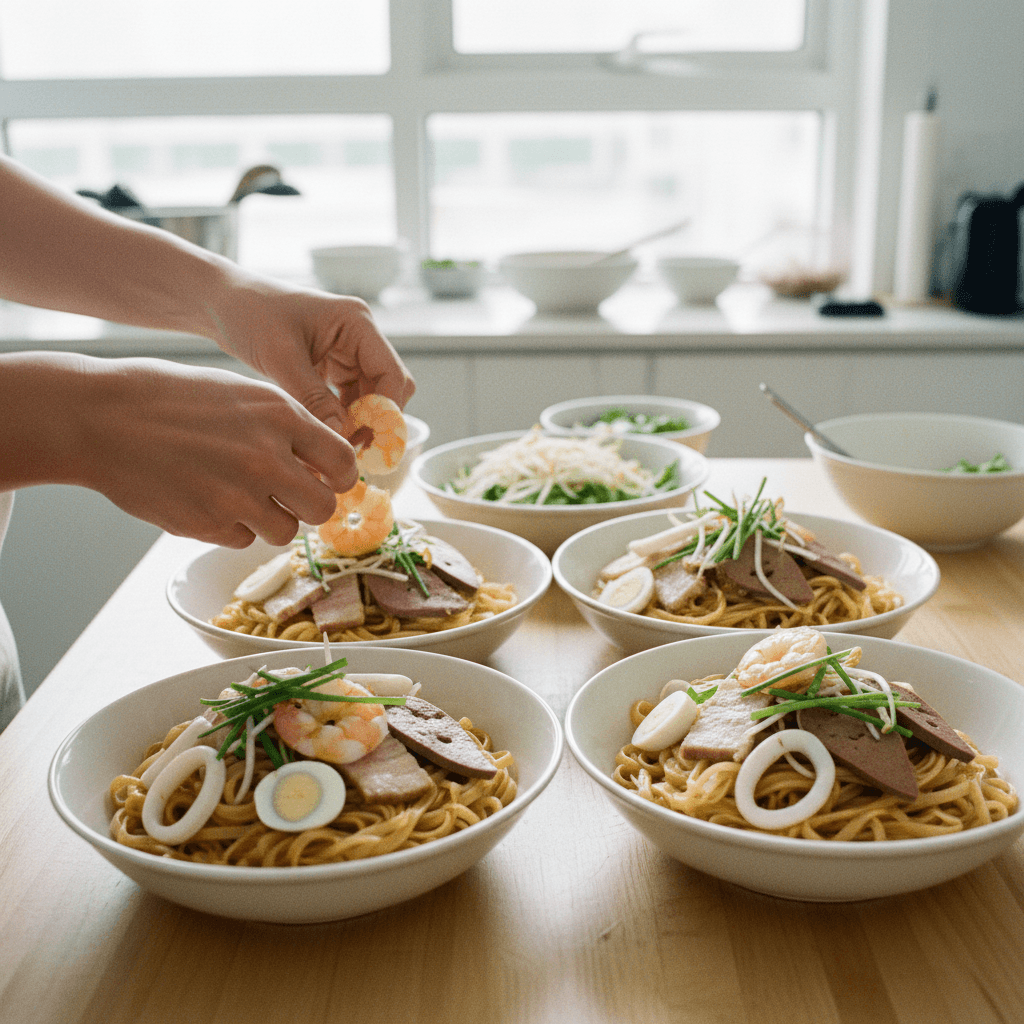
- 11
Garnish each bowl with a sprinkle of fried shallots, a dollop of chili oil, a squeeze of fresh lime juice, chopped green onion, and fresh cilantro.
⏱️ 2 min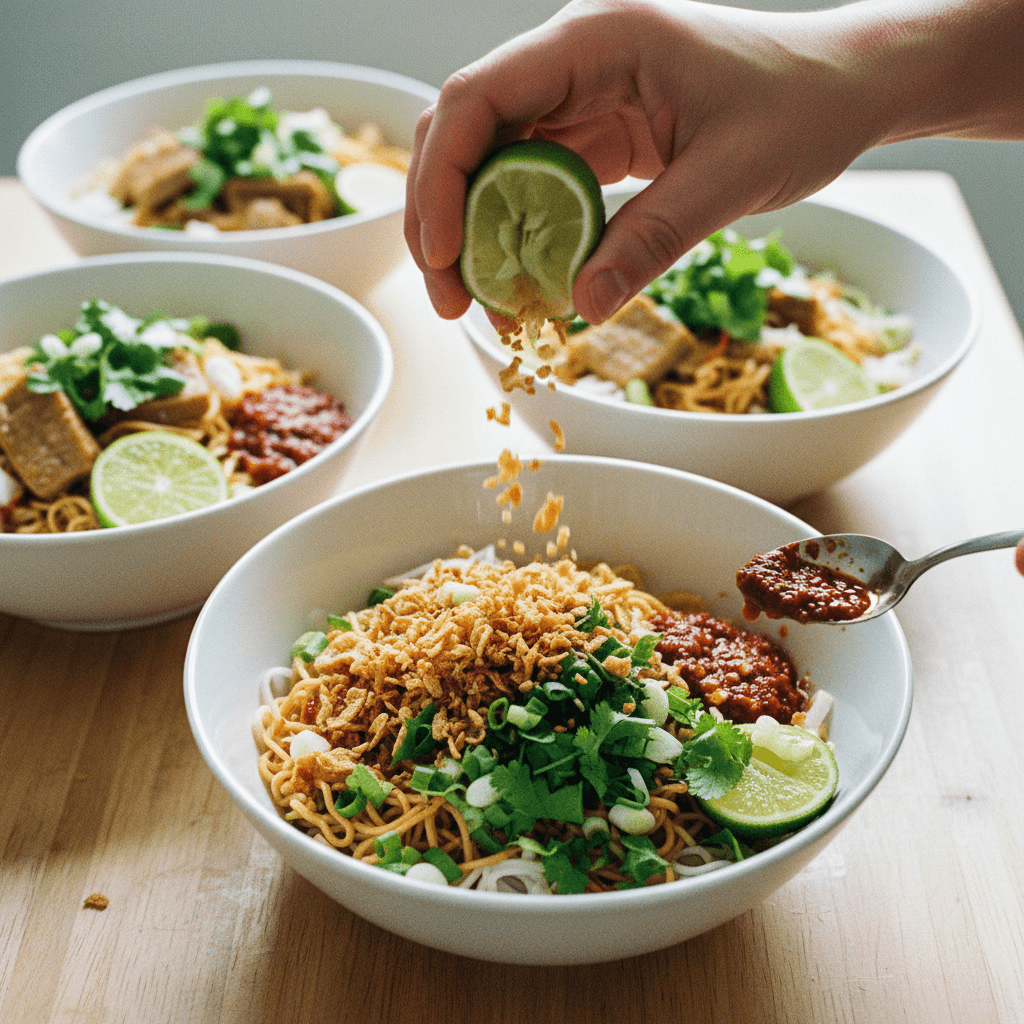
- 12
Serve immediately and encourage diners to toss everything together before eating to evenly distribute the sauce and toppings.
⏱️ 1 min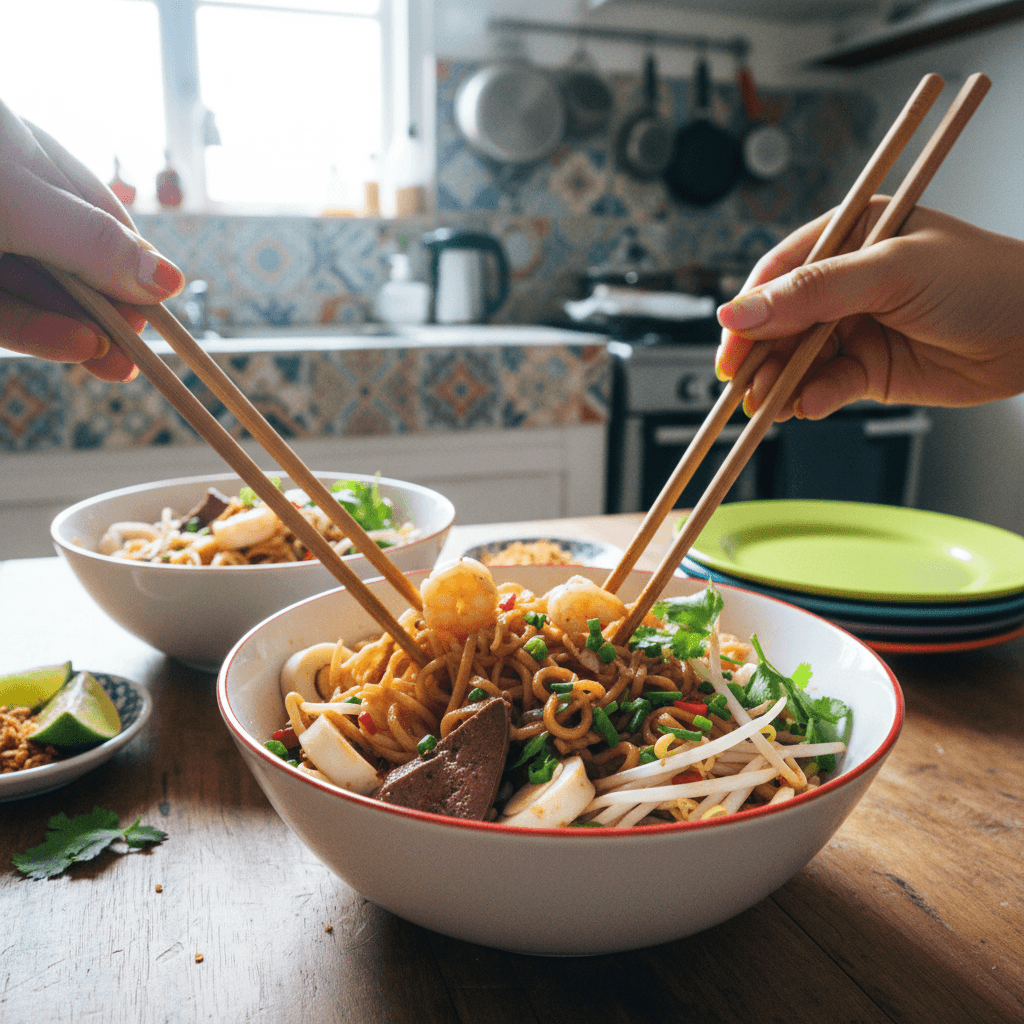
Kitchen Tools
Nutrition Facts (per serving)
Hủ Tiếu Khô - Vietnamese Dry Noodles
For the Pork Belly
- 4 garlic, cloves, smashed
- 2 inch ginger, knob, smashed
- 1 shallot, smashed
- 1 pound pork belly
- 1 tablespoon salt
- 1 tablespoon sugar
- as needed water, for boiling
For the Hủ Tiếu Sauce
- 1 1/2 tablespoons fish sauce
- 1 tablespoon dark soy sauce
- 1 tablespoon oyster sauce
- 1 teaspoon sesame oil
- 1 teaspoon black pepper
- 1 tablespoon chicken bouillon powder
- 1 tablespoon sugar
For the Noodles and Toppings
- 1 pound Hủ Tiếu noodles, flat rice noodles
- 1/2 pound shrimp, peeled and deveined
- 1/2 pound squid, cleaned and sliced into rings
- 8 quail eggs
- 1/4 pound pork liver, thinly sliced
- 1 cup bean sprouts
- 1/2 cup Chinese chives, cut into 2-inch pieces
For Garnish
- 2 tablespoons fried shallots
- 1 tablespoon chili oil, or to taste
- 1 lime, cut into wedges
- 2 tablespoons green onion, chopped
- 2 tablespoons cilantro, chopped
Instructions
- 1
Prepare the aromatics for the pork belly: smash 4 to 5 cloves of garlic, a 2-inch knob of ginger, and 1 shallot.
⏱️ 5 min - 2
Place the 1-pound slab of pork belly into a large pot. Add the smashed garlic, ginger, and shallot to the pot. Add 1 tablespoon of salt and 1 tablespoon of sugar.
⏱️ 5 min - 3
Fill the pot with enough water to fully submerge the pork belly. Bring to a boil, then reduce heat and simmer until the pork belly is tender, about 30-40 minutes.
⏱️ 40 min - 4
Once tender, remove the pork belly from the pot and let it cool completely on a cutting board. This will take about 30 minutes. Once cooled, slice the pork belly thinly.
⏱️ 30 min - 5
While the pork belly cools, prepare the Hủ Tiếu sauce. In a medium bowl, combine 1 1/2 tablespoons of fish sauce, 1 tablespoon of dark soy sauce, 1 tablespoon of oyster sauce, 1 teaspoon of sesame oil, 1 teaspoon of black pepper, 1 tablespoon of chicken bouillon powder, and 1 tablespoon of sugar. Mix all ingredients well until the sugar is dissolved.
⏱️ 5 min - 6
Bring a large pot of water to a rolling boil. Cook the Hủ Tiếu noodles (flat rice noodles) according to package directions until al dente. Drain well.
⏱️ 5 min - 7
Using the same pot of boiling water (or fresh boiling water), blanch the shrimp, squid, quail eggs, and pork liver until just cooked through. This will be quick, about 1-2 minutes for seafood and liver, and 3-5 minutes for quail eggs if starting raw.
⏱️ 5 min - 8
Quickly blanch the bean sprouts and Chinese chives for only a few seconds, just until slightly tender-crisp. Drain immediately.
⏱️ 1 min - 9
To assemble, divide the cooked Hủ Tiếu noodles among 4 serving bowls. Pour a generous amount of the prepared Hủ Tiếu sauce over the noodles in each bowl.
⏱️ 2 min - 10
Arrange the thinly sliced pork belly, blanched shrimp, squid, quail eggs, and pork liver on top of the noodles. Add the blanched bean sprouts and Chinese chives.
⏱️ 2 min - 11
Garnish each bowl with a sprinkle of fried shallots, a dollop of chili oil, a squeeze of fresh lime juice, chopped green onion, and fresh cilantro.
⏱️ 2 min - 12
Serve immediately and encourage diners to toss everything together before eating to evenly distribute the sauce and toppings.
⏱️ 1 min