Orange Herb Rotisserie Duck
Orange Herb Rotisserie Duck

Ingredients
For the Duck
- 1 whole duck, 5 to 6 pounds, neck and giblets removed
- 1 1/2 teaspoons kosher salt
- 1 teaspoon freshly ground black pepper
- 2 sprigs fresh rosemary
- 4 sprigs fresh thyme
- 4 cloves garlic, smashed
- 1 orange, halved
- 1/2 yellow onion, quartered
- kitchen twine, as needed
For the Orange Glaze
- 1/2 cup orange juice, freshly squeezed
- 1/4 cup honey
- 1 tablespoon balsamic vinegar
- 1/2 teaspoon fresh ginger, grated
- 1/4 teaspoon kosher salt
Instructions
- 1
Prepare the duck: Remove the duck from its packaging, remove the neck and giblets from the cavity. Pat the duck thoroughly dry with paper towels, inside and out. Using a sharp knife or skewer, prick the duck skin all over, especially on the breast and thighs, being careful not to pierce the meat. This helps render the fat.
⏱️ 10 min
- 2
Season and stuff the duck: Season the duck generously inside and out with kosher salt and freshly ground black pepper. Place the rosemary sprigs, thyme sprigs, smashed garlic cloves, orange halves, and onion quarters into the duck cavity.
⏱️ 5 min
- 3
Truss the duck: Using kitchen twine, truss the duck by tying the legs together and tucking the wing tips under the body. This helps the duck cook evenly and stay compact on the rotisserie spit.
⏱️ 5 min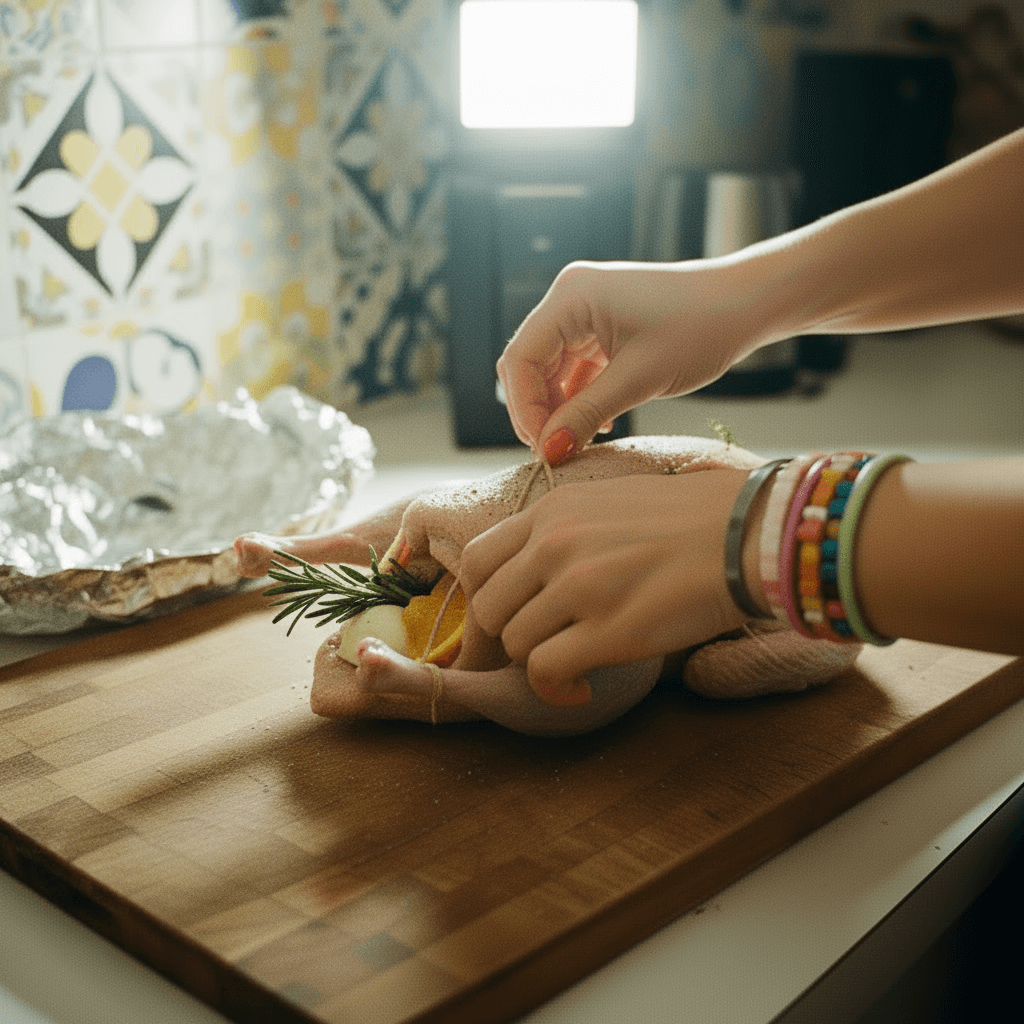
- 4
Prepare the glaze: In a small saucepan, combine the orange juice, honey, balsamic vinegar, grated fresh ginger, and 1/4 teaspoon kosher salt. Bring to a simmer over medium heat, then reduce the heat to low and cook for 5-7 minutes, or until the glaze slightly thickens. Set aside.
⏱️ 10 min
- 5
Set up the rotisserie: Secure the trussed duck onto the rotisserie spit according to your rotisserie's instructions. Preheat your oven or grill to 375°F. Place a drip pan underneath the duck to catch rendered fat and drippings.
⏱️ 5 min•🌡️ 375
- 6
Cook the duck: Place the rotisserie spit with the duck into the preheated oven or grill. Cook for 1 hour, allowing the duck to rotate and render its fat. After 1 hour, begin basting the duck with the prepared orange glaze every 15-20 minutes.
⏱️ 60 min•🌡️ 375
- 7
Continue cooking: Continue cooking and basting for another 30-60 minutes, or until an instant-read thermometer inserted into the thickest part of the thigh (without touching bone) registers 165°F. The skin should be deeply golden brown and crispy.
⏱️ 60 min•🌡️ 375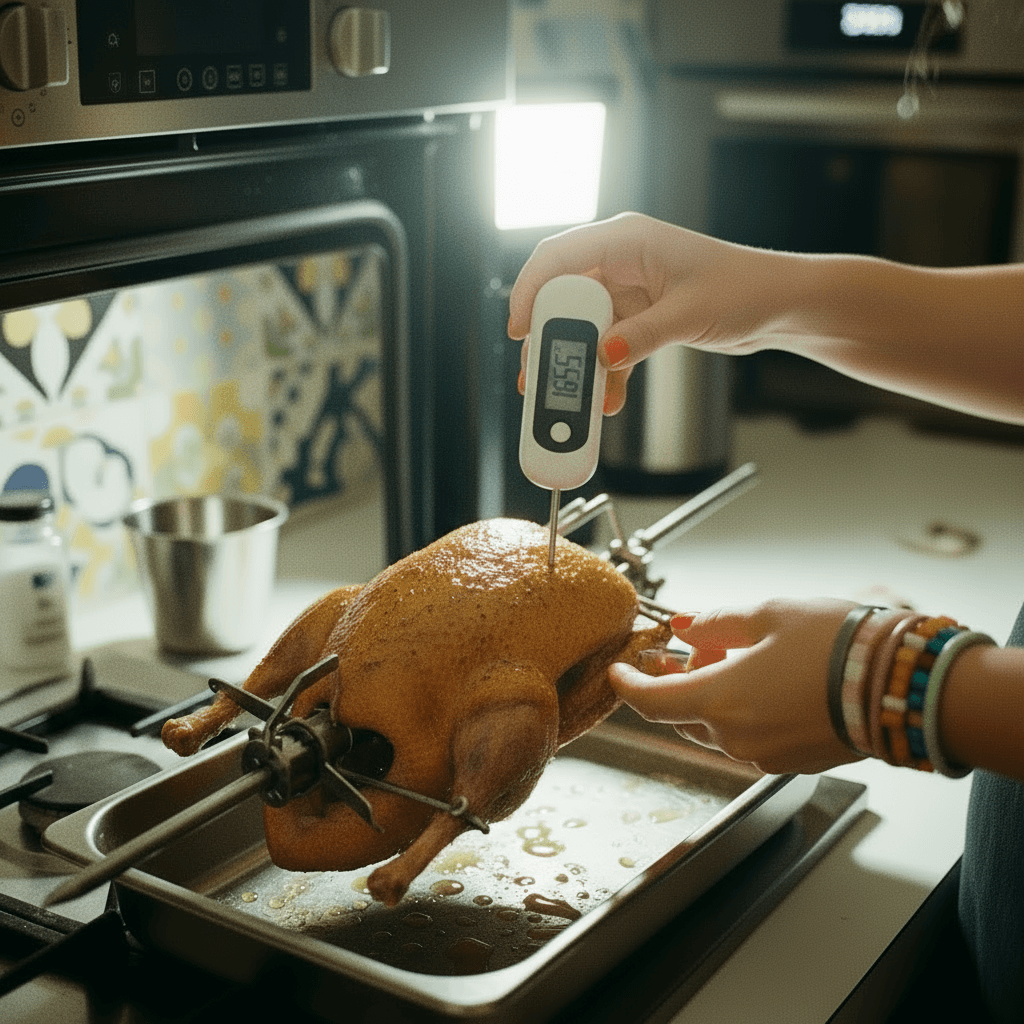
- 8
Rest and carve: Carefully remove the duck from the rotisserie spit and transfer it to a cutting board. Tent loosely with foil and let it rest for 15 minutes before carving. This allows the juices to redistribute, resulting in a more tender and flavorful duck.
⏱️ 15 min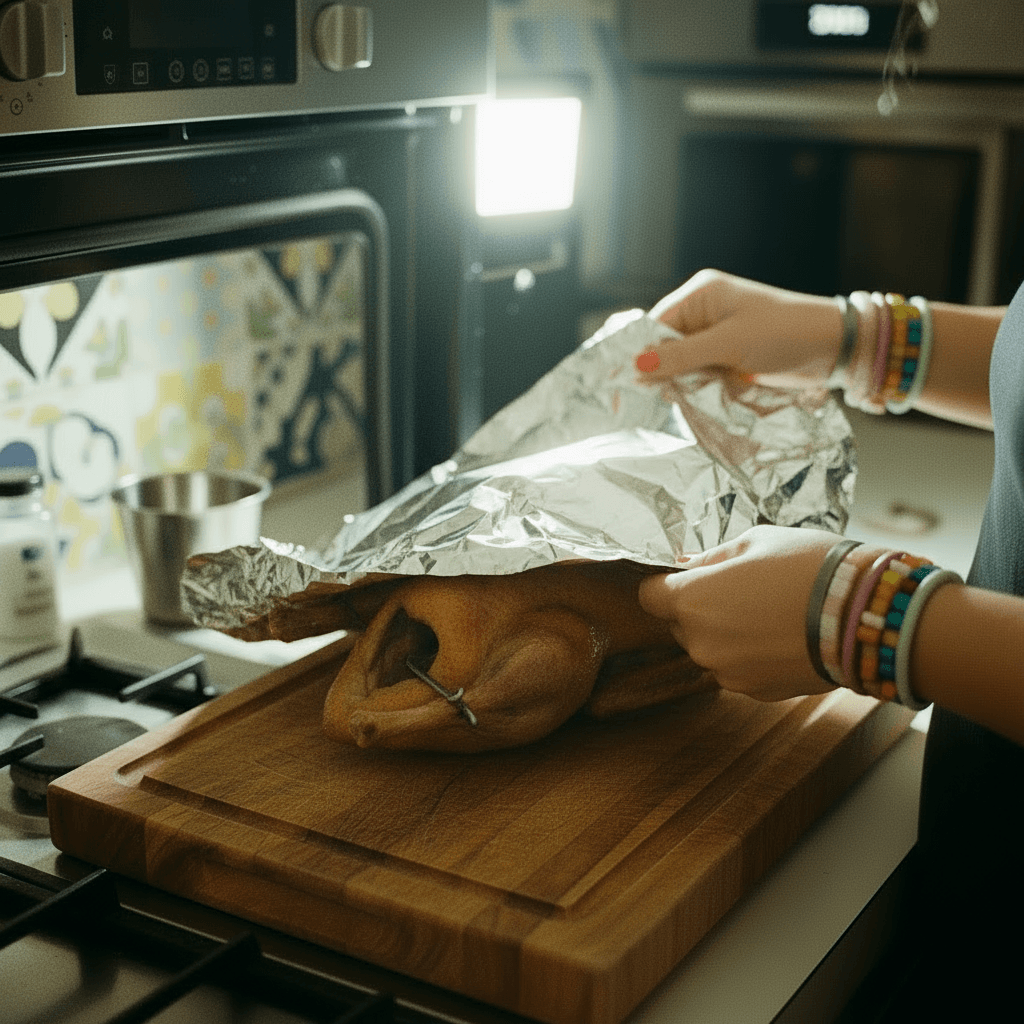
- 9
Carve the duck and serve immediately, drizzling with any remaining pan juices or glaze.
⏱️ 5 min
Kitchen Tools
Nutrition Facts (per serving)
Orange Herb Rotisserie Duck
For the Duck
- 1 whole duck, 5 to 6 pounds, neck and giblets removed
- 1 1/2 teaspoons kosher salt
- 1 teaspoon freshly ground black pepper
- 2 sprigs fresh rosemary
- 4 sprigs fresh thyme
- 4 cloves garlic, smashed
- 1 orange, halved
- 1/2 yellow onion, quartered
- kitchen twine, as needed
For the Orange Glaze
- 1/2 cup orange juice, freshly squeezed
- 1/4 cup honey
- 1 tablespoon balsamic vinegar
- 1/2 teaspoon fresh ginger, grated
- 1/4 teaspoon kosher salt
Instructions
- 1
Prepare the duck: Remove the duck from its packaging, remove the neck and giblets from the cavity. Pat the duck thoroughly dry with paper towels, inside and out. Using a sharp knife or skewer, prick the duck skin all over, especially on the breast and thighs, being careful not to pierce the meat. This helps render the fat.
⏱️ 10 min - 2
Season and stuff the duck: Season the duck generously inside and out with kosher salt and freshly ground black pepper. Place the rosemary sprigs, thyme sprigs, smashed garlic cloves, orange halves, and onion quarters into the duck cavity.
⏱️ 5 min - 3
Truss the duck: Using kitchen twine, truss the duck by tying the legs together and tucking the wing tips under the body. This helps the duck cook evenly and stay compact on the rotisserie spit.
⏱️ 5 min - 4
Prepare the glaze: In a small saucepan, combine the orange juice, honey, balsamic vinegar, grated fresh ginger, and 1/4 teaspoon kosher salt. Bring to a simmer over medium heat, then reduce the heat to low and cook for 5-7 minutes, or until the glaze slightly thickens. Set aside.
⏱️ 10 min - 5
Set up the rotisserie: Secure the trussed duck onto the rotisserie spit according to your rotisserie's instructions. Preheat your oven or grill to 375°F. Place a drip pan underneath the duck to catch rendered fat and drippings.
⏱️ 5 min•🌡️ 375 - 6
Cook the duck: Place the rotisserie spit with the duck into the preheated oven or grill. Cook for 1 hour, allowing the duck to rotate and render its fat. After 1 hour, begin basting the duck with the prepared orange glaze every 15-20 minutes.
⏱️ 60 min•🌡️ 375 - 7
Continue cooking: Continue cooking and basting for another 30-60 minutes, or until an instant-read thermometer inserted into the thickest part of the thigh (without touching bone) registers 165°F. The skin should be deeply golden brown and crispy.
⏱️ 60 min•🌡️ 375 - 8
Rest and carve: Carefully remove the duck from the rotisserie spit and transfer it to a cutting board. Tent loosely with foil and let it rest for 15 minutes before carving. This allows the juices to redistribute, resulting in a more tender and flavorful duck.
⏱️ 15 min - 9
Carve the duck and serve immediately, drizzling with any remaining pan juices or glaze.
⏱️ 5 min