New York-style Cheese Pizza Dough (48-72 Hour Fermentation)
New York-style Cheese Pizza Dough (48-72 Hour Fermentation)

Ingredients
For the Pizza Dough
- 2 1/2 cups bread flour
- 1 1/2 cups all-purpose flour
- 1 teaspoon instant yeast
- 2 teaspoons salt
- 1 teaspoon granulated sugar
- 1 1/2 cups cold water, under 55°F (12.7°C)
- 2 tablespoons olive oil
Instructions
- 1
In a large mixing bowl, combine the bread flour, all-purpose flour, instant yeast, salt, and granulated sugar. Whisk or stir the dry ingredients thoroughly to ensure even distribution.
⏱️ 2 min
- 2
Add the cold water and olive oil to the dry mixture. Mix with a sturdy wooden spoon or by hand until a shaggy, cohesive dough forms. Ensure all the flour is incorporated.
⏱️ 3 min
- 3
Transfer the shaggy dough to a clean, lightly floured surface (such as a marble countertop or a large cutting board). Knead the dough vigorously for 5 to 7 minutes. Initially, the dough will be rough and sticky, but with continued kneading, it will become smoother and more elastic. The target dough temperature after this initial mixing and kneading should be under 72°F (22.2°C).
⏱️ 7 min
- 4
Lightly oil a clean bowl or food-grade container large enough to accommodate the dough as it rises. Place the kneaded dough into the oiled container, turning it once to coat all sides. Cover the container with a lid or plastic wrap and let the dough rest at room temperature for 30 minutes.
⏱️ 30 min
- 5
After the first rest, perform the first set of 'stretch and folds'. Lightly wet your hands to prevent the dough from sticking. Gently stretch a portion of the dough from the edge of the bowl upwards, then fold it over itself towards the center. Rotate the bowl a quarter turn and repeat this process three more times, completing one full rotation. Recover the dough and let it rest for another 30 minutes at room temperature.
⏱️ 30 min
- 6
Repeat the stretch and fold process (Step 5) two more times, with 30-minute rests in between each set. After the final set of stretch and folds, the dough should be noticeably smoother, more elastic, and should pass the 'windowpane test'. To perform the windowpane test, gently pull a small piece of dough and stretch it between your fingers; if you can stretch it thin enough to see light through it without it tearing, it's ready.
⏱️ 60 min
- 7
Once the dough passes the windowpane test, cover the container tightly with a lid or plastic wrap and refrigerate the dough for a cold fermentation period of 1 to 2 days (24 to 48 hours). This long, slow fermentation develops complex flavors and improves the dough's texture.
⏱️ 2880 min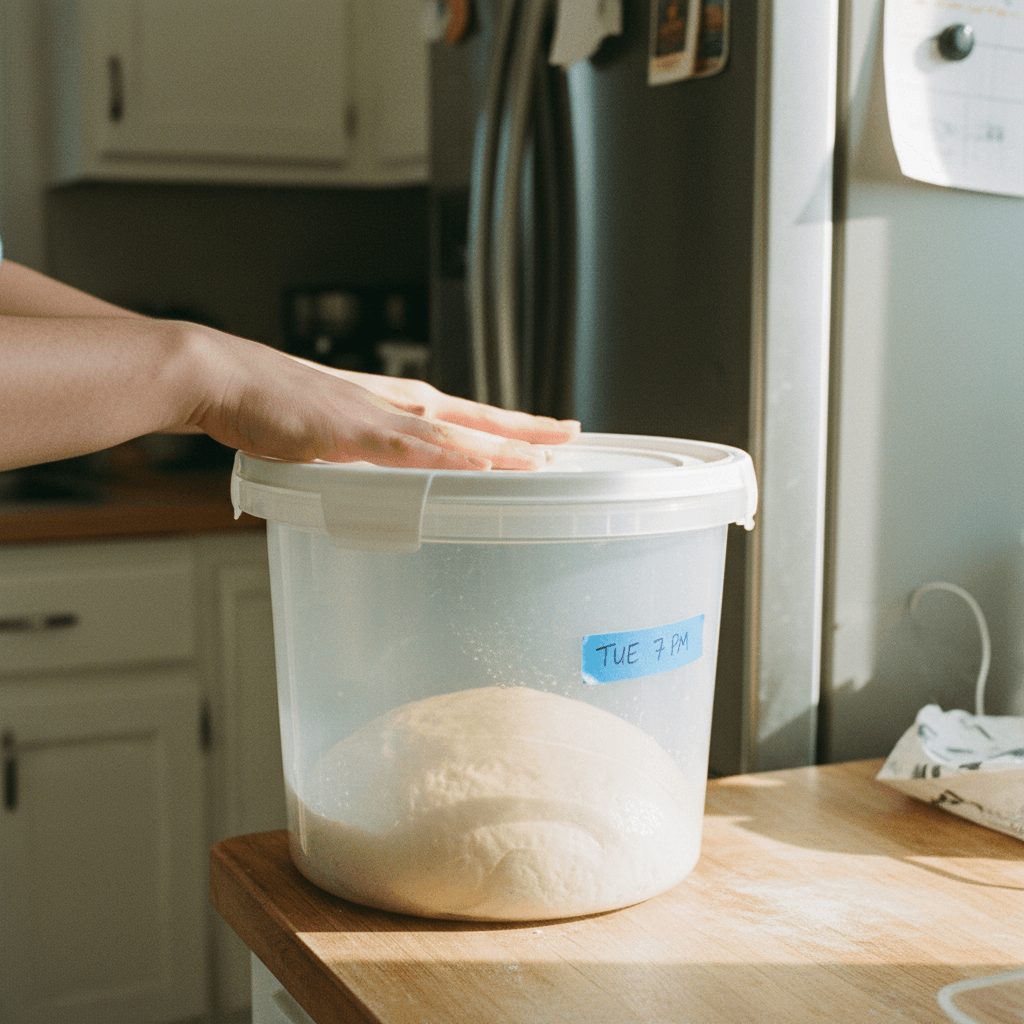
- 8
The day before you plan to bake your pizzas (after the cold fermentation), remove the dough from the refrigerator. Gently divide the dough into 4 equal portions. Shape each portion into a tight ball by pulling the edges underneath and pinching them together at the bottom. Place the dough balls into individual lightly oiled containers or on a lightly floured tray, ensuring they have space to expand. Cover loosely with plastic wrap and let them come to room temperature for 2-4 hours before baking, or refrigerate again for up to 24 hours for further fermentation before bringing to room temperature.
⏱️ 60 min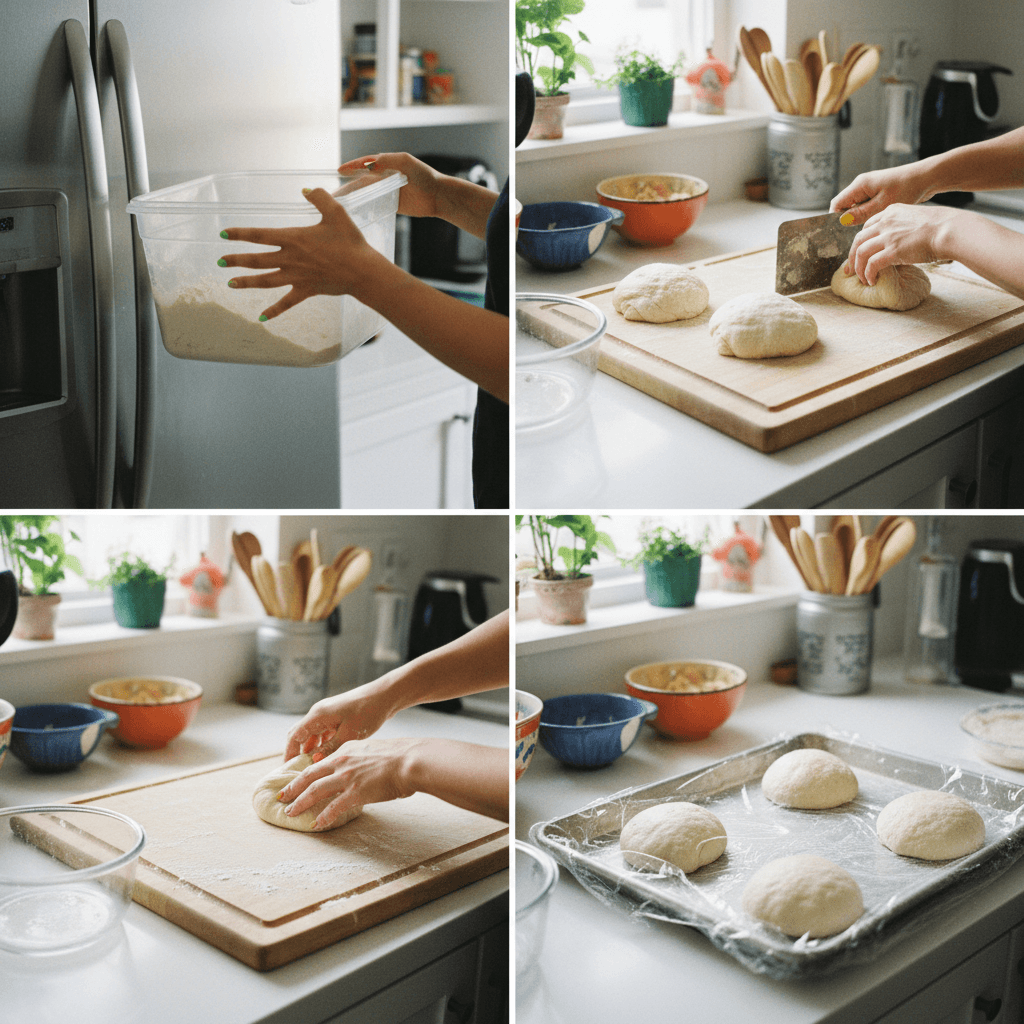
Kitchen Tools
New York-style Cheese Pizza Dough (48-72 Hour Fermentation)
For the Pizza Dough
- 2 1/2 cups bread flour
- 1 1/2 cups all-purpose flour
- 1 teaspoon instant yeast
- 2 teaspoons salt
- 1 teaspoon granulated sugar
- 1 1/2 cups cold water, under 55°F (12.7°C)
- 2 tablespoons olive oil
Instructions
- 1
In a large mixing bowl, combine the bread flour, all-purpose flour, instant yeast, salt, and granulated sugar. Whisk or stir the dry ingredients thoroughly to ensure even distribution.
⏱️ 2 min - 2
Add the cold water and olive oil to the dry mixture. Mix with a sturdy wooden spoon or by hand until a shaggy, cohesive dough forms. Ensure all the flour is incorporated.
⏱️ 3 min - 3
Transfer the shaggy dough to a clean, lightly floured surface (such as a marble countertop or a large cutting board). Knead the dough vigorously for 5 to 7 minutes. Initially, the dough will be rough and sticky, but with continued kneading, it will become smoother and more elastic. The target dough temperature after this initial mixing and kneading should be under 72°F (22.2°C).
⏱️ 7 min - 4
Lightly oil a clean bowl or food-grade container large enough to accommodate the dough as it rises. Place the kneaded dough into the oiled container, turning it once to coat all sides. Cover the container with a lid or plastic wrap and let the dough rest at room temperature for 30 minutes.
⏱️ 30 min - 5
After the first rest, perform the first set of 'stretch and folds'. Lightly wet your hands to prevent the dough from sticking. Gently stretch a portion of the dough from the edge of the bowl upwards, then fold it over itself towards the center. Rotate the bowl a quarter turn and repeat this process three more times, completing one full rotation. Recover the dough and let it rest for another 30 minutes at room temperature.
⏱️ 30 min - 6
Repeat the stretch and fold process (Step 5) two more times, with 30-minute rests in between each set. After the final set of stretch and folds, the dough should be noticeably smoother, more elastic, and should pass the 'windowpane test'. To perform the windowpane test, gently pull a small piece of dough and stretch it between your fingers; if you can stretch it thin enough to see light through it without it tearing, it's ready.
⏱️ 60 min - 7
Once the dough passes the windowpane test, cover the container tightly with a lid or plastic wrap and refrigerate the dough for a cold fermentation period of 1 to 2 days (24 to 48 hours). This long, slow fermentation develops complex flavors and improves the dough's texture.
⏱️ 2880 min - 8
The day before you plan to bake your pizzas (after the cold fermentation), remove the dough from the refrigerator. Gently divide the dough into 4 equal portions. Shape each portion into a tight ball by pulling the edges underneath and pinching them together at the bottom. Place the dough balls into individual lightly oiled containers or on a lightly floured tray, ensuring they have space to expand. Cover loosely with plastic wrap and let them come to room temperature for 2-4 hours before baking, or refrigerate again for up to 24 hours for further fermentation before bringing to room temperature.
⏱️ 60 min