Bulgogi Bibimbap Kimbap (Mini Rice Paper Version)
Bulgogi Bibimbap Kimbap (Mini Rice Paper Version)

Ingredients
For the Bulgogi
- 1 pound thinly sliced beef
- 2 tablespoons sugar
- 4 tablespoons soy sauce
- 1 tablespoon oyster sauce
- 1 1/2 tablespoons mirin
- 1 tablespoon minced garlic
- 1 tablespoon sesame oil
- as needed black pepper
For the Fillings
- 2 cups cooked rice
- 5 lettuce leaves, small
- 2 carrots, small, julienned
- 3 Persian cucumbers, julienned
- as needed pickled radish, homemade or store-bought
- 5 eggs, for egg sheets, lightly salted
- as needed cooked bulgogi
For Wrapping
- 5 gim, seaweed, cut in half
- 5 rice paper, sheets
For the Gochujang Sauce
- 2 1/2 tablespoons gochujang
- 1 tablespoon soy sauce
- 1 1/2 tablespoons honey
- 1/2 tablespoon minced garlic
- 1 tablespoon sesame oil
- as needed sesame seeds
Instructions
- 1
Prepare the bulgogi marinade: In a medium bowl, combine the thinly sliced beef with 2 tablespoons sugar, 4 tablespoons soy sauce, 1 tablespoon oyster sauce, 1 1/2 tablespoons mirin, 1 tablespoon minced garlic, 1 tablespoon sesame oil, and black pepper to taste. Mix well to ensure the beef is evenly coated.
⏱️ 5 min
- 2
Marinate the bulgogi: Cover the bowl and refrigerate the beef for at least 30 minutes to allow the flavors to meld.

- 3
Cook the bulgogi: Heat a large skillet or pan over medium-high heat. Add the marinated beef and pan-fry, stirring occasionally, until it is fully cooked through and lightly caramelized. This should take about 7-10 minutes. Set aside.
⏱️ 10 min
- 4
Prepare the egg sheets: Whisk 5 eggs with a pinch of salt. Heat a lightly oiled non-stick pan over medium-low heat. Pour a thin layer of egg mixture into the pan, swirling to coat the bottom. Cook until set, then carefully flip and cook for another 30 seconds. Repeat with the remaining egg mixture to create several thin egg sheets. Once cooled, stack the egg sheets and slice them into thin strips.
⏱️ 10 min
- 5
Make the gochujang sauce: In a small bowl, whisk together 2 1/2 tablespoons gochujang, 1 tablespoon soy sauce, 1 1/2 tablespoons honey, 1/2 tablespoon minced garlic, 1 tablespoon sesame oil, and sesame seeds to taste until well combined.
⏱️ 5 min
- 6
Assemble the kimbap: Lay a half sheet of gim (seaweed), shiny side down, on a clean, flat surface (like a cutting board).
⏱️ 1 min
- 7
Soften rice paper: Quickly dip one sheet of rice paper in water to soften it. It should be pliable but not overly soggy. Carefully place the softened rice paper on top of the gim, aligning the edges.
⏱️ 1 min
- 8
Add fillings: Arrange the fillings in a line across the lower third of the rice paper and gim. Start with one lettuce leaf, then a portion of cooked rice, followed by julienned Persian cucumbers, julienned carrots, pickled radish, sliced egg sheets, and finally, a portion of the cooked bulgogi.
⏱️ 2 min
- 9
Roll the kimbap: Carefully fold the bottom edge of the rice paper up and over the ingredients. Then, tightly roll the entire assembly upwards, pressing gently to keep the fillings compact. The rice paper will be sticky and help seal the roll.
⏱️ 2 min
- 10
Seal and repeat: If needed, dab a little water along the top edge of the rice paper to help it seal completely. Repeat steps 6-9 for the remaining rolls.
⏱️ 1 min
- 11
Finish and serve: Once all rolls are assembled, slice each completed roll into 4 pieces using a sharp, wet knife. You can also eat them whole or cut in half like a wrap. Serve immediately with the prepared gochujang sauce on the side for dipping.
⏱️ 3 min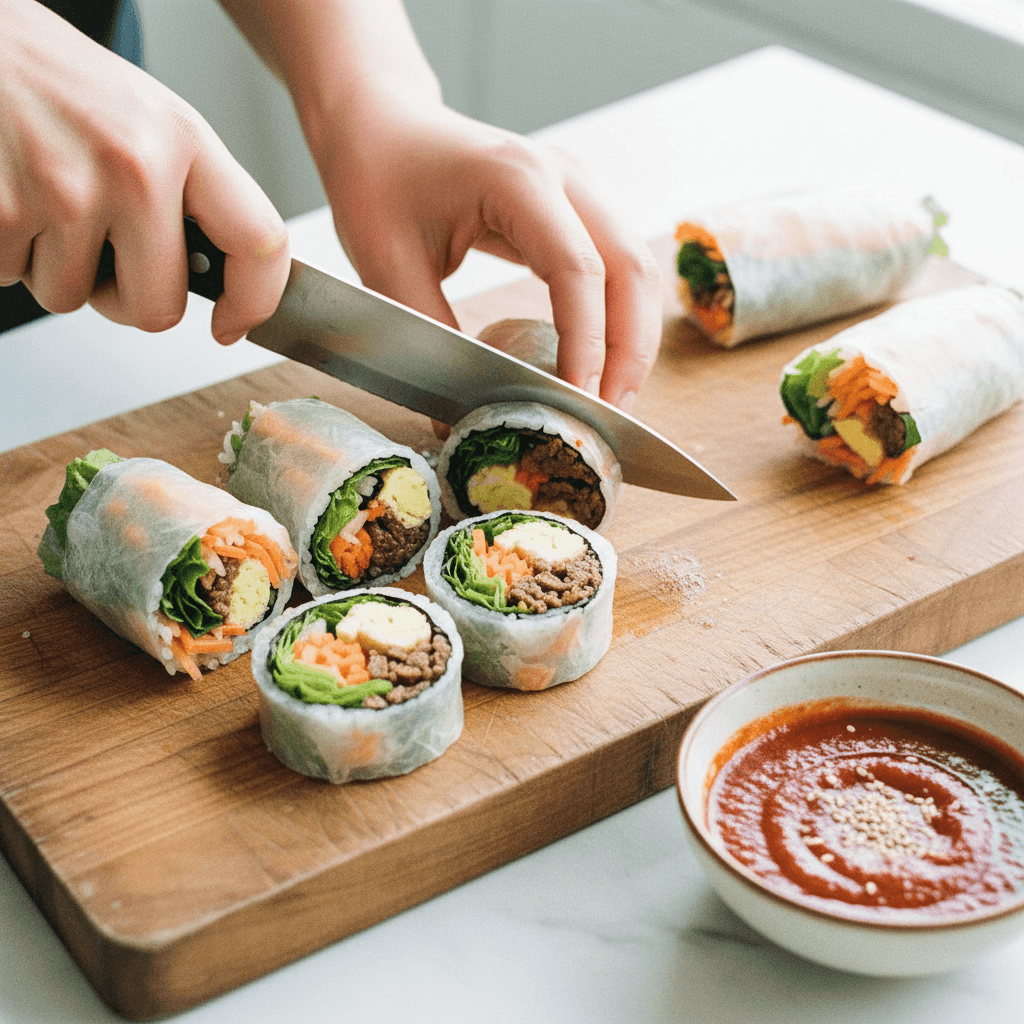
Kitchen Tools
Bulgogi Bibimbap Kimbap (Mini Rice Paper Version)
For the Bulgogi
- 1 pound thinly sliced beef
- 2 tablespoons sugar
- 4 tablespoons soy sauce
- 1 tablespoon oyster sauce
- 1 1/2 tablespoons mirin
- 1 tablespoon minced garlic
- 1 tablespoon sesame oil
- as needed black pepper
For the Fillings
- 2 cups cooked rice
- 5 lettuce leaves, small
- 2 carrots, small, julienned
- 3 Persian cucumbers, julienned
- as needed pickled radish, homemade or store-bought
- 5 eggs, for egg sheets, lightly salted
- as needed cooked bulgogi
For Wrapping
- 5 gim, seaweed, cut in half
- 5 rice paper, sheets
For the Gochujang Sauce
- 2 1/2 tablespoons gochujang
- 1 tablespoon soy sauce
- 1 1/2 tablespoons honey
- 1/2 tablespoon minced garlic
- 1 tablespoon sesame oil
- as needed sesame seeds
Instructions
- 1
Prepare the bulgogi marinade: In a medium bowl, combine the thinly sliced beef with 2 tablespoons sugar, 4 tablespoons soy sauce, 1 tablespoon oyster sauce, 1 1/2 tablespoons mirin, 1 tablespoon minced garlic, 1 tablespoon sesame oil, and black pepper to taste. Mix well to ensure the beef is evenly coated.
⏱️ 5 min - 2
Marinate the bulgogi: Cover the bowl and refrigerate the beef for at least 30 minutes to allow the flavors to meld.
- 3
Cook the bulgogi: Heat a large skillet or pan over medium-high heat. Add the marinated beef and pan-fry, stirring occasionally, until it is fully cooked through and lightly caramelized. This should take about 7-10 minutes. Set aside.
⏱️ 10 min - 4
Prepare the egg sheets: Whisk 5 eggs with a pinch of salt. Heat a lightly oiled non-stick pan over medium-low heat. Pour a thin layer of egg mixture into the pan, swirling to coat the bottom. Cook until set, then carefully flip and cook for another 30 seconds. Repeat with the remaining egg mixture to create several thin egg sheets. Once cooled, stack the egg sheets and slice them into thin strips.
⏱️ 10 min - 5
Make the gochujang sauce: In a small bowl, whisk together 2 1/2 tablespoons gochujang, 1 tablespoon soy sauce, 1 1/2 tablespoons honey, 1/2 tablespoon minced garlic, 1 tablespoon sesame oil, and sesame seeds to taste until well combined.
⏱️ 5 min - 6
Assemble the kimbap: Lay a half sheet of gim (seaweed), shiny side down, on a clean, flat surface (like a cutting board).
⏱️ 1 min - 7
Soften rice paper: Quickly dip one sheet of rice paper in water to soften it. It should be pliable but not overly soggy. Carefully place the softened rice paper on top of the gim, aligning the edges.
⏱️ 1 min - 8
Add fillings: Arrange the fillings in a line across the lower third of the rice paper and gim. Start with one lettuce leaf, then a portion of cooked rice, followed by julienned Persian cucumbers, julienned carrots, pickled radish, sliced egg sheets, and finally, a portion of the cooked bulgogi.
⏱️ 2 min - 9
Roll the kimbap: Carefully fold the bottom edge of the rice paper up and over the ingredients. Then, tightly roll the entire assembly upwards, pressing gently to keep the fillings compact. The rice paper will be sticky and help seal the roll.
⏱️ 2 min - 10
Seal and repeat: If needed, dab a little water along the top edge of the rice paper to help it seal completely. Repeat steps 6-9 for the remaining rolls.
⏱️ 1 min - 11
Finish and serve: Once all rolls are assembled, slice each completed roll into 4 pieces using a sharp, wet knife. You can also eat them whole or cut in half like a wrap. Serve immediately with the prepared gochujang sauce on the side for dipping.
⏱️ 3 min