Đồ Chua (Vietnamese Pickled Vegetables)
Đồ Chua (Vietnamese Pickled Vegetables)
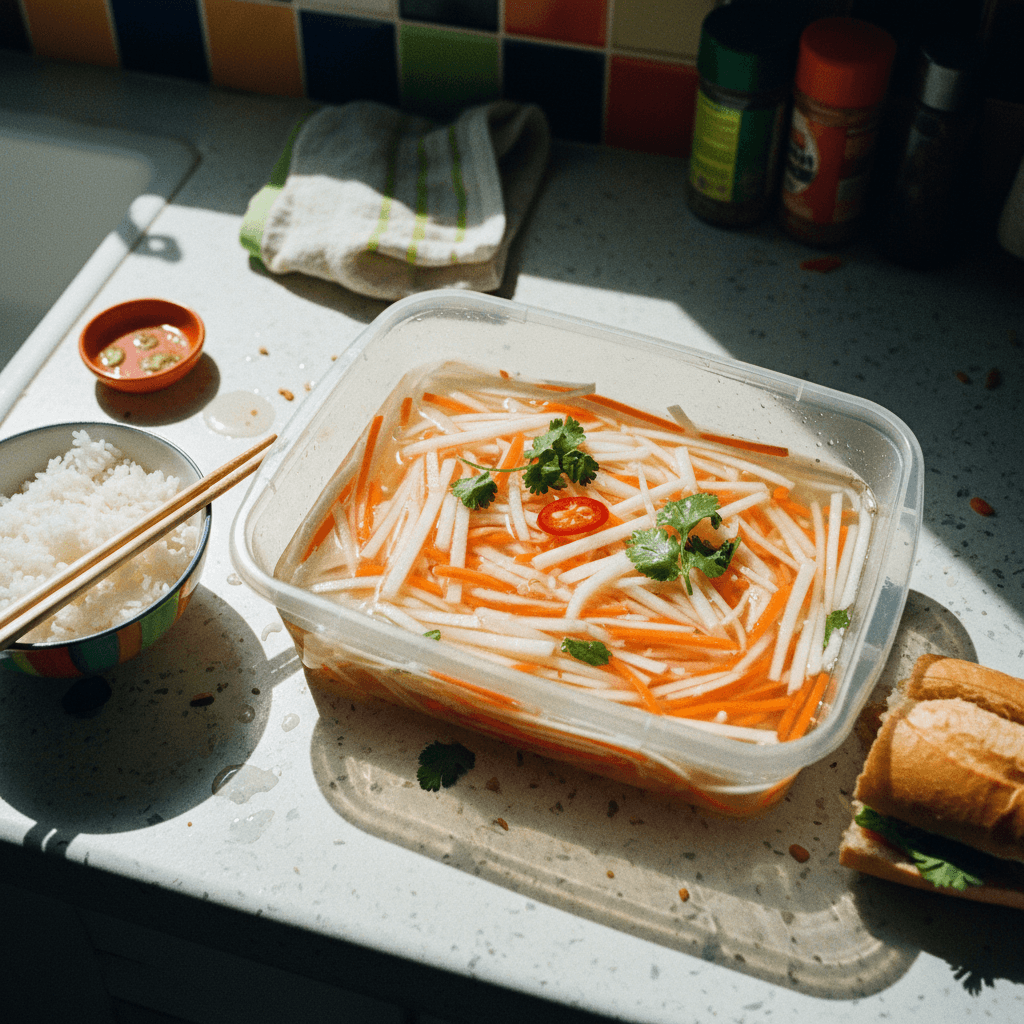
Ingredients
For the Vegetables
- 1 daikon, peeled
- 1 carrot, peeled
- 1 tablespoon salt, plus more for pickling liquid
For the Pickling Liquid
- 1/2 cup granulated sugar
- 1/2 cup rice wine vinegar
- 1/2 cup white vinegar
- 1/2 cup water
- 1/2 teaspoon salt
Instructions
- 1
Peel the daikon and carrot. Cut the carrot into 2 to 3-inch segments. Slice these segments into flat planks, then julienne them into thin strips. The strips should be thin enough for a good crunch but not so thin they become mushy. Repeat the process for the daikon, cutting it into similar-sized segments and then julienning into thin strips.
⏱️ 15 min
- 2
Place the julienned daikon and carrots into a large mixing bowl. Add 1 tablespoon of salt and mix thoroughly by hand, ensuring the salt is evenly distributed to help draw out excess water from the vegetables.
⏱️ 5 min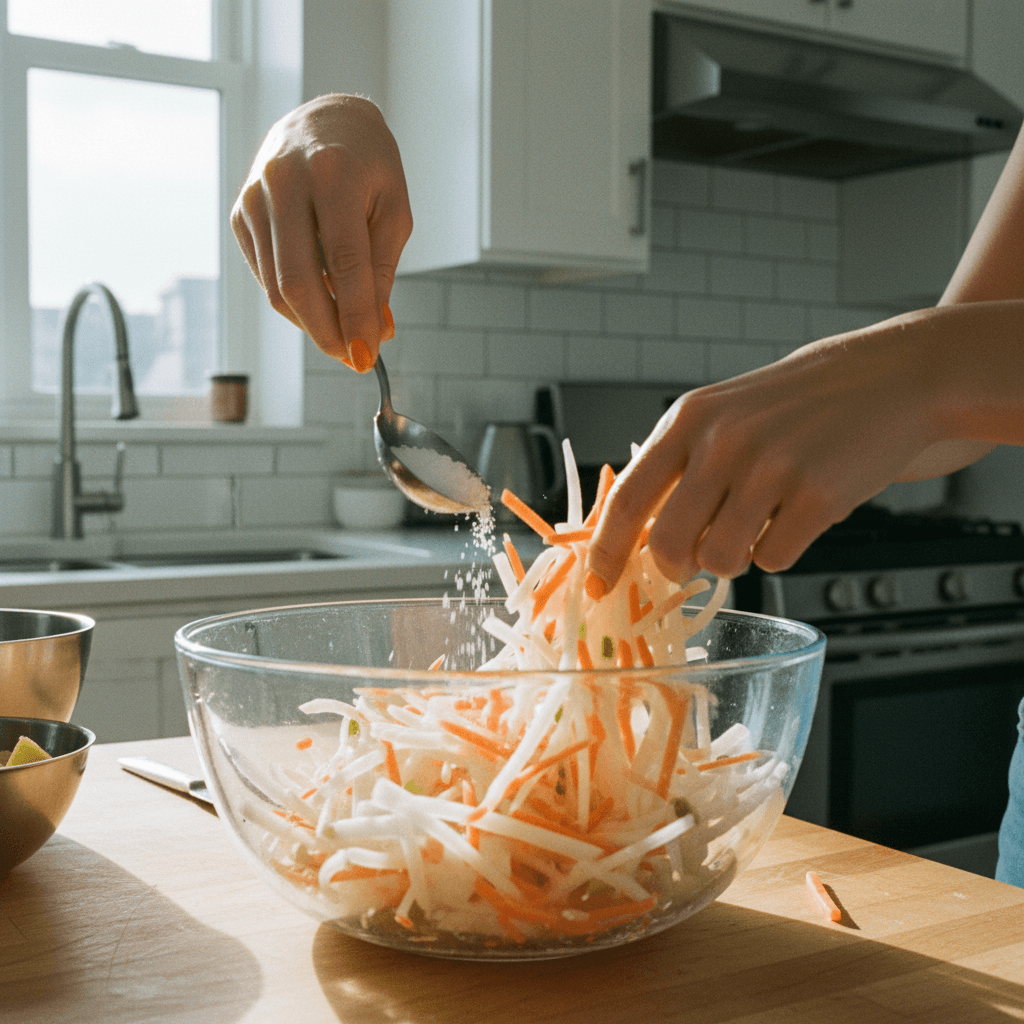
- 3
In a small pot or saucepan, combine the granulated sugar, 1/2 teaspoon of salt, rice wine vinegar, white vinegar, and water. Stir the ingredients well to combine.
⏱️ 2 min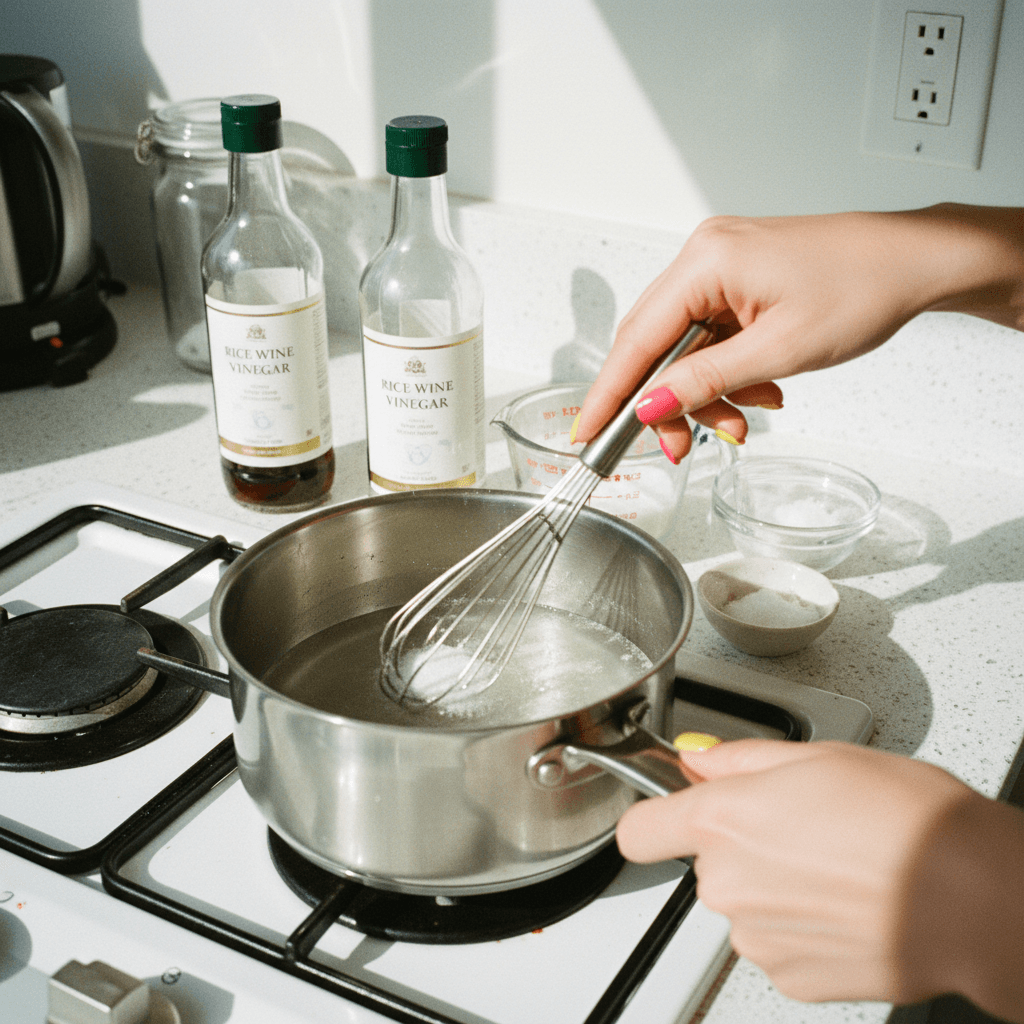
- 4
Place the pot on a stovetop over medium heat. Bring the mixture to a simmer, stirring occasionally until the sugar and salt are fully dissolved. Once simmering, remove the pot from the heat and allow the pickling liquid to cool completely to room temperature. This will take at least 30 minutes.
⏱️ 3 min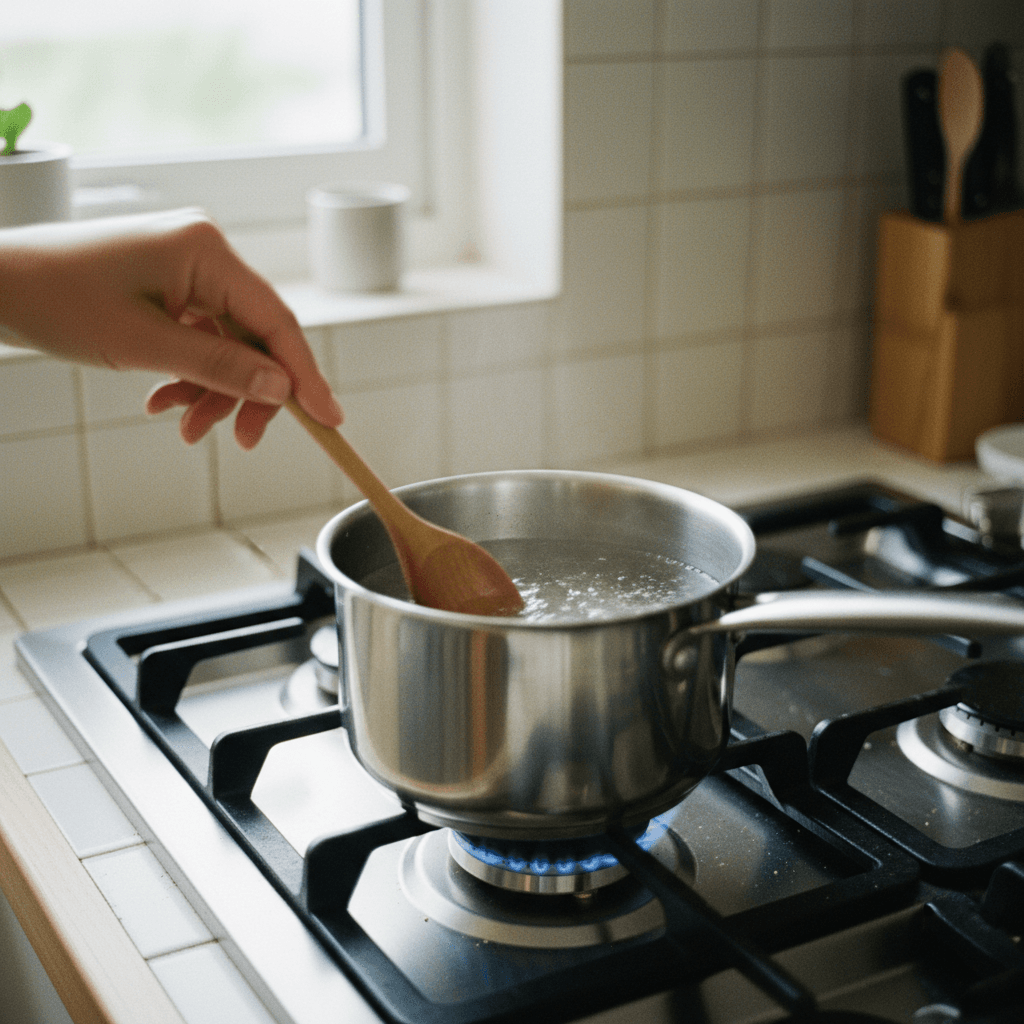
- 5
Once the vegetables have released their water (you'll see liquid at the bottom of the bowl), drain the liquid. Take handfuls of the salted vegetables and firmly squeeze out any remaining water with clean hands. This step is crucial for crunchy pickles.
⏱️ 5 min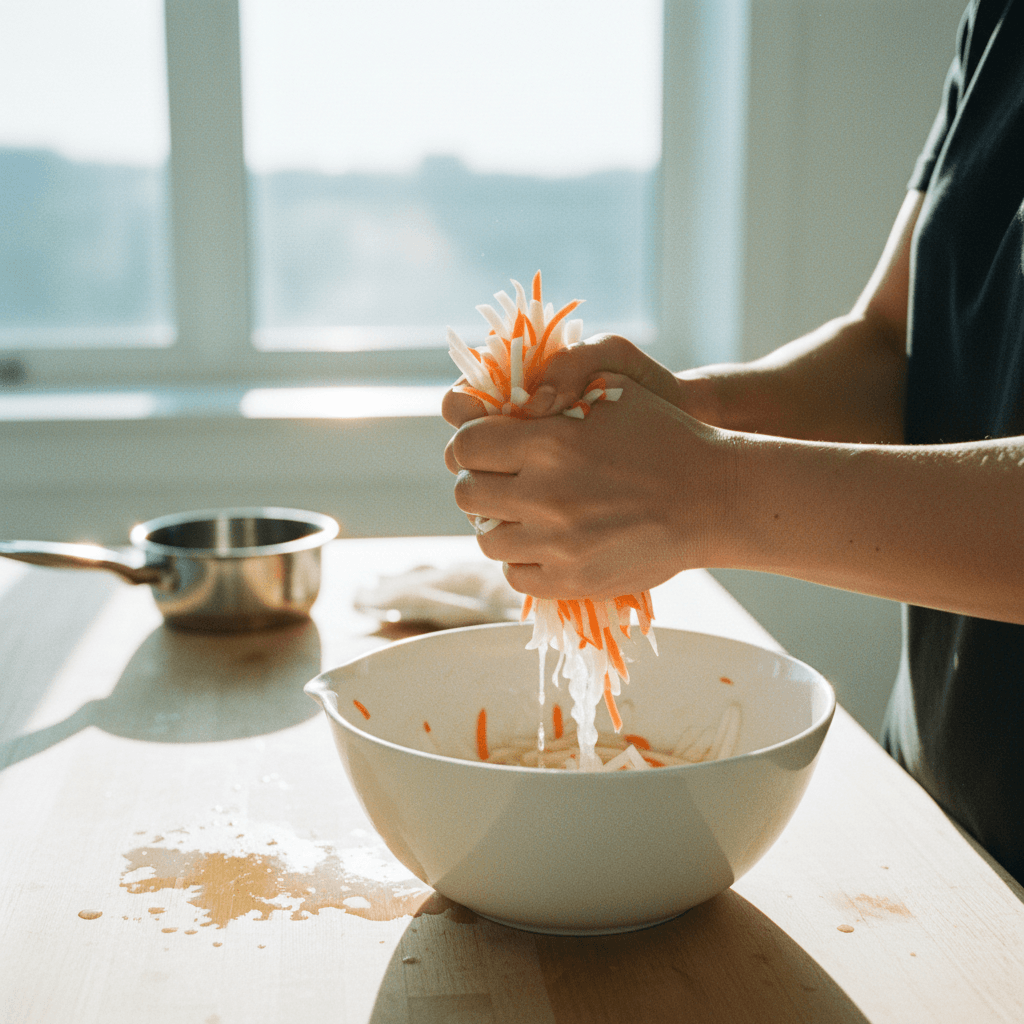
- 6
Transfer the squeezed vegetables into a clean, sealable container. Pour the cooled pickling liquid over the vegetables, ensuring they are fully submerged. Seal the container tightly and gently shake to distribute the liquid evenly.
⏱️ 5 min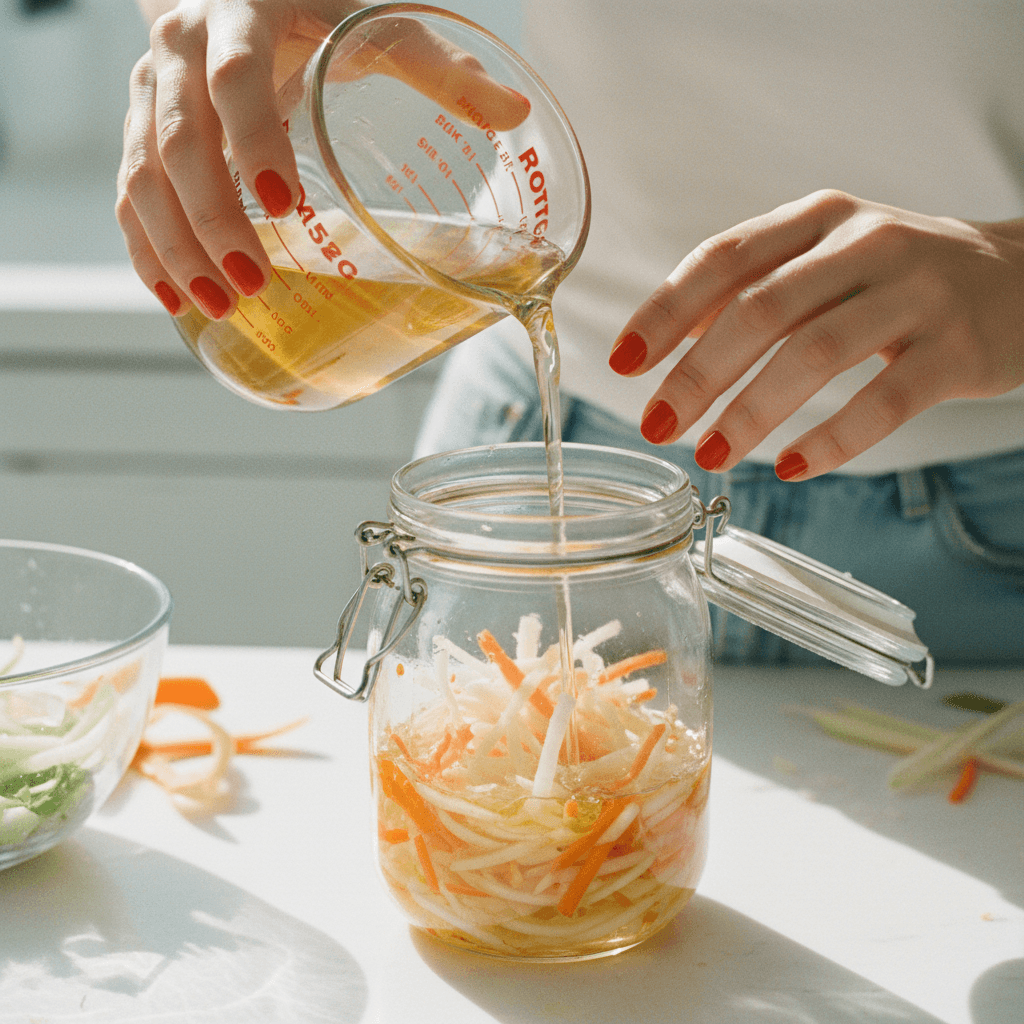
- 7
Refrigerate the pickled vegetables for at least 24 hours to allow the flavors to develop and the vegetables to properly pickle. While they can be eaten sooner, the taste and texture will improve significantly after a few days.
⏱️ 1440 min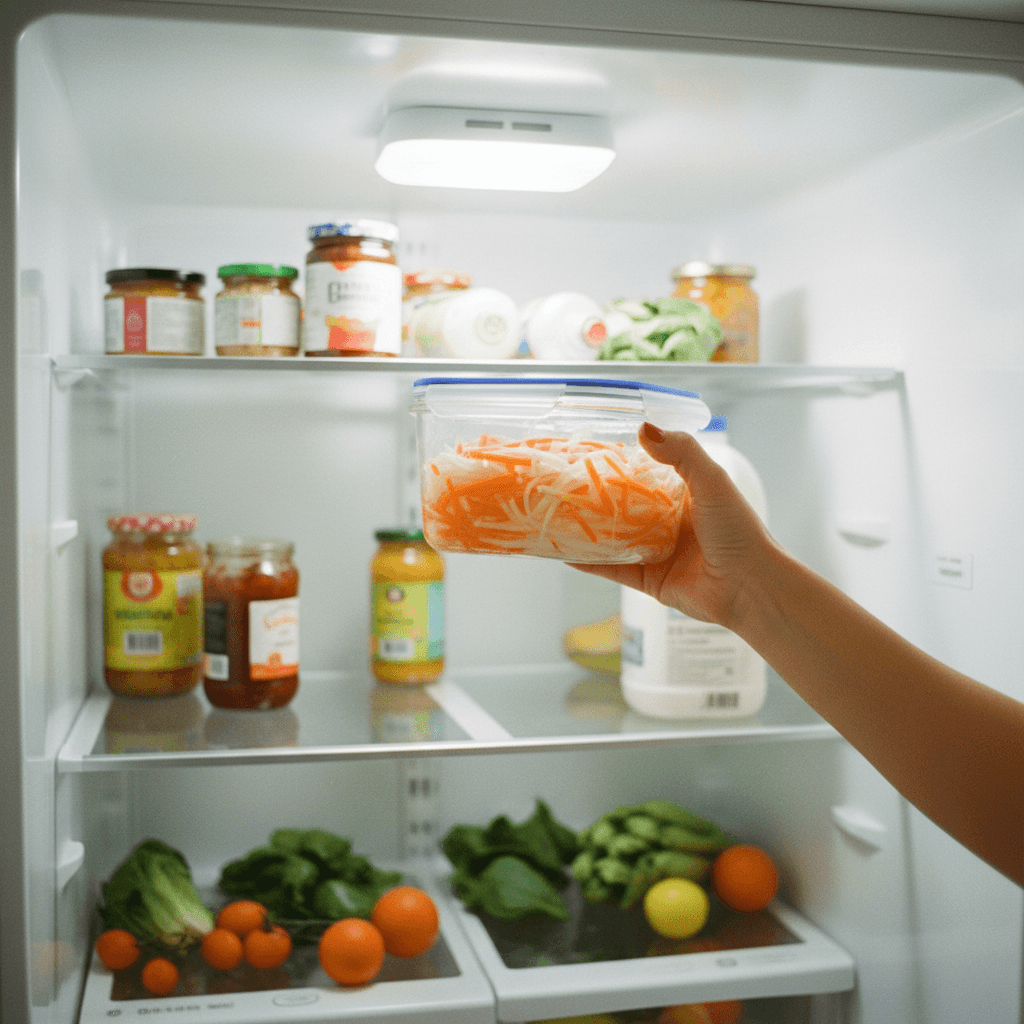
- 8
After a few days, the Đồ Chua is ready to be enjoyed. Serve plain as a side, or add to banh mi sandwiches, rice dishes, or noodle bowls for a refreshing crunch.

Kitchen Tools
Nutrition Facts (per serving)
Đồ Chua (Vietnamese Pickled Vegetables)
For the Vegetables
- 1 daikon, peeled
- 1 carrot, peeled
- 1 tablespoon salt, plus more for pickling liquid
For the Pickling Liquid
- 1/2 cup granulated sugar
- 1/2 cup rice wine vinegar
- 1/2 cup white vinegar
- 1/2 cup water
- 1/2 teaspoon salt
Instructions
- 1
Peel the daikon and carrot. Cut the carrot into 2 to 3-inch segments. Slice these segments into flat planks, then julienne them into thin strips. The strips should be thin enough for a good crunch but not so thin they become mushy. Repeat the process for the daikon, cutting it into similar-sized segments and then julienning into thin strips.
⏱️ 15 min - 2
Place the julienned daikon and carrots into a large mixing bowl. Add 1 tablespoon of salt and mix thoroughly by hand, ensuring the salt is evenly distributed to help draw out excess water from the vegetables.
⏱️ 5 min - 3
In a small pot or saucepan, combine the granulated sugar, 1/2 teaspoon of salt, rice wine vinegar, white vinegar, and water. Stir the ingredients well to combine.
⏱️ 2 min - 4
Place the pot on a stovetop over medium heat. Bring the mixture to a simmer, stirring occasionally until the sugar and salt are fully dissolved. Once simmering, remove the pot from the heat and allow the pickling liquid to cool completely to room temperature. This will take at least 30 minutes.
⏱️ 3 min - 5
Once the vegetables have released their water (you'll see liquid at the bottom of the bowl), drain the liquid. Take handfuls of the salted vegetables and firmly squeeze out any remaining water with clean hands. This step is crucial for crunchy pickles.
⏱️ 5 min - 6
Transfer the squeezed vegetables into a clean, sealable container. Pour the cooled pickling liquid over the vegetables, ensuring they are fully submerged. Seal the container tightly and gently shake to distribute the liquid evenly.
⏱️ 5 min - 7
Refrigerate the pickled vegetables for at least 24 hours to allow the flavors to develop and the vegetables to properly pickle. While they can be eaten sooner, the taste and texture will improve significantly after a few days.
⏱️ 1440 min - 8
After a few days, the Đồ Chua is ready to be enjoyed. Serve plain as a side, or add to banh mi sandwiches, rice dishes, or noodle bowls for a refreshing crunch.