Super Simple Sandwich Bread
Super Simple Sandwich Bread
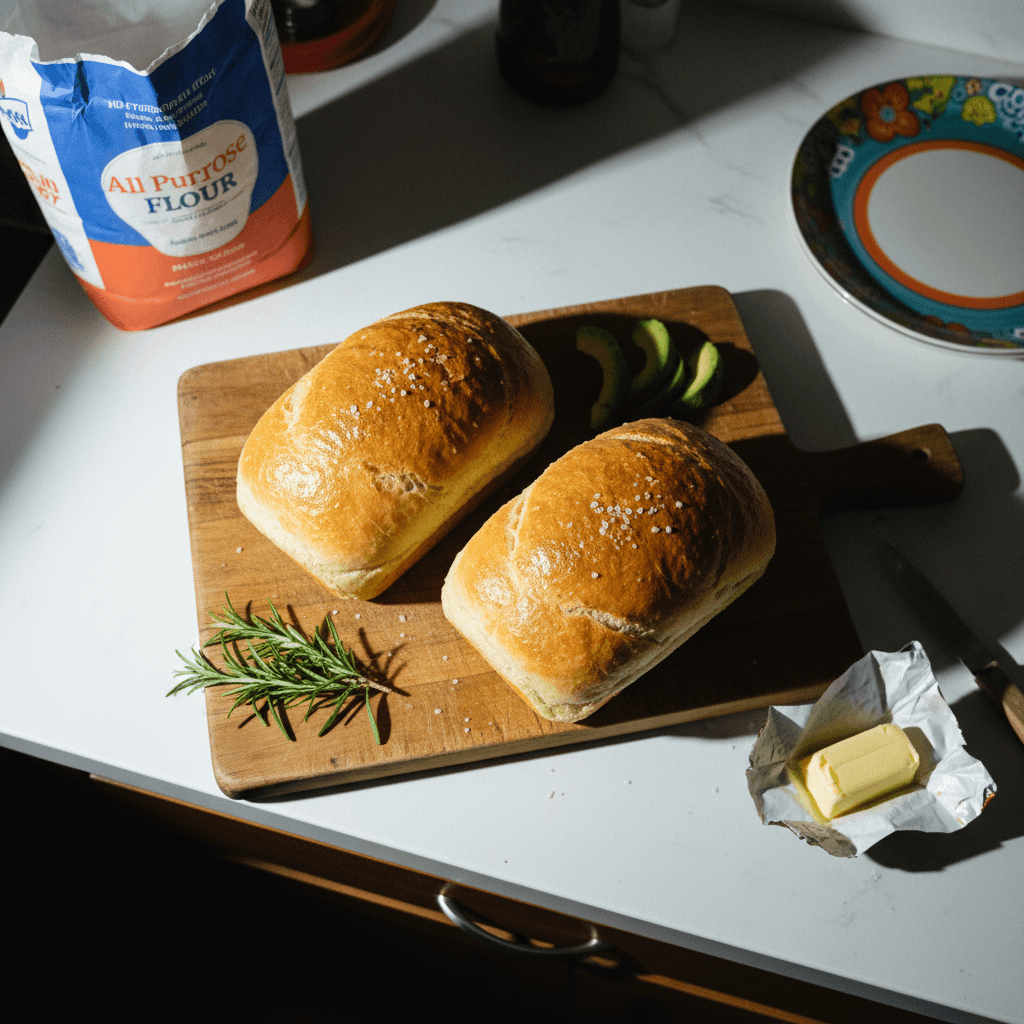
Ingredients
For the Dough
- 3 cups warm water, 110 degrees F
- 1 packet active dry yeast
- 1 tablespoon granulated sugar
- 1 tablespoon salt
- 2 tablespoons olive oil
- 6 cups all-purpose flour
For Finishing
- avocado oil spray, as needed, for greasing
- butter, as needed, for brushing
Instructions
- 1
In a large mixing bowl (preferably a stand mixer bowl), combine the warm water, active dry yeast, and granulated sugar. Whisk these ingredients together until well combined.
⏱️ 1 min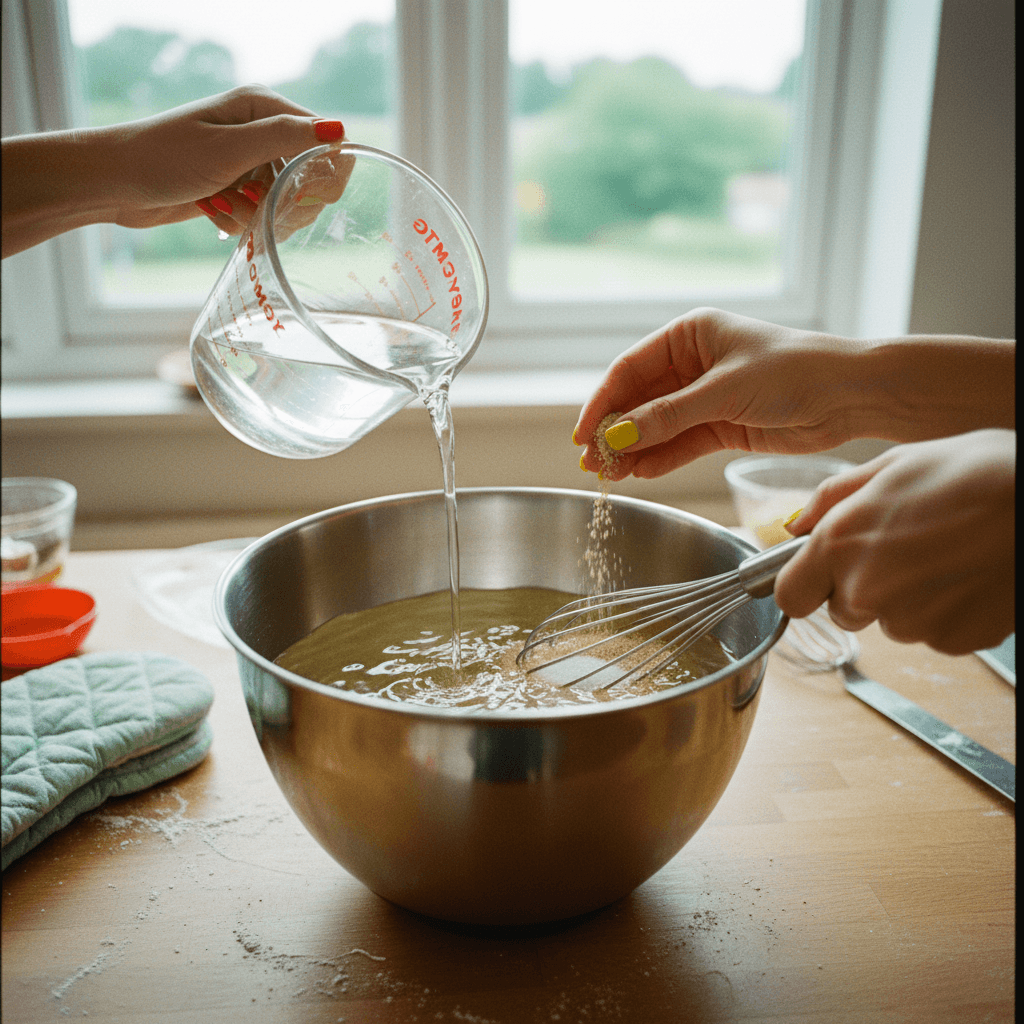
- 2
Let the mixture sit undisturbed for 10 minutes. It should become foamy on top, indicating that the yeast is active and proofing correctly.
⏱️ 10 min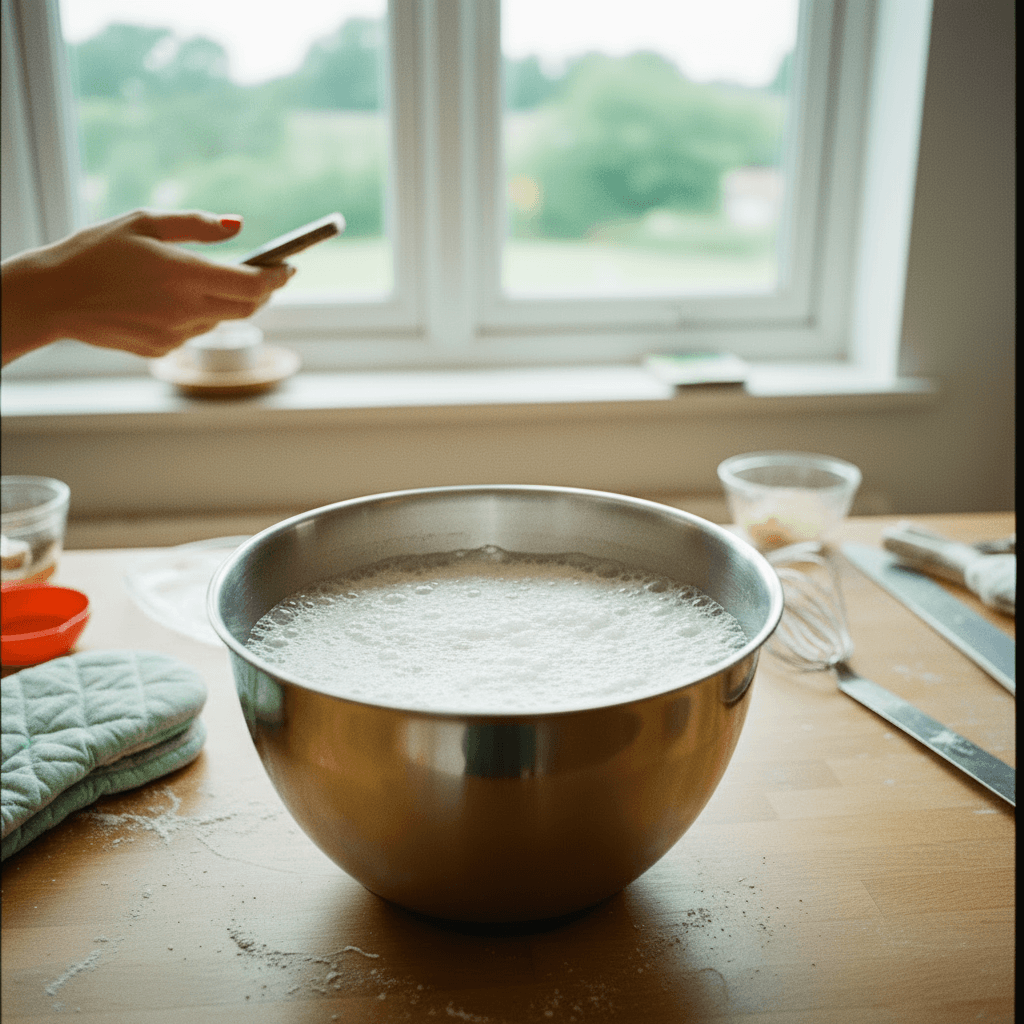
- 3
To the foamy yeast mixture, add the salt, olive oil, and all-purpose flour.
⏱️ 2 min
- 4
Attach the bowl to a stand mixer fitted with a dough hook. Knead the dough on medium speed for approximately 10 minutes. The dough should be sticky but should not adhere to your fingers when touched lightly.
⏱️ 10 min
- 5
Lightly spray a clean, large bowl with avocado oil spray. Transfer the kneaded dough into the greased bowl, turning it once to coat. Cover the bowl tightly with plastic wrap or a clean kitchen towel.
⏱️ 2 min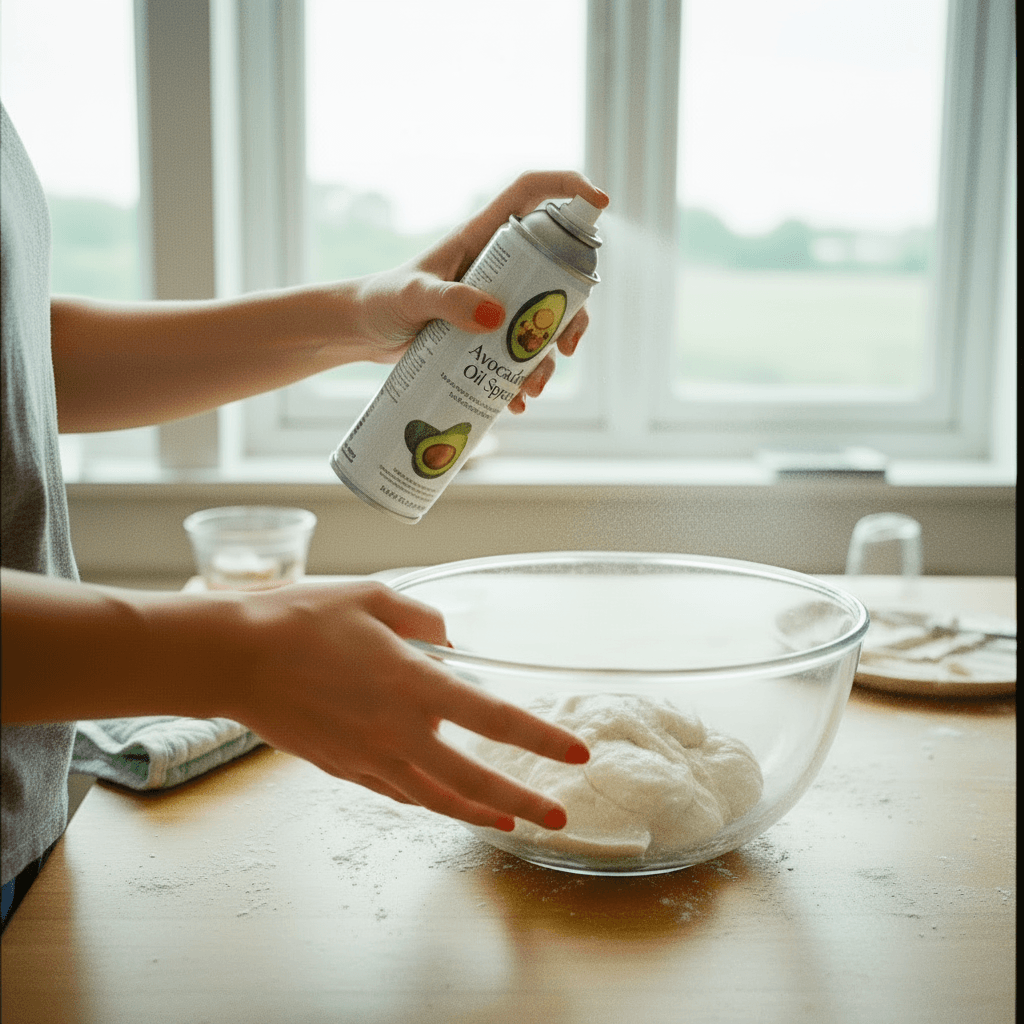
- 6
Place the covered bowl in a warm place and let the dough rise for about 1 hour, or until it has visibly doubled in size.
⏱️ 60 min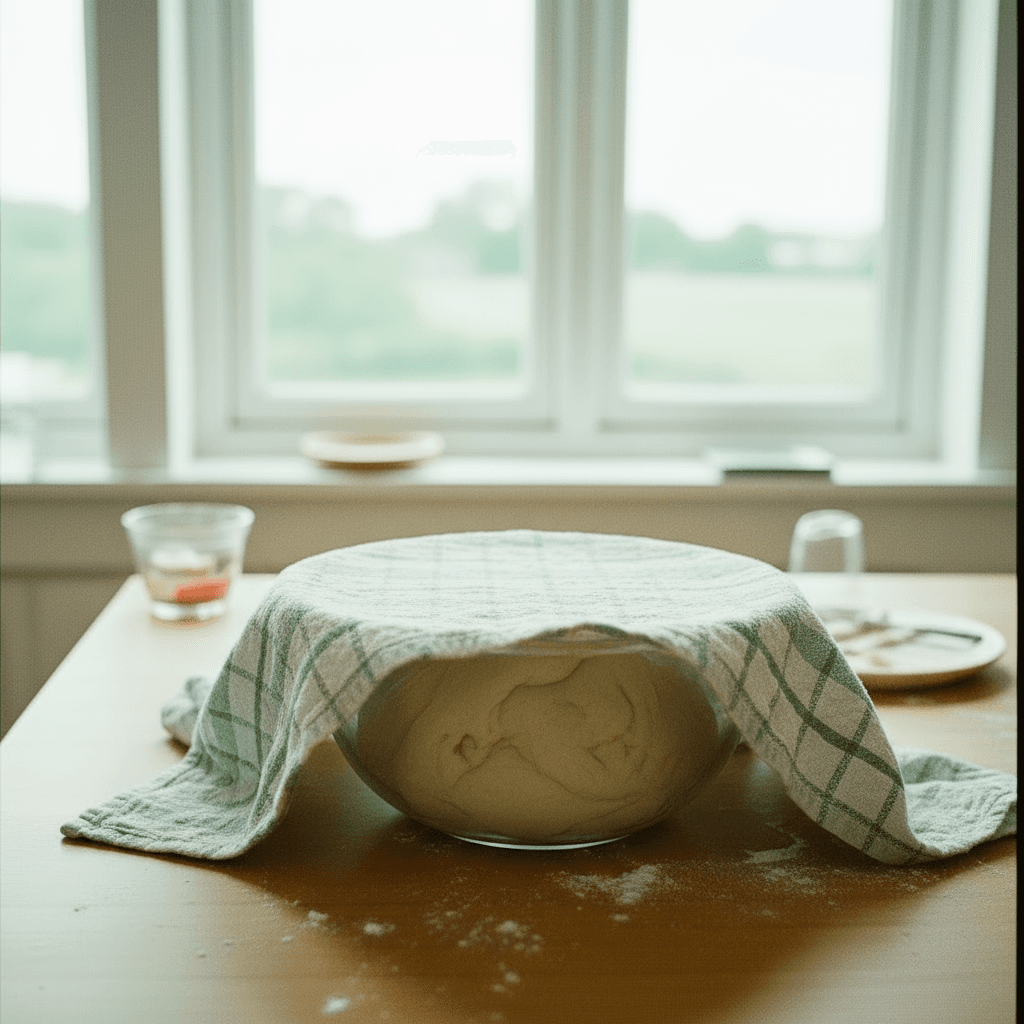
- 7
Once the dough has risen, gently punch it down to release the air. Turn the dough out onto a lightly floured surface. Shape the dough into a ball, then use a sharp knife or dough scraper to cut it in half.
⏱️ 3 min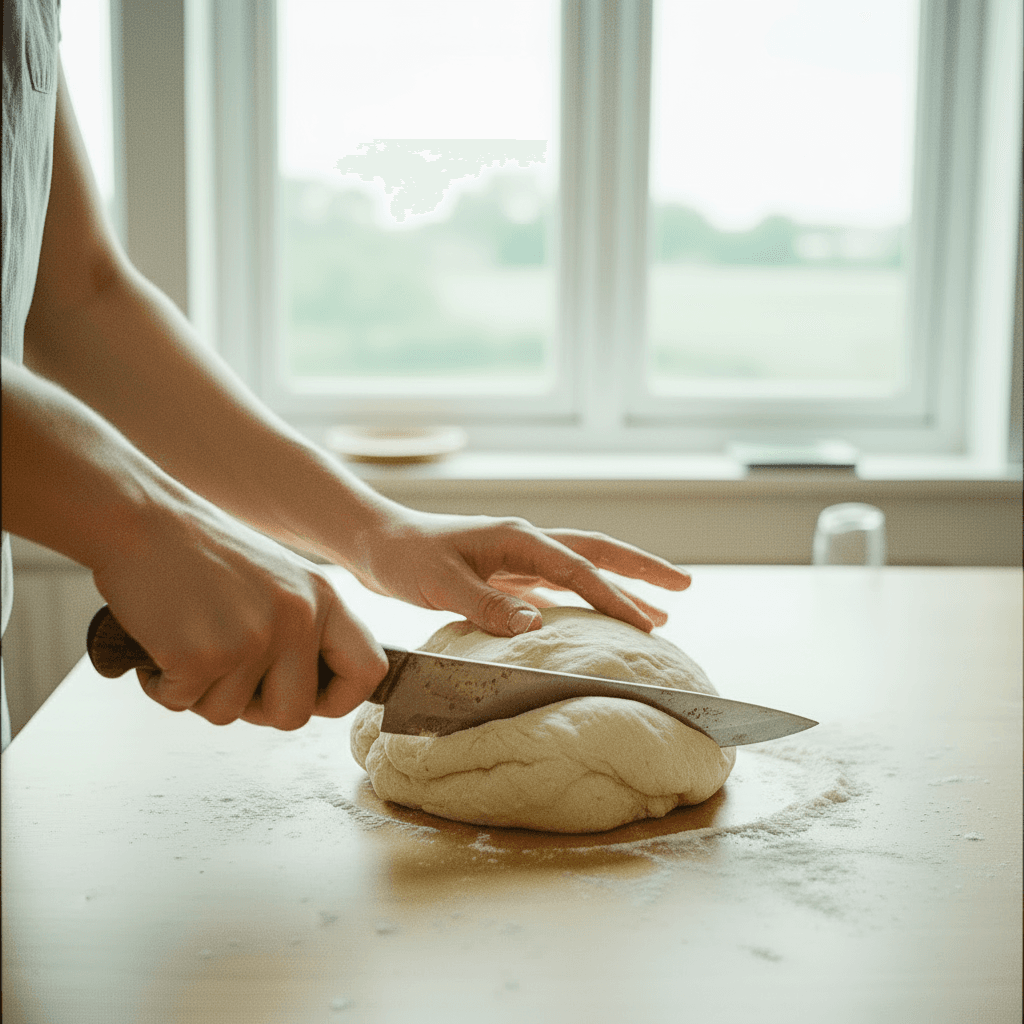
- 8
Shape each half of the dough into a log suitable for fitting into a standard loaf pan.
⏱️ 2 min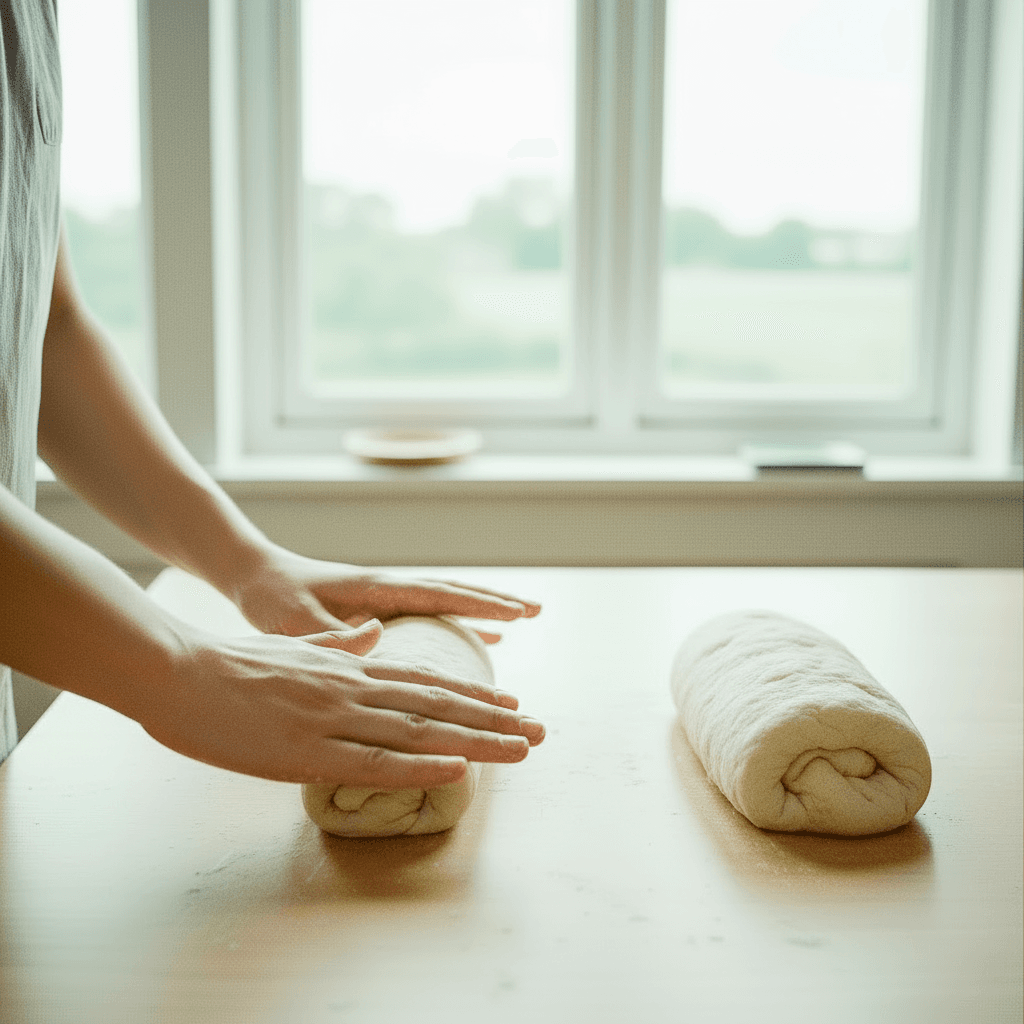
- 9
Spray two loaf pans generously with avocado oil spray. Place one dough log into each prepared loaf pan. Cover the loaf pans loosely with plastic wrap.
⏱️ 2 min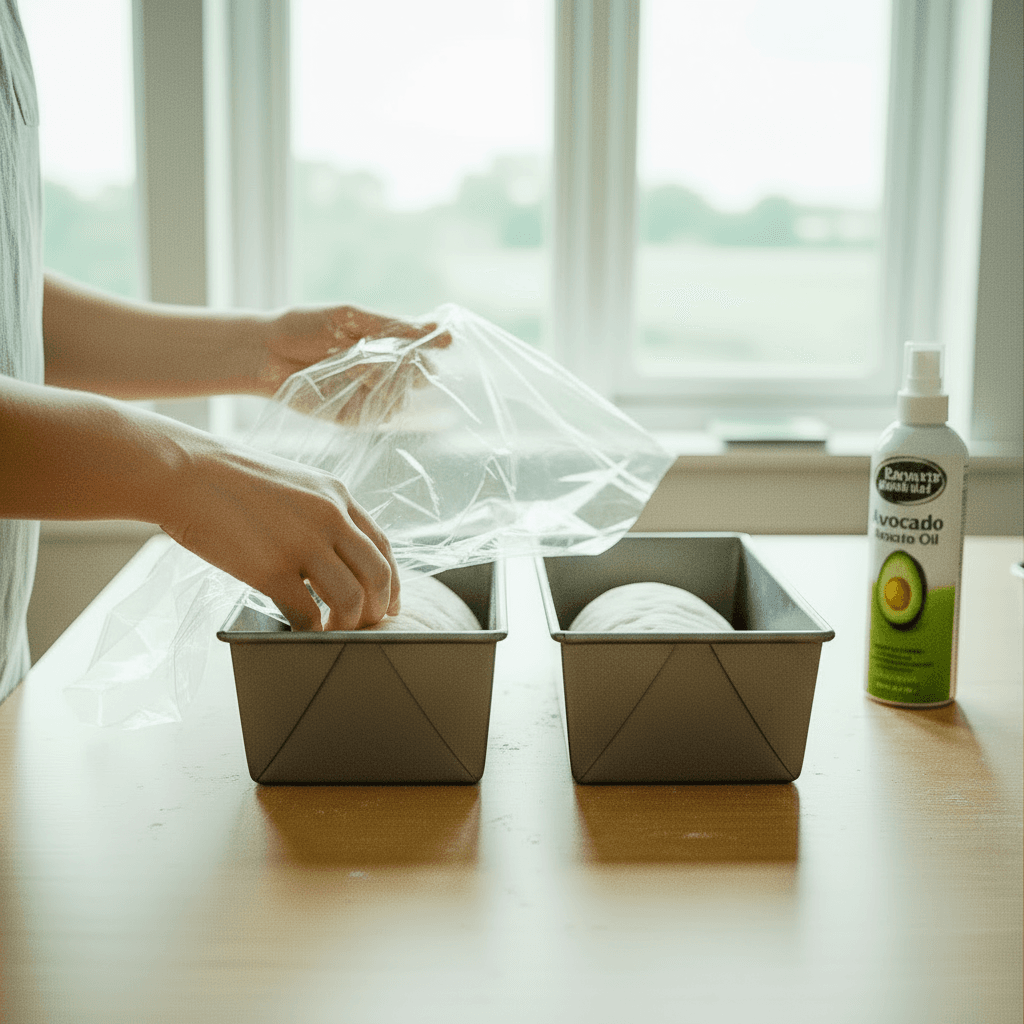
- 10
Let the dough rise again in the loaf pans for about 30 minutes, or until it has risen above the rim of the pans.
⏱️ 30 min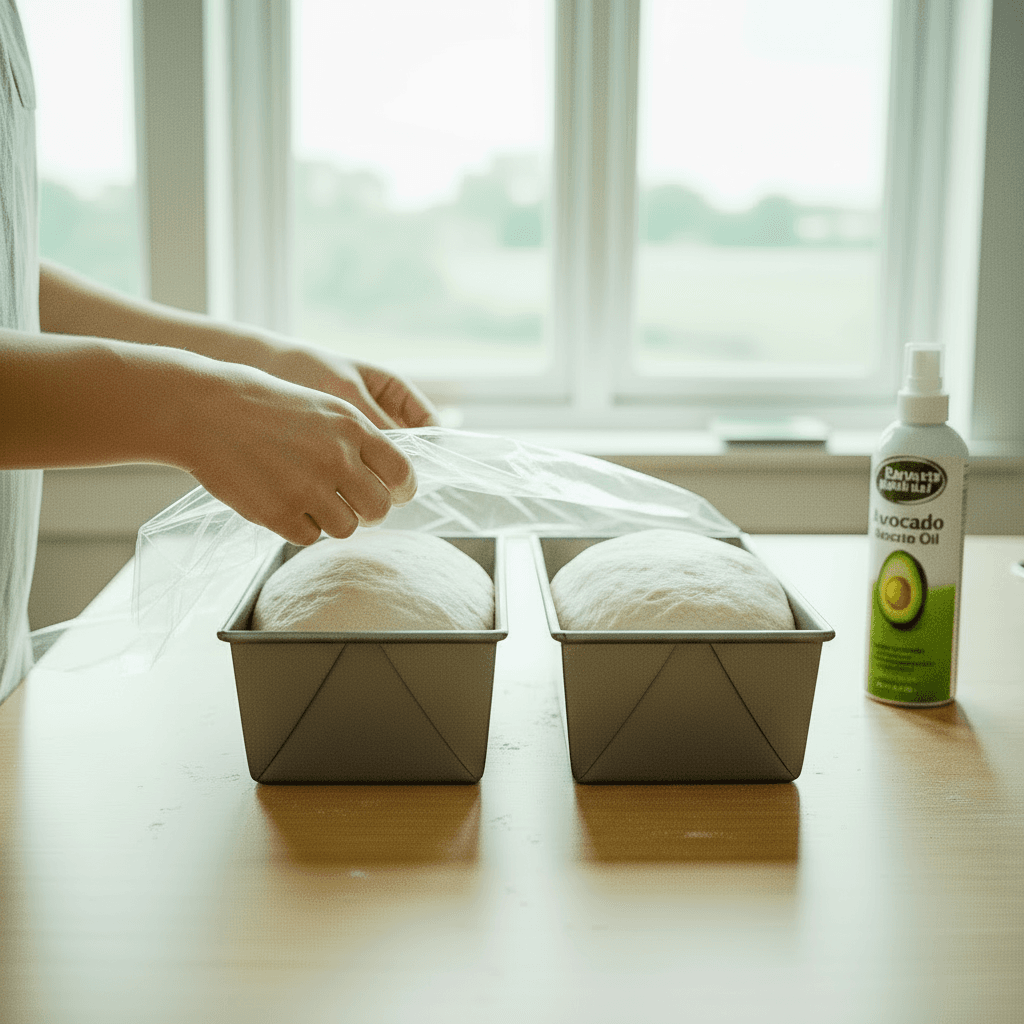
- 11
While the dough is on its second rise, preheat your oven to 350°F.
⏱️ 15 min•🌡️ 350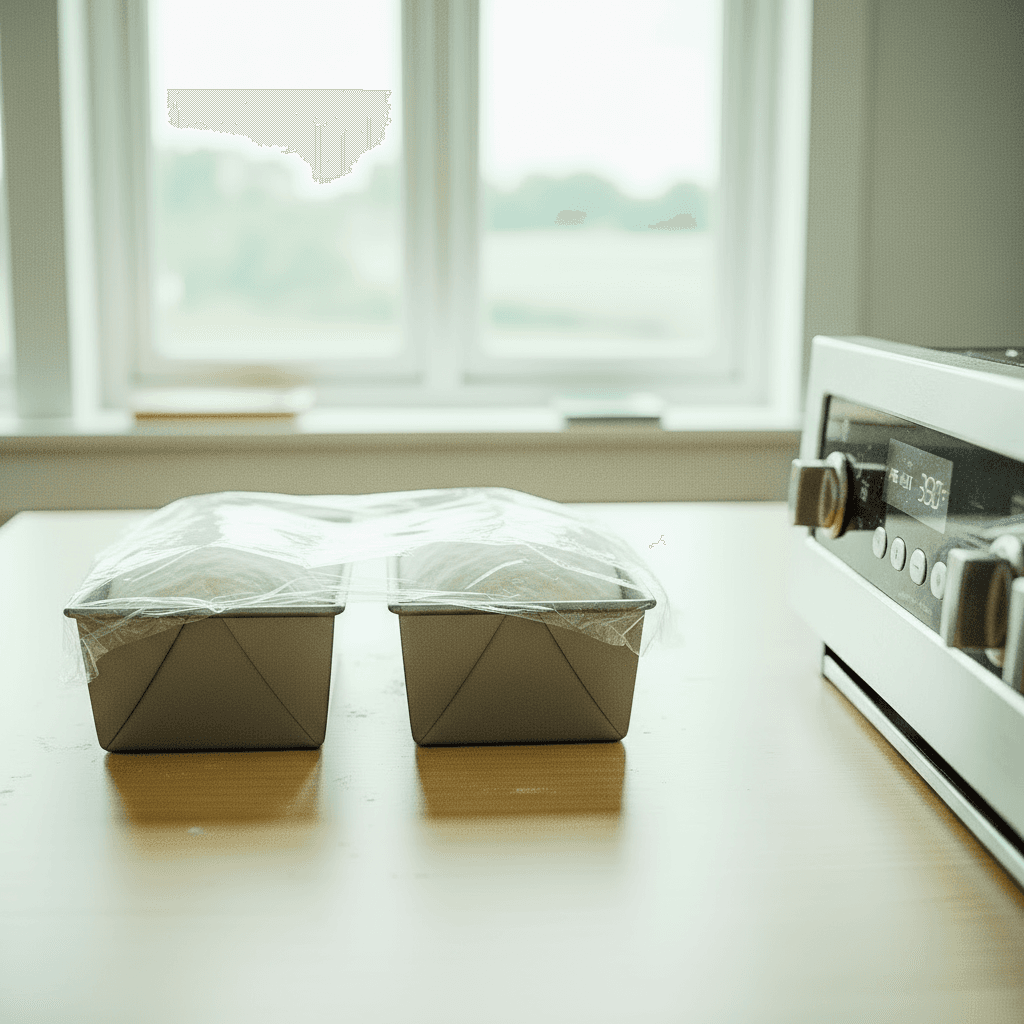
- 12
Once the dough has completed its second rise, carefully place the loaf pans into the preheated oven. Bake for approximately 25 to 30 minutes, or until the crust is golden brown and the internal temperature reaches 200-210°F.
⏱️ 30 min•🌡️ 350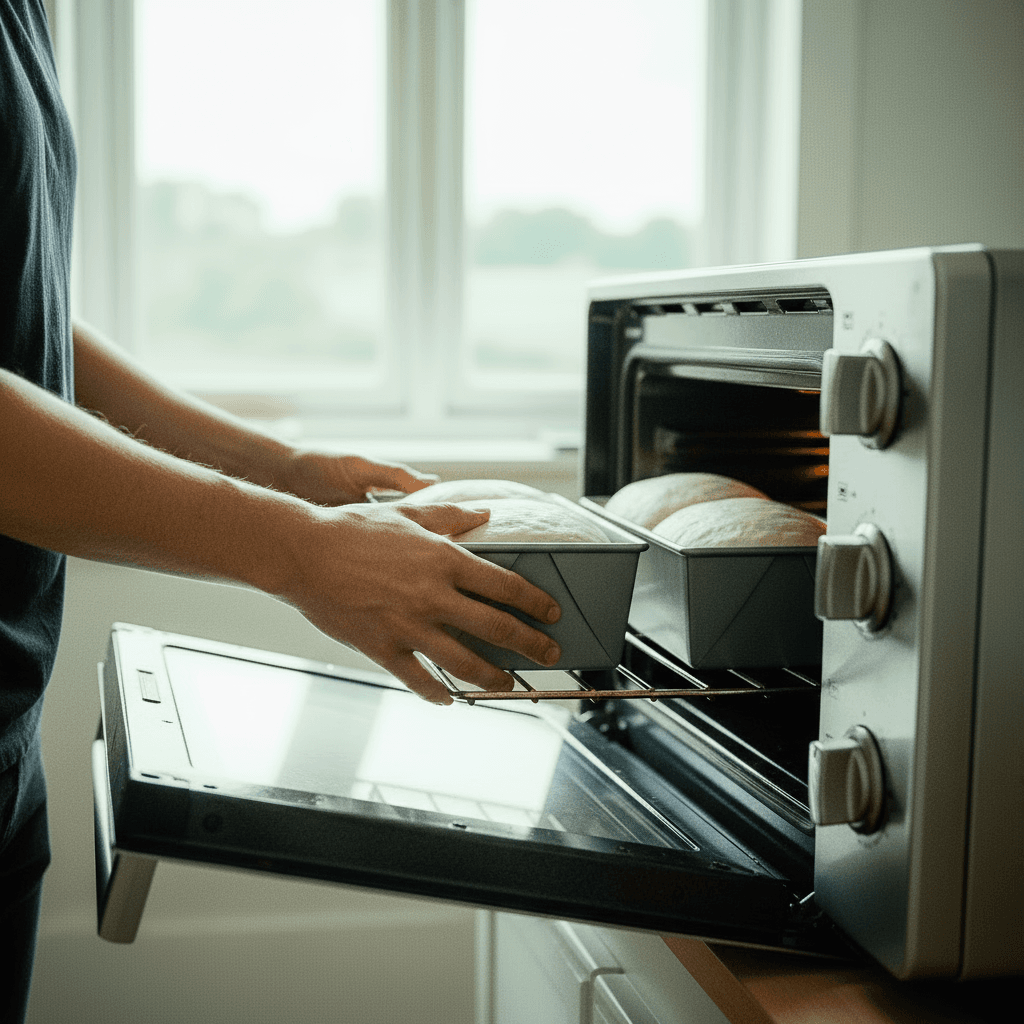
- 13
Remove the baked bread from the oven. While the loaves are still warm, gently rub butter generously over the tops of the loaves to create a soft crust.
⏱️ 1 min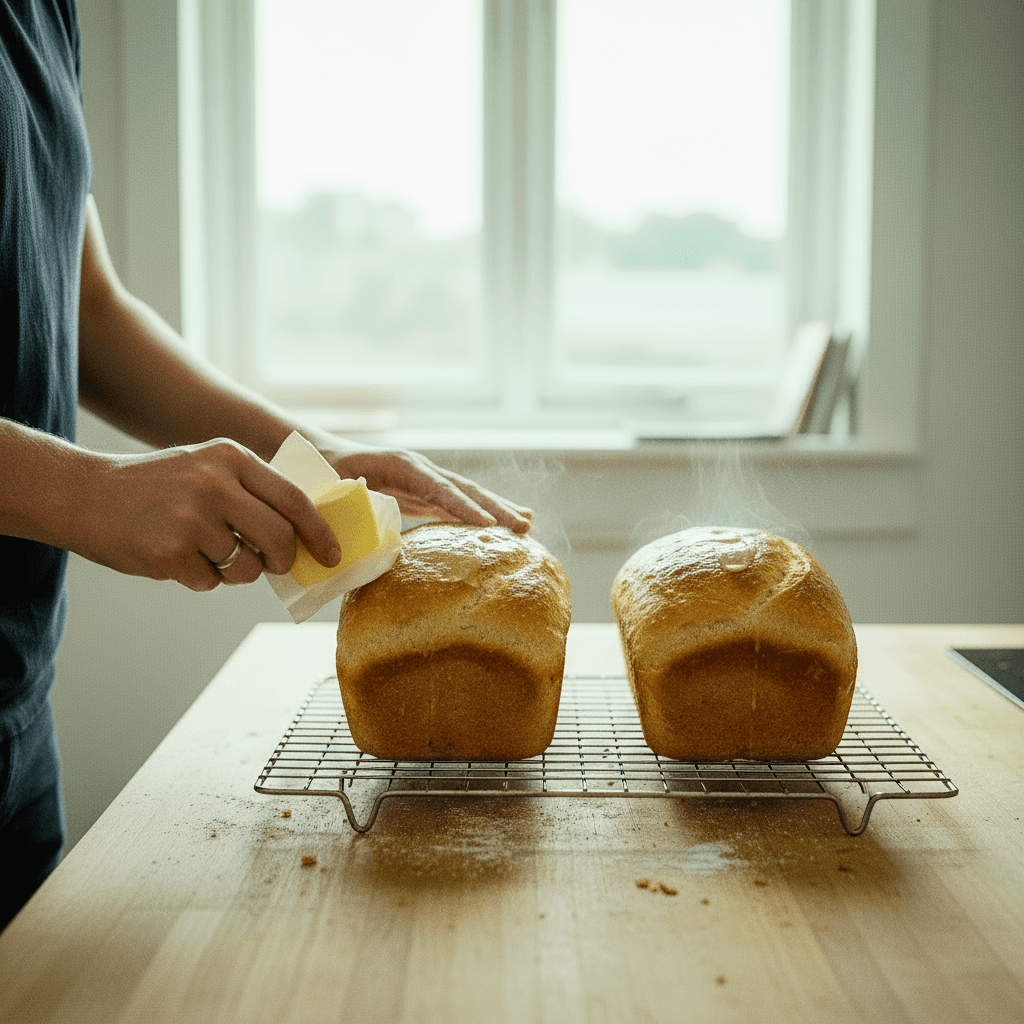
- 14
Allow the bread to cool completely on a wire rack before slicing and serving. This ensures a proper texture and prevents the bread from becoming gummy.
⏱️ 60 min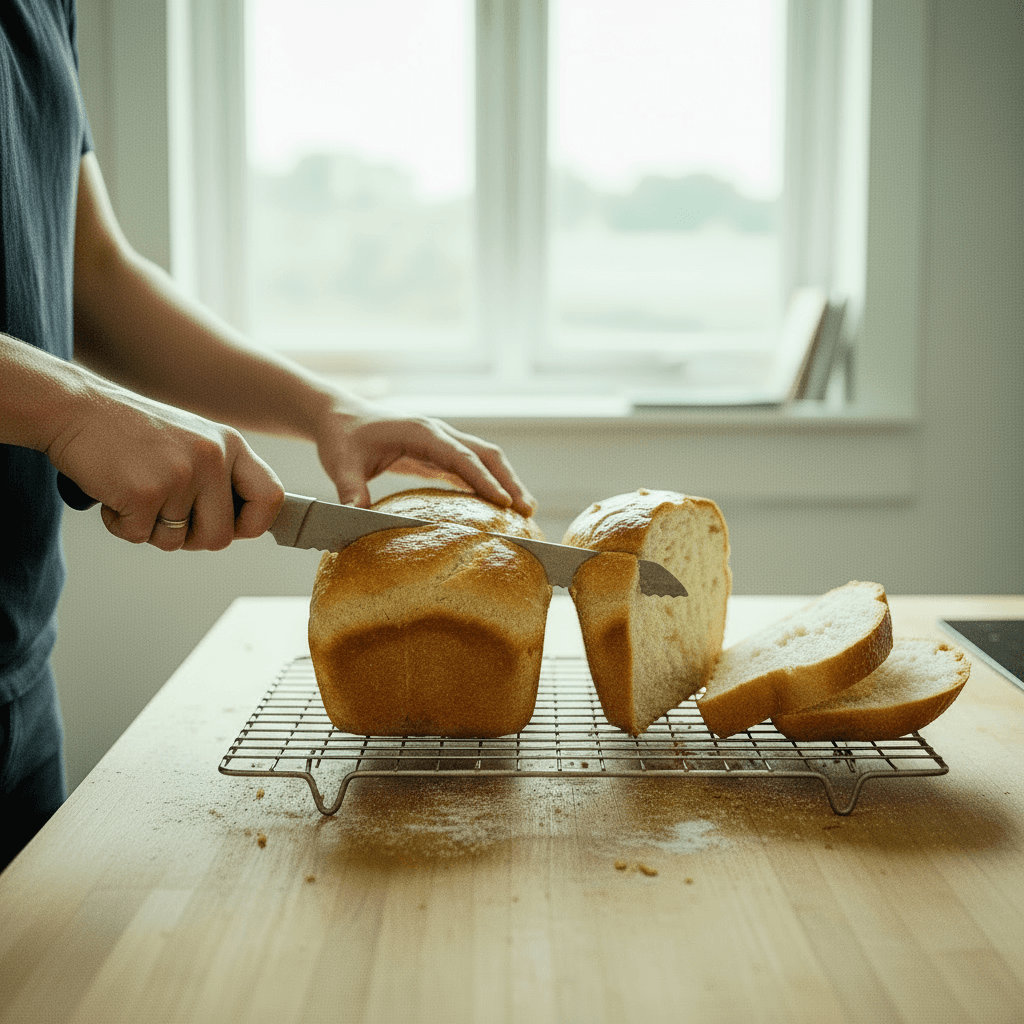
Kitchen Tools
Nutrition Facts (per serving)
Super Simple Sandwich Bread
Ingredients
For the Dough
- 3 cups warm water, 110 degrees F
- 1 packet active dry yeast
- 1 tablespoon granulated sugar
- 1 tablespoon salt
- 2 tablespoons olive oil
- 6 cups all-purpose flour
For Finishing
- avocado oil spray, as needed, for greasing
- butter, as needed, for brushing
Instructions
- 1
In a large mixing bowl (preferably a stand mixer bowl), combine the warm water, active dry yeast, and granulated sugar. Whisk these ingredients together until well combined.
⏱️ 1 min - 2
Let the mixture sit undisturbed for 10 minutes. It should become foamy on top, indicating that the yeast is active and proofing correctly.
⏱️ 10 min - 3
To the foamy yeast mixture, add the salt, olive oil, and all-purpose flour.
⏱️ 2 min - 4
Attach the bowl to a stand mixer fitted with a dough hook. Knead the dough on medium speed for approximately 10 minutes. The dough should be sticky but should not adhere to your fingers when touched lightly.
⏱️ 10 min - 5
Lightly spray a clean, large bowl with avocado oil spray. Transfer the kneaded dough into the greased bowl, turning it once to coat. Cover the bowl tightly with plastic wrap or a clean kitchen towel.
⏱️ 2 min - 6
Place the covered bowl in a warm place and let the dough rise for about 1 hour, or until it has visibly doubled in size.
⏱️ 60 min - 7
Once the dough has risen, gently punch it down to release the air. Turn the dough out onto a lightly floured surface. Shape the dough into a ball, then use a sharp knife or dough scraper to cut it in half.
⏱️ 3 min - 8
Shape each half of the dough into a log suitable for fitting into a standard loaf pan.
⏱️ 2 min - 9
Spray two loaf pans generously with avocado oil spray. Place one dough log into each prepared loaf pan. Cover the loaf pans loosely with plastic wrap.
⏱️ 2 min - 10
Let the dough rise again in the loaf pans for about 30 minutes, or until it has risen above the rim of the pans.
⏱️ 30 min - 11
While the dough is on its second rise, preheat your oven to 350°F.
⏱️ 15 min•🌡️ 350 - 12
Once the dough has completed its second rise, carefully place the loaf pans into the preheated oven. Bake for approximately 25 to 30 minutes, or until the crust is golden brown and the internal temperature reaches 200-210°F.
⏱️ 30 min•🌡️ 350 - 13
Remove the baked bread from the oven. While the loaves are still warm, gently rub butter generously over the tops of the loaves to create a soft crust.
⏱️ 1 min - 14
Allow the bread to cool completely on a wire rack before slicing and serving. This ensures a proper texture and prevents the bread from becoming gummy.
⏱️ 60 min