KBBQ at Home
KBBQ at Home
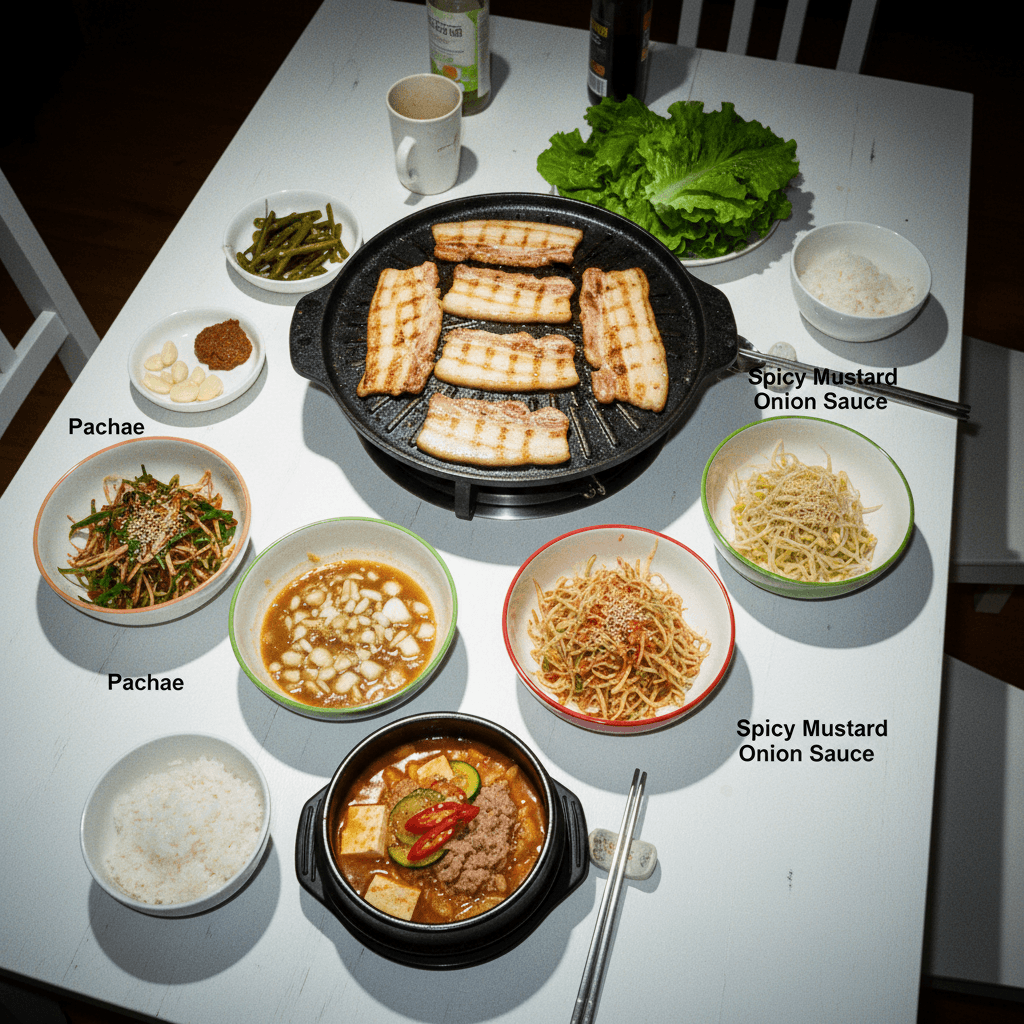
Ingredients
For the Pork Belly
- 1 pound pork belly, thick slab
For the Pachae (Leek Salad)
- 2 cups leek, thinly sliced
- 1 tablespoon gochugaru
- 1 tablespoon granulated sugar
- 1 tablespoon fish sauce
- 1 tablespoon sesame oil
- 1 tablespoon sesame seeds
For the Spicy Mustard Onion Sauce
- 1/2 onion, thinly sliced
- 1 tablespoon spicy mustard
- 1 tablespoon soy sauce
- 1 tablespoon rice wine vinegar
- 1 tablespoon granulated sugar
- 1/4 cup water
For the Kongnamul Muchim (Soybean Sprout Salad)
- 2 cups soybean sprouts
- 1 tablespoon garlic, minced or grated
- 1 tablespoon gochugaru
- 1 teaspoon salt
- 1 tablespoon sesame oil
- 1 tablespoon sesame seeds
For the Dwenjangjjigae (Soybean Paste Stew)
- 1 1/2 cups water
- 1/4 cup dwenjang
- 1 tablespoon gochugaru
- 1/4 cup ground pork or beef
- 1/4 cup onion, chunks
- 1/4 cup leeks, sliced
- 1/4 cup squash, diced
- 1/4 cup firm tofu, cubed
- 1 chili pepper, sliced
For Grilling and Serving
- 12 garlic cloves, peeled
- 1 cup aged kimchi
- 1 head lettuce leaves, for wrapping
- 1/2 cup ssamjang
- 3 cups cooked rice
- 3 seaweed sheets
Instructions
- 1
Prepare the pork belly: Cut the pork belly into thick slabs. Make straight cuts on one side, being careful not to cut all the way through. Flip the pork belly over and make diagonal cuts on the other side, also being careful not to cut all the way through. This 'beehive' technique allows the pork belly to open up like an accordion.
⏱️ 10 min
- 2
Prepare the Pachae (Leek Salad): Thinly julienne the leeks. Place the sliced leeks in a bowl of ice water and let them soak for 10 minutes to reduce their acridness. Drain thoroughly.
⏱️ 5 min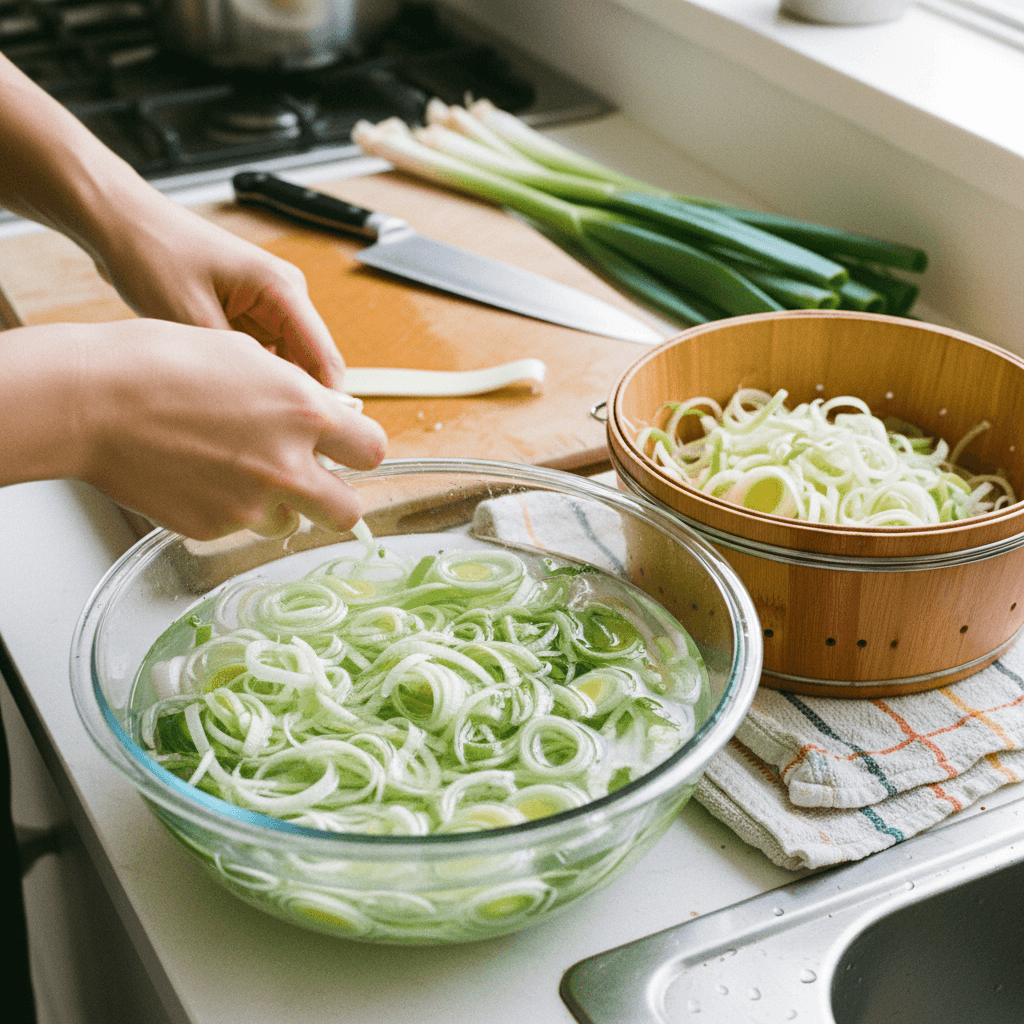
- 3
Dress the Pachae: In a mixing bowl, combine the drained leeks with 1 tablespoon gochugaru, 1 tablespoon granulated sugar, 1 tablespoon fish sauce, 1 tablespoon sesame oil, and 1 tablespoon sesame seeds. Mix well to ensure the leeks are evenly coated.
⏱️ 5 min
- 4
Prepare the Spicy Mustard Onion Sauce: Thinly slice the onion. Soak the sliced onions in a bowl of ice water for 10 minutes, then drain well.
⏱️ 5 min
- 5
Make the Spicy Mustard Onion Dressing: In a separate bowl, whisk together 1 tablespoon spicy mustard, 1 tablespoon soy sauce, 1 tablespoon rice wine vinegar, 1 tablespoon granulated sugar, and 1/4 cup water. Dress the drained onions with this sauce.
⏱️ 5 min
- 6
Prepare the Kongnamul Muchim (Soybean Sprout Salad): Blanch or boil the soybean sprouts until tender-crisp, about 2-3 minutes. Drain and cool slightly.
⏱️ 5 min
- 7
Dress the Kongnamul Muchim: In a bowl, combine the blanched soybean sprouts with 1 tablespoon minced or grated garlic, 1 tablespoon gochugaru, 1 teaspoon salt, 1 tablespoon sesame oil, and 1 tablespoon sesame seeds. Mix thoroughly by hand until all ingredients are well combined.
⏱️ 5 min
- 8
Prepare the Dwenjangjjigae (Soybean Paste Stew): In a pot, add 1 1/2 cups water. Stir in 1/4 cup dwenjang and 1 tablespoon gochugaru until dissolved.
⏱️ 2 min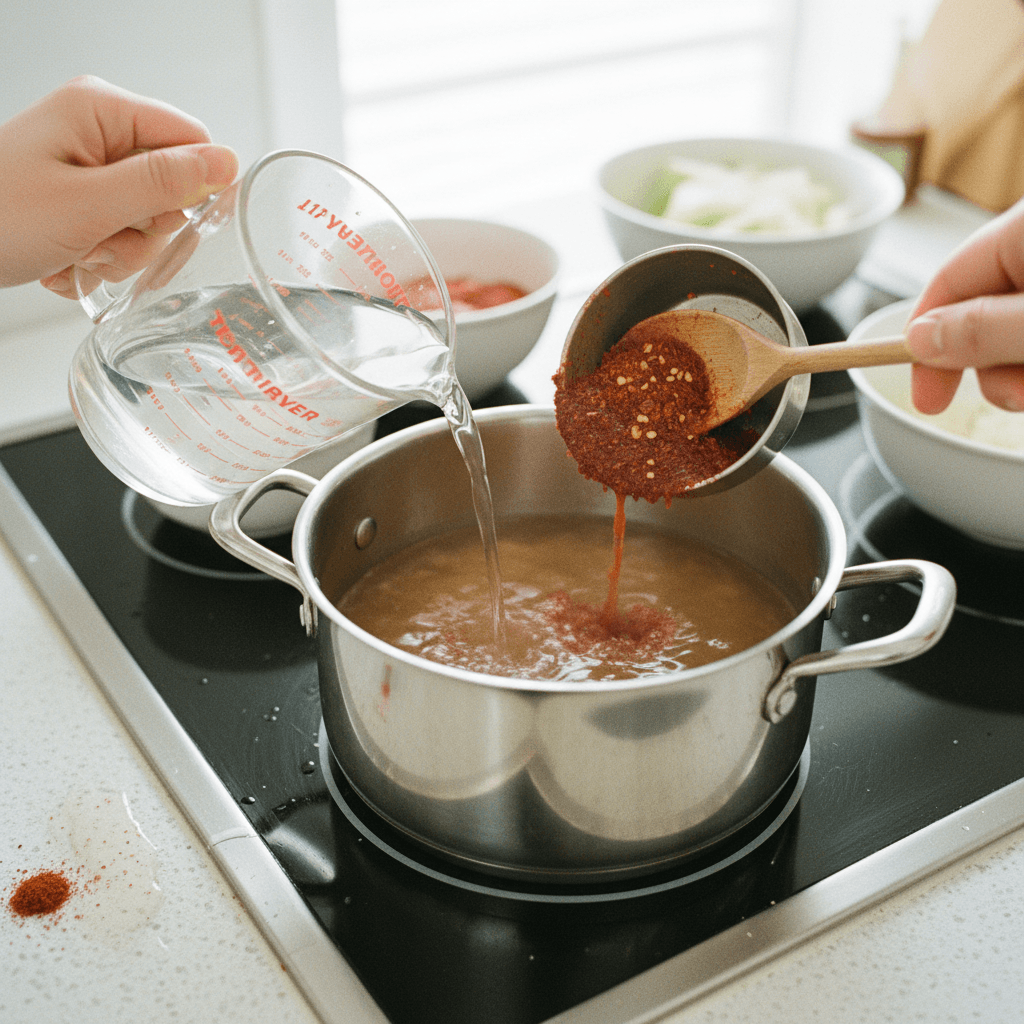
- 9
Cook the Dwenjangjjigae: Add 1/4 cup ground pork or beef, 1/4 cup onion chunks, 1/4 cup sliced leeks, 1/4 cup diced squash, and 1/4 cup cubed firm tofu to the pot. Bring the stew to a simmer and cook until the vegetables are tender and the stew is flavorful, about 15-20 minutes. Just before serving, snip 1 sliced chili pepper into the stew.
⏱️ 20 min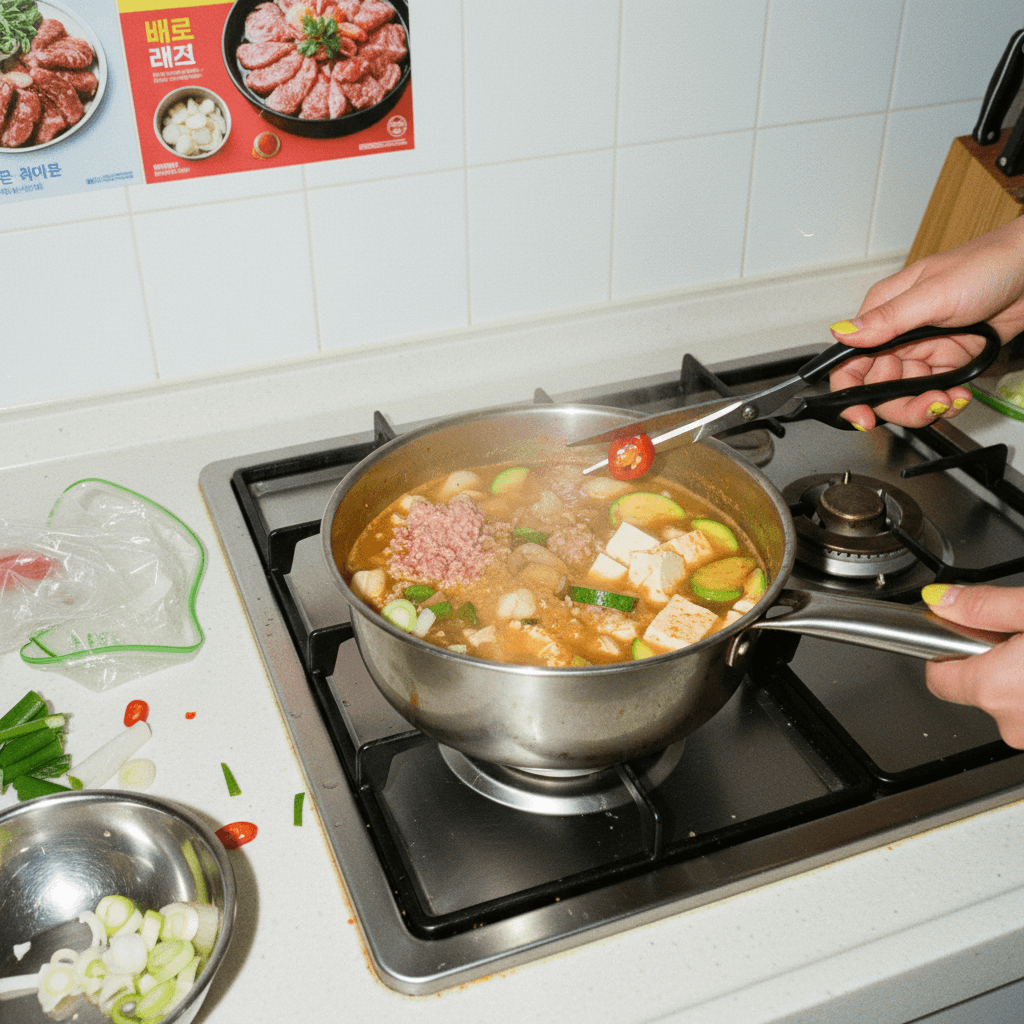
- 10
Set up for Grilling: Arrange the prepared pork belly on an electric griddle set on your dining table. Line up peeled garlic cloves on the griddle. Add some of the prepared Kongnamul Muchim and aged kimchi to sizzle in the pork fat on the griddle.
⏱️ 5 min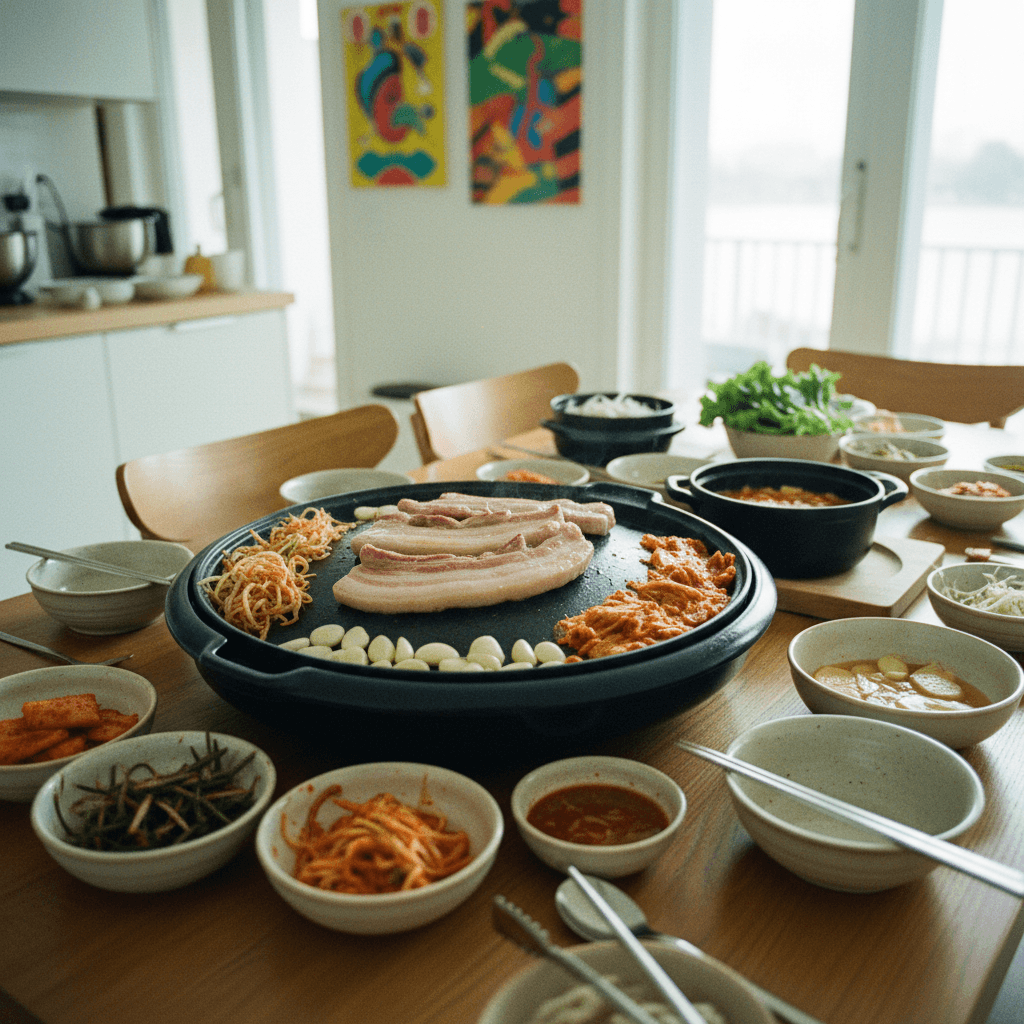
- 11
Grill and Serve: Grill the pork belly, garlic, kongnamul, and kimchi until the pork is cooked to your desired doneness and the other items are nicely charred. Serve immediately with lettuce leaves for wrapping, ssamjang, and the other prepared banchan.
⏱️ 30 min
- 12
Make Kimchi Fried Rice (Korean Dessert): After finishing the main grilling, use kitchen shears to cut up any remaining grilled pork belly and other items on the griddle into smaller pieces. Add more kimchi to the griddle. Add 3 cups of cooked rice to the griddle. Fry the rice with the pork, kimchi, and rendered pork lard until heated through and slightly crispy.
⏱️ 10 min
- 13
Finish Kimchi Fried Rice: Cut seaweed sheets into smaller pieces using kitchen shears. Sprinkle the cut seaweed over the fried rice and serve as a savory 'Korean dessert'.
⏱️ 5 min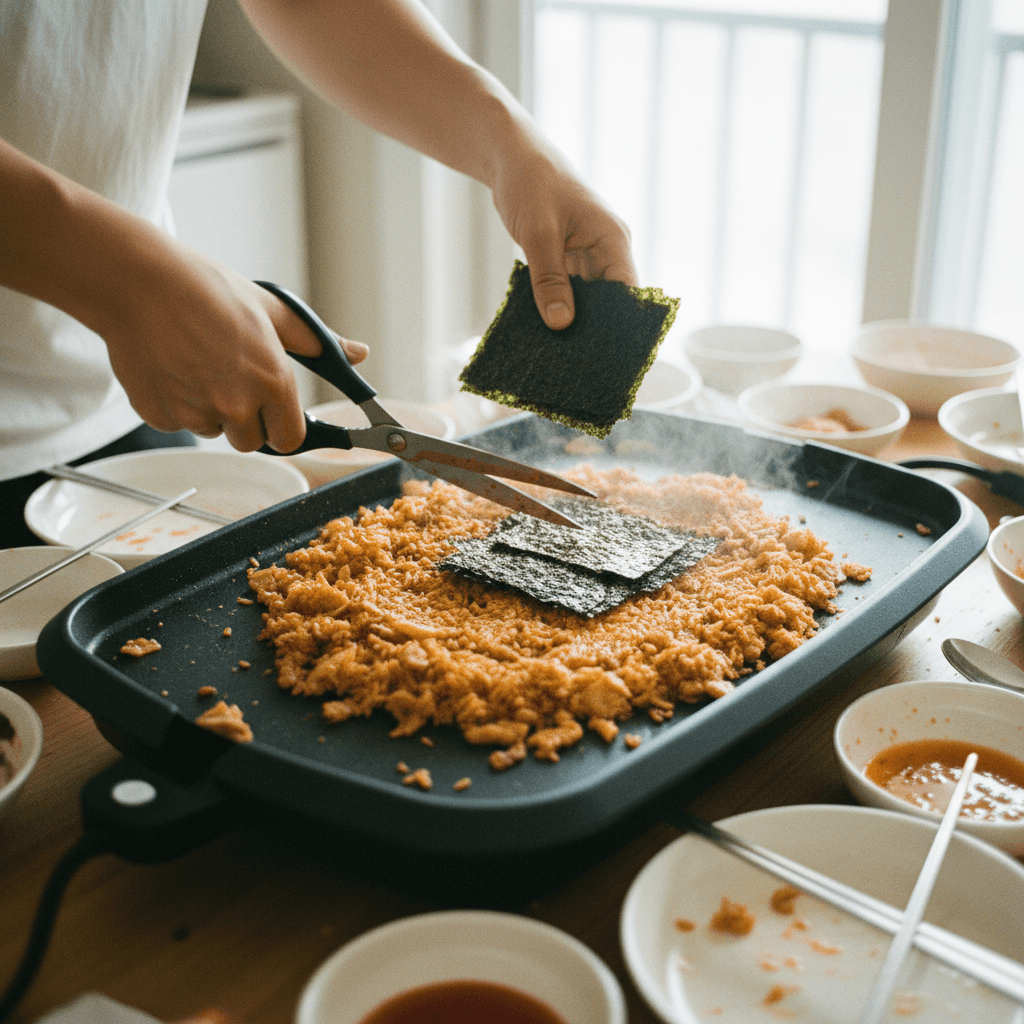
Kitchen Tools
Nutrition Facts (per serving)
KBBQ at Home
For the Pork Belly
- 1 pound pork belly, thick slab
For the Pachae (Leek Salad)
- 2 cups leek, thinly sliced
- 1 tablespoon gochugaru
- 1 tablespoon granulated sugar
- 1 tablespoon fish sauce
- 1 tablespoon sesame oil
- 1 tablespoon sesame seeds
For the Spicy Mustard Onion Sauce
- 1/2 onion, thinly sliced
- 1 tablespoon spicy mustard
- 1 tablespoon soy sauce
- 1 tablespoon rice wine vinegar
- 1 tablespoon granulated sugar
- 1/4 cup water
For the Kongnamul Muchim (Soybean Sprout Salad)
- 2 cups soybean sprouts
- 1 tablespoon garlic, minced or grated
- 1 tablespoon gochugaru
- 1 teaspoon salt
- 1 tablespoon sesame oil
- 1 tablespoon sesame seeds
For the Dwenjangjjigae (Soybean Paste Stew)
- 1 1/2 cups water
- 1/4 cup dwenjang
- 1 tablespoon gochugaru
- 1/4 cup ground pork or beef
- 1/4 cup onion, chunks
- 1/4 cup leeks, sliced
- 1/4 cup squash, diced
- 1/4 cup firm tofu, cubed
- 1 chili pepper, sliced
For Grilling and Serving
- 12 garlic cloves, peeled
- 1 cup aged kimchi
- 1 head lettuce leaves, for wrapping
- 1/2 cup ssamjang
- 3 cups cooked rice
- 3 seaweed sheets
Instructions
- 1
Prepare the pork belly: Cut the pork belly into thick slabs. Make straight cuts on one side, being careful not to cut all the way through. Flip the pork belly over and make diagonal cuts on the other side, also being careful not to cut all the way through. This 'beehive' technique allows the pork belly to open up like an accordion.
⏱️ 10 min - 2
Prepare the Pachae (Leek Salad): Thinly julienne the leeks. Place the sliced leeks in a bowl of ice water and let them soak for 10 minutes to reduce their acridness. Drain thoroughly.
⏱️ 5 min - 3
Dress the Pachae: In a mixing bowl, combine the drained leeks with 1 tablespoon gochugaru, 1 tablespoon granulated sugar, 1 tablespoon fish sauce, 1 tablespoon sesame oil, and 1 tablespoon sesame seeds. Mix well to ensure the leeks are evenly coated.
⏱️ 5 min - 4
Prepare the Spicy Mustard Onion Sauce: Thinly slice the onion. Soak the sliced onions in a bowl of ice water for 10 minutes, then drain well.
⏱️ 5 min - 5
Make the Spicy Mustard Onion Dressing: In a separate bowl, whisk together 1 tablespoon spicy mustard, 1 tablespoon soy sauce, 1 tablespoon rice wine vinegar, 1 tablespoon granulated sugar, and 1/4 cup water. Dress the drained onions with this sauce.
⏱️ 5 min - 6
Prepare the Kongnamul Muchim (Soybean Sprout Salad): Blanch or boil the soybean sprouts until tender-crisp, about 2-3 minutes. Drain and cool slightly.
⏱️ 5 min - 7
Dress the Kongnamul Muchim: In a bowl, combine the blanched soybean sprouts with 1 tablespoon minced or grated garlic, 1 tablespoon gochugaru, 1 teaspoon salt, 1 tablespoon sesame oil, and 1 tablespoon sesame seeds. Mix thoroughly by hand until all ingredients are well combined.
⏱️ 5 min - 8
Prepare the Dwenjangjjigae (Soybean Paste Stew): In a pot, add 1 1/2 cups water. Stir in 1/4 cup dwenjang and 1 tablespoon gochugaru until dissolved.
⏱️ 2 min - 9
Cook the Dwenjangjjigae: Add 1/4 cup ground pork or beef, 1/4 cup onion chunks, 1/4 cup sliced leeks, 1/4 cup diced squash, and 1/4 cup cubed firm tofu to the pot. Bring the stew to a simmer and cook until the vegetables are tender and the stew is flavorful, about 15-20 minutes. Just before serving, snip 1 sliced chili pepper into the stew.
⏱️ 20 min - 10
Set up for Grilling: Arrange the prepared pork belly on an electric griddle set on your dining table. Line up peeled garlic cloves on the griddle. Add some of the prepared Kongnamul Muchim and aged kimchi to sizzle in the pork fat on the griddle.
⏱️ 5 min - 11
Grill and Serve: Grill the pork belly, garlic, kongnamul, and kimchi until the pork is cooked to your desired doneness and the other items are nicely charred. Serve immediately with lettuce leaves for wrapping, ssamjang, and the other prepared banchan.
⏱️ 30 min - 12
Make Kimchi Fried Rice (Korean Dessert): After finishing the main grilling, use kitchen shears to cut up any remaining grilled pork belly and other items on the griddle into smaller pieces. Add more kimchi to the griddle. Add 3 cups of cooked rice to the griddle. Fry the rice with the pork, kimchi, and rendered pork lard until heated through and slightly crispy.
⏱️ 10 min - 13
Finish Kimchi Fried Rice: Cut seaweed sheets into smaller pieces using kitchen shears. Sprinkle the cut seaweed over the fried rice and serve as a savory 'Korean dessert'.
⏱️ 5 min